Analytical Data
-
Gene name
TNFRSF10C
- Application
-
Alternative Names
Tumor Necrosis Factor Receptor Superfamily Member 10C; Antagonist Decoy Receptor for TRAIL/Apo-2L; Decoy TRAIL Receptor Without Death Domain; Decoy Receptor 1; DcR1; Lymphocyte Inhibitor of TRAIL; TNF-Related Apoptosis-Inducing Ligand Receptor 3; TRAIL Receptor 3; TRAIL-R3; TRAIL Receptor Without an Intracellular Domain; CD263; TNFRSF10C; DCR1; LIT; TRAILR3; TRID
-
Species
Human
-
Source
HEK293
-
Tag
C- His
-
Purity
Greater than 95% as determined by SDS-PAGE.
-
Uniprot
O14798
-
Expression Region
26-221aa
-
Molecular Weight
21.78 kDa
-
Endotoxin
< 1.0 EU per μg protein as determined by the LAL method.
-
Form
Freeze-dried powder
-
Buffer formulation
PBS, pH7.4, containing 0.01% SKL, 1mM DTT, 5% Trehalose and Proclin300.
-
Reconstitution
Reconstitute in ddH2O to a concentration of 0.1-0.5 mg/mL. Do not vortex.
- Customization
-
Stability Test
The thermal stability is described by the loss rate. The loss rate was determined by accelerated thermal degradation test, that is, incubate the protein at 37℃ for 48h, and no obvious degradation and precipitation were observed. The loss rate isless than 8% within the expiration date under appropriate storage condition.
-
Storage & Shelf Life
Samples are stable for up to twelve months from date of receipt at -20℃ to -80℃. Store it under sterile conditions at -20℃ to -80℃. It is recommended that the protein be aliquoted for optimal storage. Avoid repeated freeze-thaw cycles.
-
Shipping
In general, recombinant proteins are supplied as lyophilized powder and shipped at ambient temperature. For bulk packages, the proteins are provided as frozen liquid and shipped with blue ice, unless otherwise requested by the customer.
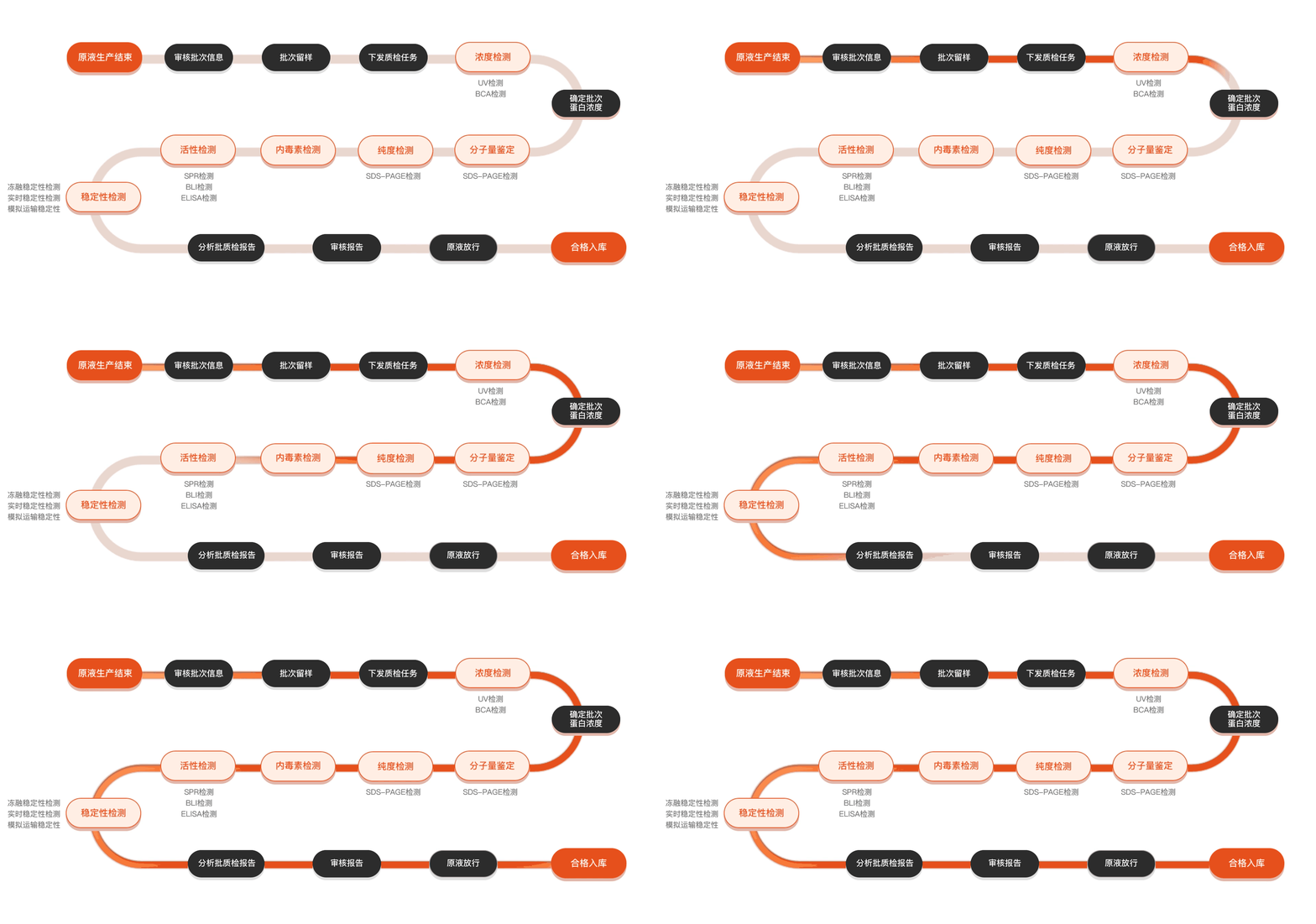
Quality inspection process
Related Products
Protein Description
TNFRSF10C, also known as TRAIL receptor 2 (TRAIL-R2), is a member of the tumor necrosis factor receptor superfamily. This protein is primarily involved in modulating apoptosis, particularly in cancer cells, by mediating the effects of TRAIL (TNF-related apoptosis-inducing ligand). Research has indicated that TNFRSF10C can elicit pro-apoptotic signals when activated by its ligands, making it a potential target for cancer therapy. Preliminary studies suggest that enhancing the expression or activity of TNFRSF10C may increase the sensitivity of tumor cells to TRAIL-induced apoptosis, therefore offering a novel strategy for cancer treatment. Moreover, alterations in TNFRSF10C expression levels have been associated with various malignancies, indicating its role in tumorigenesis and the progression of certain cancers. The development and application of recombinant TNFRSF10C proteins have emerged as promising avenues for both understanding its biological functions and exploring therapeutic possibilities, including the design of TRAIL receptor agonists or combination therapies that could improve patient outcomes. Current research is focused on elucidating the structural and functional properties of TNFRSF10C, with the aim of optimizing its application in clinical settings. Additionally, investigating the signaling pathways activated by TNFRSF10C may provide new insights into its role in immune regulation and anticancer immunity, thereby expanding its potential use in combination with other immunotherapeutic approaches.