Analytical Data
-
Gene name
BPIFA1
-
简介
BPIFA1 Protein, a lipid-binding protein, exhibits high specificity for the surfactant phospholipid DPPC. It plays a crucial role in the innate immune responses of the upper airways, reducing surface tension, inhibiting biofilm formation by pathogenic bacteria, and negatively regulating proteolytic cleavage of SCNN1G, contributing to airway surface liquid homeostasis. BPIFA1 may also attract macrophages and neutrophils. BPIFA1 Protein, Human is the recombinant human-derived BPIFA1 protein, expressed by E. coli , with tag free.
- Application
-
Biological Activity
Measured by its ability to bind fluorescein-conjugated E. coli Bioparticles. The ED50 for this effect is 3.382 μg/mL. Measured by its ability to bind fluorescein-conjugated E. coli Bioparticles. The ED50 for this effect is 3.382 μg/mL.
-
Alternative Names
BPI fold-containing family A member 1; Lung-specific protein X; PLUNC1; SPLUNC1; Von Ebner protein Hl;
-
Species
Human
-
Source
E. coli
-
Tag
Tag Free
-
Purity
Greater than 95% as determined by SDS-PAGE.
-
Uniprot
Q9NP55-1
-
Expression Region
Q20-V256
-
AA Sequence
QFGGLPVPLDQTLPLNVNPALPLSPTGLAGSLTNALSNGLLSGGLLGILENLPLLDILKPGGGTSGGLLGGLLGKVTSVIPGLNNIIDIKVTDPQLLELGLVQSPDGHRLYVTIPLGIKLQVNTPLVGASLLRLAVKLDITAEILAVRDKQERIHLVLGDCTHSPGSLQISLLDGLGPLPIQGLLDSLTGILNKVLPELVQGNVCPLVNEVLRGLDITLVHDIVNMLIHGLQFVIKV
-
Protein Length
Full Length of Isoform-1 Mature Protein
-
Molecular Weight
24.8 kDa
-
Endotoxin
< 1.0 EU per μg protein as determined by the LAL method.
-
Form
Freeze-dried powder
-
Buffer formulation
PBS, pH7.4, containing 0.01% SKL, 1mM DTT, 5% Trehalose and Proclin300.
-
Reconstitution
Reconstitute in ddH2O to a concentration of 0.1-0.5 mg/mL. Do not vortex.
- Customization
-
Stability Test
The thermal stability is described by the loss rate. The loss rate was determined by accelerated thermal degradation test, that is, incubate the protein at 37℃ for 48h, and no obvious degradation and precipitation were observed. The loss rate isless than 8% within the expiration date under appropriate storage condition.
-
Storage & Shelf Life
Samples are stable for up to twelve months from date of receipt at -20℃ to -80℃. Store it under sterile conditions at -20℃ to -80℃. It is recommended that the protein be aliquoted for optimal storage. Avoid repeated freeze-thaw cycles.
-
Shipping
In general, recombinant proteins are supplied as lyophilized powder and shipped at ambient temperature. For bulk packages, the proteins are provided as frozen liquid and shipped with blue ice, unless otherwise requested by the customer.
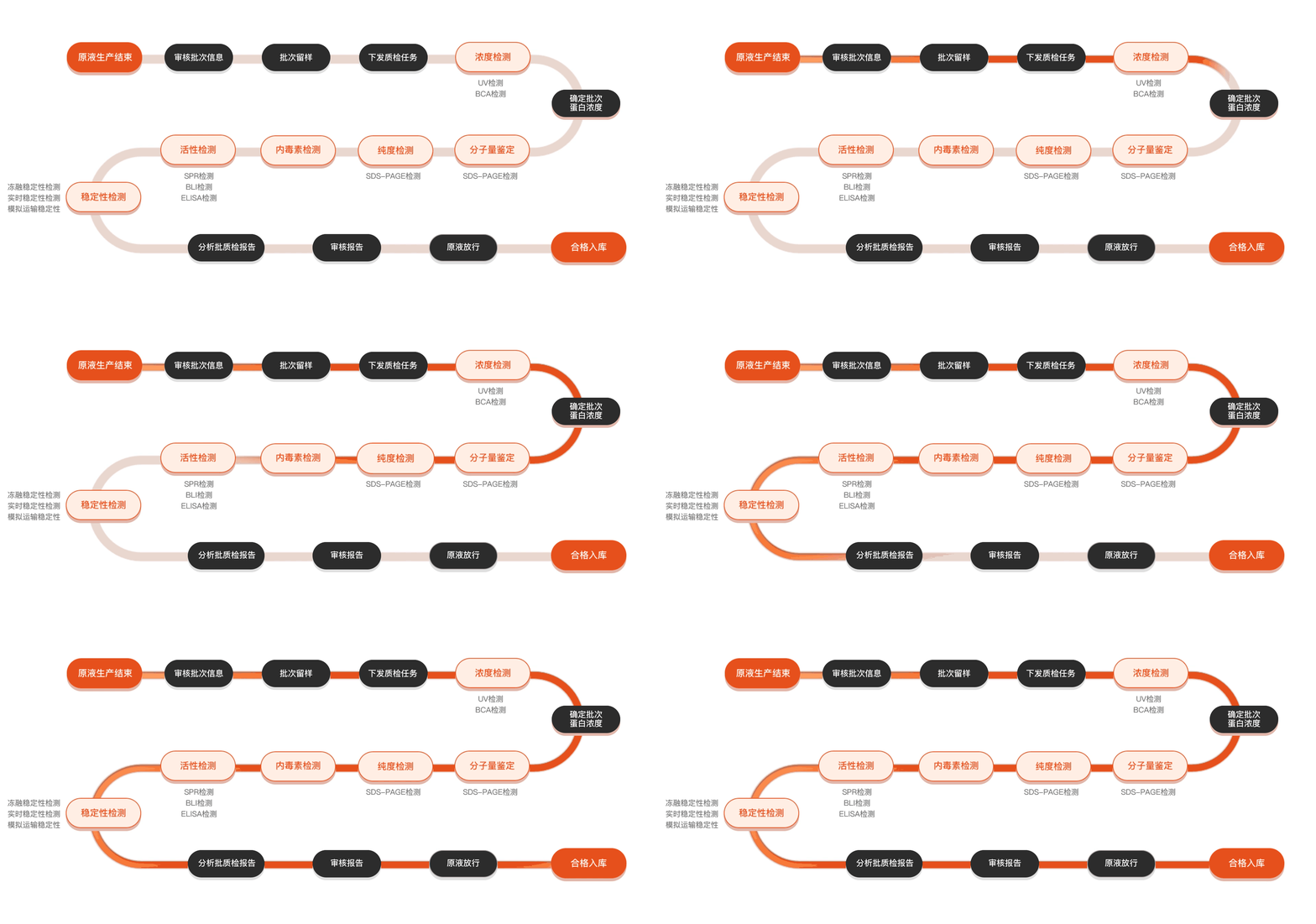
Quality inspection process
Related Products
Protein Description
BPIFA1, or BPI fold-containing protein A1, is a member of the BPI/LBP/PLC family, which is involved in various immune responses and microbial interactions. It is predominantly expressed in the respiratory tract and has been implicated in the modulation of inflammatory processes and host defense against pathogens. Research into BPIFA1 reorganization and synthesis has gained significant attention due to its potential role in respiratory diseases, such as asthma and chronic obstructive pulmonary disease (COPD). Studies suggest that BPIFA1 may influence mucosal immunity and the regulation of mucus production, which are critical for maintaining respiratory health. Additionally, BPIFA1's antibacterial and antiviral properties make it a promising candidate for therapeutic interventions aimed at enhancing the innate immune response. The reconstitution of BPIFA1 as a recombinant protein enables researchers to explore its biochemical properties, interactions with pathogens, and overall efficacy in immune modulation. Understanding the structure-function relationship of BPIFA1 can provide insights into its therapeutic applications and the development of novel treatments for respiratory conditions. Thus, the study of BPIFA1 not only advances our knowledge of host defense mechanisms but also opens new avenues for the design of immunomodulatory therapies.