Analytical Data
-
Gene name
nucB
- Application
-
Alternative Names
nucB; BSU25750; Sporulation-specific extracellular nuclease; EC 3.-.-.-
-
Species
Bacillus subtilis
-
Source
Yeast
-
Tag
Tag Free
-
Purity
Greater than 90% as determined by SDS-PAGE.
-
Uniprot
P42983
-
Expression Region
29-136aa
-
Molecular Weight
12 kDa
-
Endotoxin
< 1.0 EU per μg protein as determined by the LAL method.
-
Form
Freeze-dried powder
-
Buffer formulation
PBS, pH7.4, containing 0.01% SKL, 1mM DTT, 5% Trehalose and Proclin300.
-
Reconstitution
Reconstitute in ddH2O to a concentration of 0.1-0.5 mg/mL. Do not vortex.
- Customization
-
Stability Test
The thermal stability is described by the loss rate. The loss rate was determined by accelerated thermal degradation test, that is, incubate the protein at 37℃ for 48h, and no obvious degradation and precipitation were observed. The loss rate isless than 8% within the expiration date under appropriate storage condition.
-
Storage & Shelf Life
Samples are stable for up to twelve months from date of receipt at -20℃ to -80℃. Store it under sterile conditions at -20℃ to -80℃. It is recommended that the protein be aliquoted for optimal storage. Avoid repeated freeze-thaw cycles.
-
Shipping
In general, recombinant proteins are supplied as lyophilized powder and shipped at ambient temperature. For bulk packages, the proteins are provided as frozen liquid and shipped with blue ice, unless otherwise requested by the customer.
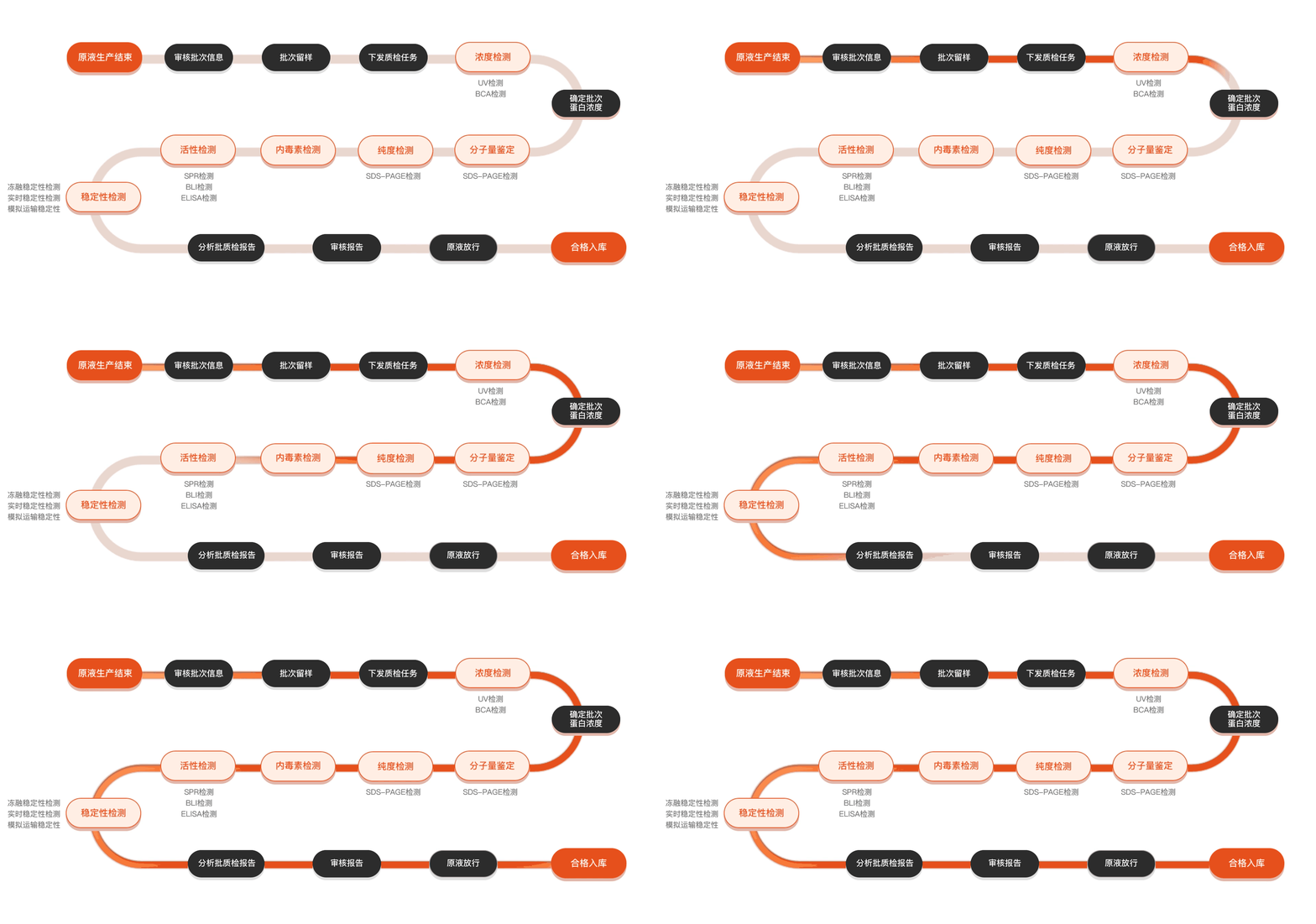
Quality inspection process
Related Products
Protein Description
NucB, a nuclease enzyme derived from Bacillus subtilis, has garnered significant attention in the field of molecular biology and biotechnology due to its unique characteristics and potential applications. As a member of the DUF1594 family of proteins, NucB exhibits endonuclease activity that can efficiently degrade RNA, making it a valuable tool for various research and therapeutic applications, such as antisense RNA delivery and nucleotide manipulation. The interest in NucB is further fueled by its structural stability and favorable reaction conditions, which help overcome challenges faced with other nucleases. Studies on the recombinant expression of NucB in heterologous systems, such as Escherichia coli, have enabled researchers to produce large quantities of this enzyme for in-depth characterization and functional analysis. Understanding the mechanisms underlying NucB's activity can lead to innovative uses in genetic engineering, RNA biology, and therapeutic interventions. Moreover, the insights gained from NucB research may contribute to the development of new biotechnological tools and strategies for RNA-based therapies, thereby enhancing our ability to manipulate RNA molecules for research and clinical purposes. This growing body of knowledge not only highlights the significance of NucB in scientific exploration, but also paves the way for novel applications in the emerging field of RNA therapeutics.