Analytical Data
-
Gene name
batroxostatin
- Application
-
Alternative Names
(Disintegrin colombistatin)(Platelet aggregation activation inhibitor)
-
Species
Bothrops atrox
-
Source
E. coli
-
Tag
N- His & C- Myc
-
Purity
Greater than 90% as determined by SDS-PAGE.
-
Uniprot
P18618
-
Expression Region
1-72aa
-
Molecular Weight
15.2 kDa
-
Endotoxin
< 1.0 EU per μg protein as determined by the LAL method.
-
Form
Freeze-dried powder
-
Buffer formulation
PBS, pH7.4, containing 0.01% SKL, 1mM DTT, 5% Trehalose and Proclin300.
-
Reconstitution
Reconstitute in ddH2O to a concentration of 0.1-0.5 mg/mL. Do not vortex.
- Customization
-
Stability Test
The thermal stability is described by the loss rate. The loss rate was determined by accelerated thermal degradation test, that is, incubate the protein at 37℃ for 48h, and no obvious degradation and precipitation were observed. The loss rate isless than 8% within the expiration date under appropriate storage condition.
-
Storage & Shelf Life
Samples are stable for up to twelve months from date of receipt at -20℃ to -80℃. Store it under sterile conditions at -20℃ to -80℃. It is recommended that the protein be aliquoted for optimal storage. Avoid repeated freeze-thaw cycles.
-
Shipping
In general, recombinant proteins are supplied as lyophilized powder and shipped at ambient temperature. For bulk packages, the proteins are provided as frozen liquid and shipped with blue ice, unless otherwise requested by the customer.
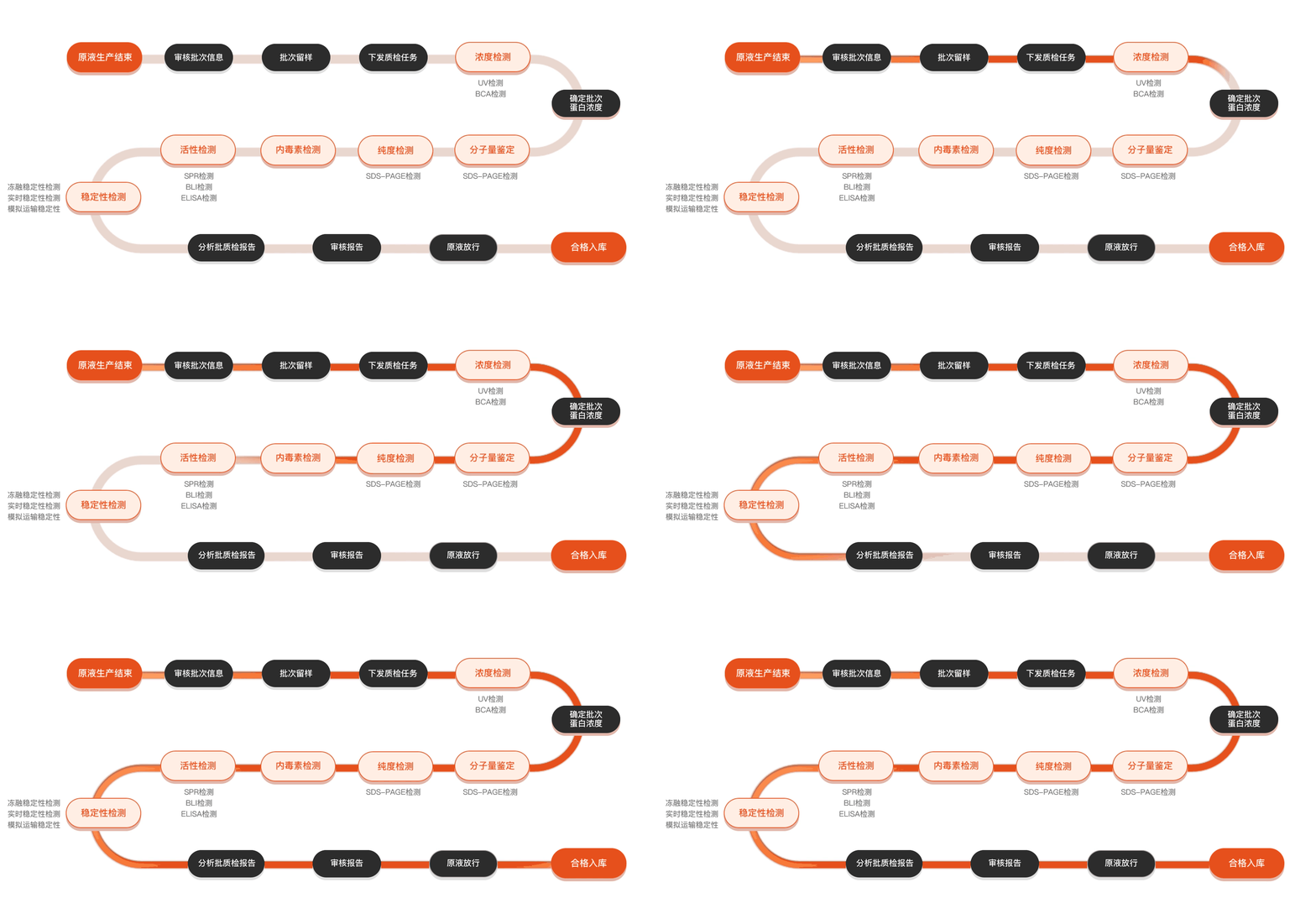
Quality inspection process
Related Products
Protein Description
Batroxostatin is a recombinant protein derived from the secretion of the Brazilian pit viper, Bothrops atrox, known for its potent inhibition of serine proteases and its unique ability to modulate the coagulation cascade. Research into batroxostatin has gained significant momentum due to its potential therapeutic applications in managing bleeding disorders and thrombotic conditions. Unlike traditional anticoagulants, batroxostatin exhibits a dual mechanism of action, simultaneously inhibiting thrombin and other proteases involved in the coagulation pathway, thereby offering a novel approach to controlling hemostasis. This recombinant protein has also piqued interest in the realms of drug design and development, as its specific targeting of coagulation factors presents opportunities for creating targeted therapeutics with reduced side effects. Furthermore, the stable expression and production of batroxostatin through recombinant technologies enhance its availability for pharmaceutical applications. Early studies have revealed its efficacy in preclinical models, paving the way for further investigation into its pharmacokinetics, safety profiles, and potential clinical applications. As researchers continue to unravel the complexities of batroxostatin's action on the coagulation system, this recombinant protein holds promise as a groundbreaking agent in hematology, providing insights that could lead to advancements in current therapeutic strategies for managing both bleeding and clotting disorders.