Analytical Data
-
基因名
MTMR9
- Application
-
别名
MTMR9;C8orf9;MTMR8;Myotubularin-related Protein 9
-
种属
Human
-
表达系统
E. coli
-
标签
His tag N-Terminus
-
纯度
Greater than 90% as determined by SDS-PAGE.
-
蛋白编号
Q96QG7
-
表达区间
1-549aa
-
氨基酸序列
MEFAELIKTP RVDNVVLHRP FYPAVEGTLC LTGHHLILSS RQDNTEELWL LHSNIDAIDK RFVGSLGTII IKCKDFRIIQ LDIPGMEECL NIASSIEALS TLDSITLMYP FFYRPMFEVI EDGWHSFLPE QEFELYSSAT SEWRLSYVNK EFAVCPSYPP IVTVPKSIDD EALRKVATFR HGGRFPVLSY YHKKNGMVIM RSGQPLTGTN GRRCKEDEKL INATLRAGKR GYIIDTRSLN VAQQTRAKGG GFEQEAHYPQ WRRIHKSIER YHILQESLIK LVEACNDQTH NMDRWLSKLE ASNWLTHIKE ILTTACLAAQ CIDREGASIL IHGTEGTDST LQVTSLAQII LEPRSRTIRG FEALIEREWL QAGHPFQQRC AQSAYCNTKQ KWEAPVFLLF LDCVWQILRQ FPCSFEFNEN FLIMLFEHAY ASQFGTFLGN NESERCKLKL QQKTMSLWSW VNQPSELSKF TNPLFEANNL VIWPSVAPQS LPLWEGIFLR WNRSSKYLDE AYEEMVNIIE YNKELQAKVN ILRRQLAELE TEDGMQESP
-
分子量
63.4 kDa
-
内毒素
< 1.0 EU per μg protein as determined by the LAL method.
-
性状
Freeze-dried powder
-
缓冲液
PBS, pH7.4, containing 0.01% SKL, 1mM DTT, 5% Trehalose and Proclin300.
-
复溶方法
Reconstitute in ddH2O to a concentration of 0.1-0.5 mg/mL. Do not vortex.
- 个性化定制
-
稳定性测试
The thermal stability is described by the loss rate. The loss rate was determined by accelerated thermal degradation test, that is, incubate the protein at 37℃ for 48h, and no obvious degradation and precipitation were observed. The loss rate isless than 8% within the expiration date under appropriate storage condition.
-
保存条件 & 期限
Samples are stable for up to twelve months from date of receipt at -20℃ to -80℃. Store it under sterile conditions at -20℃ to -80℃. It is recommended that the protein be aliquoted for optimal storage. Avoid repeated freeze-thaw cycles.
-
运输条件
In general, recombinant proteins are supplied as lyophilized powder and shipped at ambient temperature. For bulk packages, the proteins are provided as frozen liquid and shipped with blue ice, unless otherwise requested by the customer.
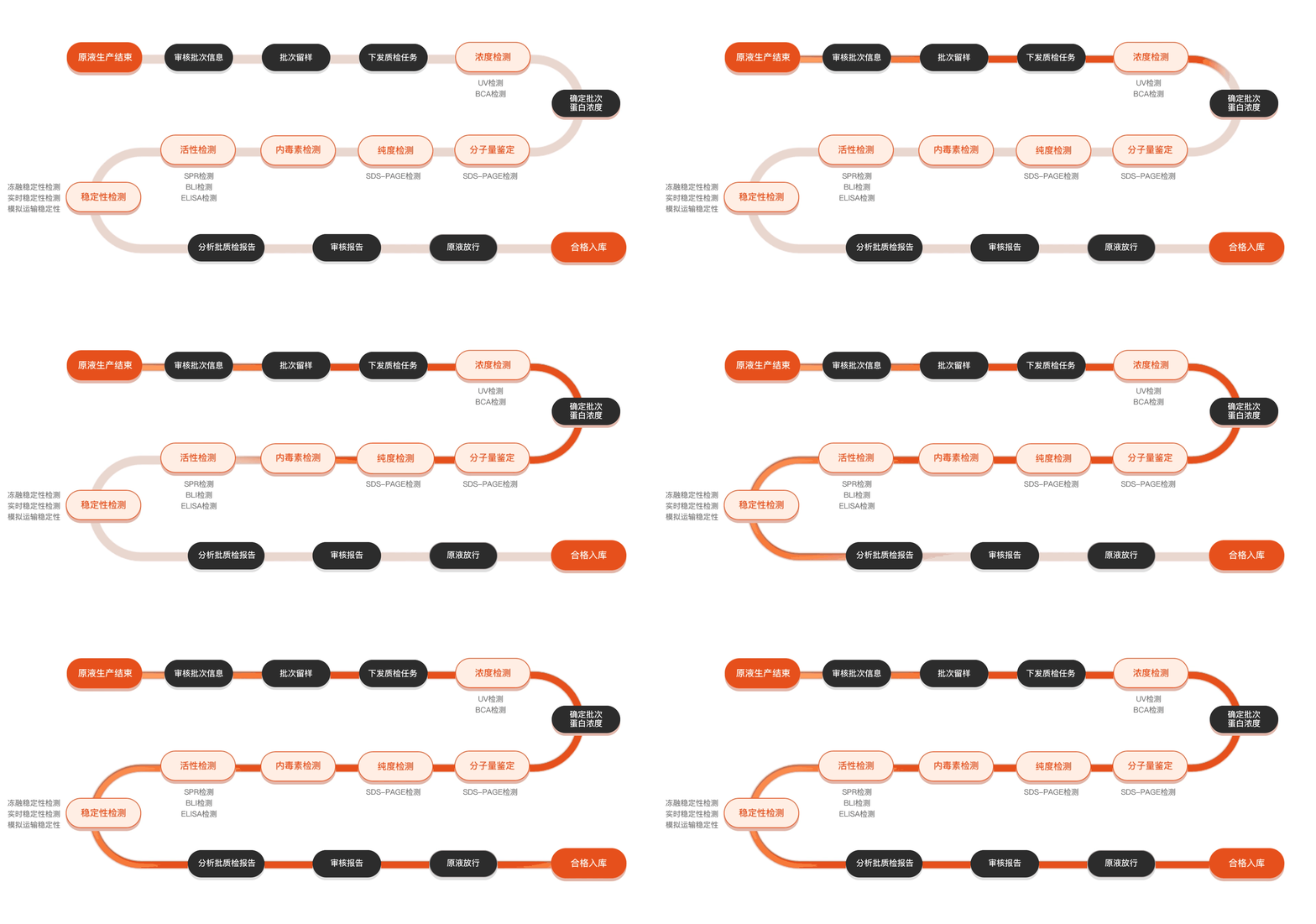
Quality inspection process
Related Products
Recombinant Human Hmgcs1 Protein,His
Cat:PA2000-3837
Recombinant Human CARNS1 Protein,His
Cat:PA1000-9664
Protein Description
MTMR9 (Myotubularin-related protein 9) is a member of the myotubularin family of proteins, which are known for their lipid phosphatase activity that plays a crucial role in cellular processes such as membrane trafficking and endocytosis. The significance of MTMR9 in various biological contexts has prompted researchers to investigate its potential implications in human health and disease, particularly concerning skeletal muscle and neurological disorders. Mutations in the genes encoding myotubularins, including MTMR9, have been linked to conditions such as Charcot-Marie-Tooth disease and other myopathies, highlighting the importance of understanding its functional dynamics. Moreover, the study of MTMR9 reconstitution and structure-function relationships has been increasingly relevant in the field of cell biology and pathology. Investigating its interactions with other cellular molecules could uncover new therapeutic targets and pathways involved in disease mechanisms. As research progresses, the characterization of MTMR9's role and the exploration of its applications in bioengineering and regenerative medicine hold exciting prospects for the development of novel treatment strategies.