Analytical Data
-
Gene name
MIG/CXCL9
-
简介
CXCL9, also known as MIG, is one member of the ELR-negative CXC chemokine subfamily, and can be induced by IFN-γ. CXCL9 binds to its receptor CXCR3 and can recruit CXCR3+ cells, such as effector T cells, regulatory T cells (Tregs) and CD8+ cytotoxic T cells. CXCL9 is involved in immunoregulatory and inflammatory processes, but it also play a key role in tumor growth, angiogenesis, and metastasis[1][2]. MIG/CXCL9 Protein, Mouse (HEK293, His) is produced in HEK293 cells with six C-Terminal His-tags.
- Application
-
Alternative Names
rMuC-X-C motif chemokine 9/CXCL9, His; C-X-C motif chemokine 9; Gamma-interferon-induced monokine; Monokine induced by interferon-gamma; MIG; MuMIG; Protein m119; Small-inducible cytokine B9; Cxcl9; Mig; Scyb9
-
Species
Mouse
-
Source
HEK293
-
Tag
C-6*His
-
Purity
Greater than 95% as determined by reducing SDS-PAGE.
-
Uniprot
P18340
-
Expression Region
T22-T126
-
Protein Length
Full Length of Mature Protein
-
Molecular Weight
18-28 kDa
-
Endotoxin
< 1.0 EU per μg protein as determined by the LAL method.
-
Form
Freeze-dried powder
-
Buffer formulation
PBS, pH7.4, containing 0.01% SKL, 1mM DTT, 5% Trehalose and Proclin300.
-
Reconstitution
Reconstitute in ddH2O to a concentration of 0.1-0.5 mg/mL. Do not vortex.
- Customization
-
Stability Test
The thermal stability is described by the loss rate. The loss rate was determined by accelerated thermal degradation test, that is, incubate the protein at 37℃ for 48h, and no obvious degradation and precipitation were observed. The loss rate isless than 8% within the expiration date under appropriate storage condition.
-
Storage & Shelf Life
Samples are stable for up to twelve months from date of receipt at -20℃ to -80℃. Store it under sterile conditions at -20℃ to -80℃. It is recommended that the protein be aliquoted for optimal storage. Avoid repeated freeze-thaw cycles.
-
Shipping
In general, recombinant proteins are supplied as lyophilized powder and shipped at ambient temperature. For bulk packages, the proteins are provided as frozen liquid and shipped with blue ice, unless otherwise requested by the customer.
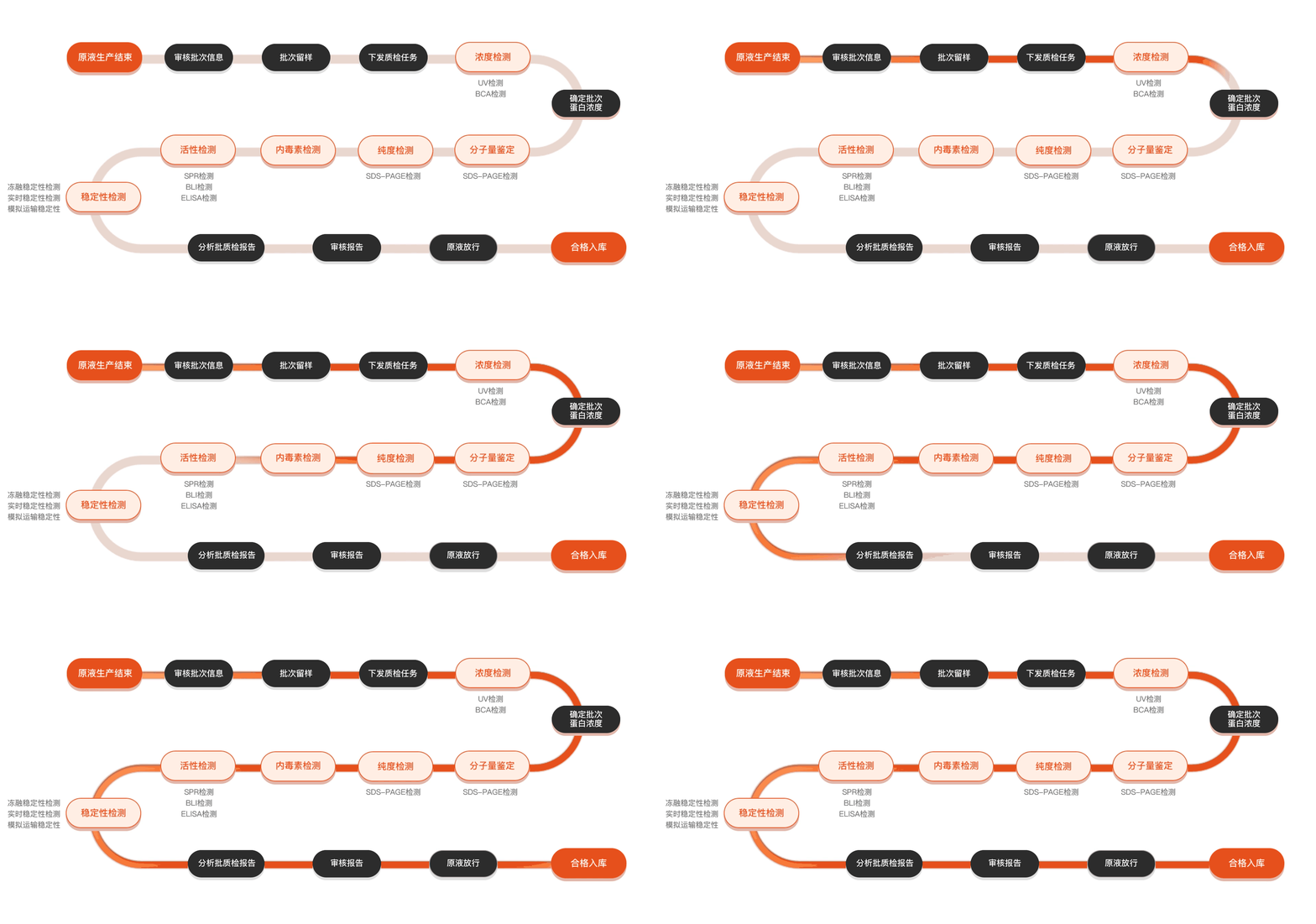
Quality inspection process
Related Products
Protein Description
MIG (Monokine Induced by Gamma Interferon), also known as CXCL9, is a member of the CXC chemokine family and plays a pivotal role in immune responses, particularly in the recruitment of T cells and natural killer (NK) cells to sites of inflammation and infection. Its expression is notably upregulated in response to interferon-gamma (IFN-γ) signaling, making it integral in modulating the host's defense against pathogens and tumors. Due to its ability to attract immune cells, MIG/CXCL9 has gained significant attention in therapeutic research, especially concerning cancer immunotherapy and chronic inflammatory diseases. Studies have shown that increased levels of MIG/CXCL9 correlate with favorable outcomes in various cancers, as it facilitates the infiltration of cytotoxic T lymphocytes into tumor microenvironments. Furthermore, MIG/CXCL9's interactions with its receptor, CXCR3, are pivotal for mediating the immune response and may offer potential targets for enhancing anti-tumor immunity or addressing immunological disorders. Ongoing investigations into the recombinant production of MIG/CXCL9 are aimed at elucidating its biological functions, therapeutic potential, and mechanisms of action, paving the way for novel treatment strategies that harness the body’s immune system more effectively. Overall, the study of MIG/CXCL9 is crucial for advancing our understanding of immune modulation and developing innovative approaches to treat a variety of diseases.