Analytical Data
-
基因名
IdhA
- Application
-
别名
IDH3A;Isocitrate dehydrogenase [NAD] subunit alpha. mitochondrial
-
种属
E.coli
-
表达系统
E. coli
-
标签
His tag N-Terminus
-
纯度
Greater than 90% as determined by SDS-PAGE.
-
蛋白编号
P52643
-
表达区间
1-329aa
-
氨基酸序列
MGSSHHHHHH SSGLVPRGSH MGSHMKLAVY STKQYDKKYL QQVNESFGFE LEFFDFLLTE KTAKTANGCE AVCIFVNDDG SRPVLEELKK HGVKYIALRC AGFNNVDLDA AKELGLKVVR VPAYDPEAVA EHAIGMMMTL NRRIHRAYQR TRDANFSLEG LTGFTMYGKT AGVIGTGKIG VAMLRILKGF GMRLLAFDPY PSAAALELGV EYVDLPTLFS ESDVISLHCP LTPENYHLLN EAAFEQMKNG VMIVNTSRGA LIDSQAAIEA LKNQKIGSLG MDVYENERDL FFEDKSNDVI QDDVFRRLSA CHNVLFTGHQ AFLTAEALTS ISQTTLQNLS NLEKGETCPN ELV
-
分子量
39 kDa
-
内毒素
< 1.0 EU per μg protein as determined by the LAL method.
-
性状
Freeze-dried powder
-
缓冲液
PBS, pH7.4, containing 0.01% SKL, 1mM DTT, 5% Trehalose and Proclin300.
-
复溶方法
Reconstitute in ddH2O to a concentration of 0.1-0.5 mg/mL. Do not vortex.
- 个性化定制
-
稳定性测试
The thermal stability is described by the loss rate. The loss rate was determined by accelerated thermal degradation test, that is, incubate the protein at 37℃ for 48h, and no obvious degradation and precipitation were observed. The loss rate isless than 8% within the expiration date under appropriate storage condition.
-
保存条件 & 期限
Samples are stable for up to twelve months from date of receipt at -20℃ to -80℃. Store it under sterile conditions at -20℃ to -80℃. It is recommended that the protein be aliquoted for optimal storage. Avoid repeated freeze-thaw cycles.
-
运输条件
In general, recombinant proteins are supplied as lyophilized powder and shipped at ambient temperature. For bulk packages, the proteins are provided as frozen liquid and shipped with blue ice, unless otherwise requested by the customer.
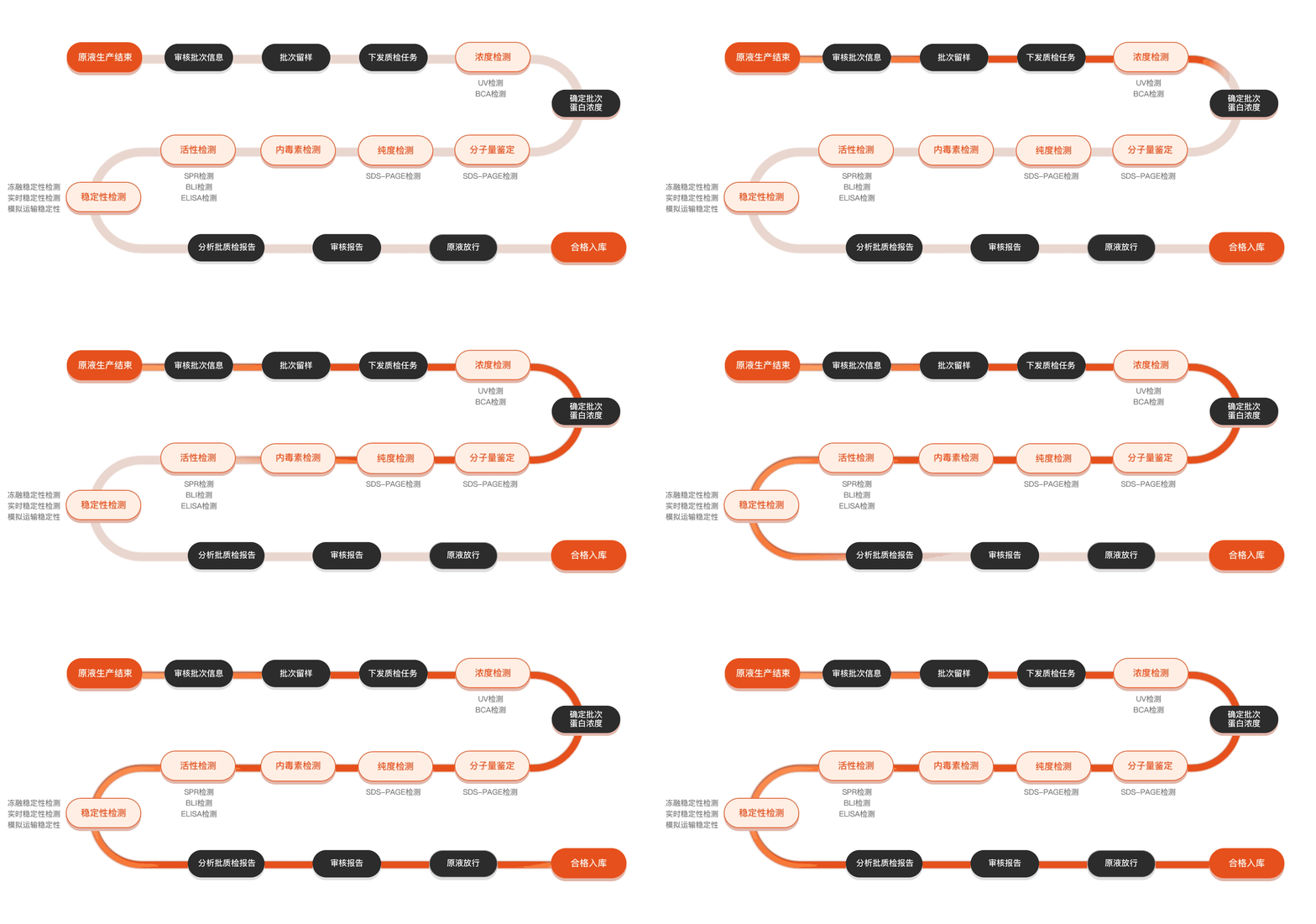
Quality inspection process
Related Products
Recombinant Human IQSEC1 Protein,GST
Cat:PA2000-8511
Recombinant Human Cxcl11 Protein,His
Cat:PA2000-4378
Protein Description
IdhA, or isocitrate dehydrogenase A, is a key enzyme involved in the tricarboxylic acid (TCA) cycle, playing a crucial role in cellular metabolism and energy production. This enzyme catalyzes the oxidative decarboxylation of isocitrate to alpha-ketoglutarate, providing insights into metabolic pathways and their regulation in various organisms. Research on IdhA has garnered significant attention due to its potential implications in understanding metabolic disorders and its links to cancer biology, where mutations in isocitrate dehydrogenases can lead to the production of the oncometabolite 2-hydroxyglutarate. The recombinant expression of IdhA provides a valuable tool for studying its enzymatic functions, substrate specificity, and the effects of post-translational modifications. Furthermore, the availability of purified IdhA protein facilitates the exploration of its role in metabolic engineering and synthetic biology, where modulating metabolic pathways can enhance biotechnological applications. Researchers aim to elucidate the structural characteristics of IdhA through techniques such as X-ray crystallography and NMR spectroscopy, aiding in the design of inhibitors or activators that might serve as therapeutic agents. Overall, the study of IdhA recombinant protein represents a vital area of biochemical research, with promising applications in both health and industry.