Analytical Data
-
Gene name
MAGEA9
- Application
-
Alternative Names
Cancer/testis antigen 1.9; Cancer/testis antigen family 1 member 9; CT1.9; MAGA9_HUMAN; MAGE 9 antigen; MAGE-9 antigen; MAGE9; MAGEA9A; MAGEA9B; Melanoma antigen family A 9; Melanoma associated antigen 9; Melanoma-associated antigen 9; MGC8421
-
Species
Human
-
Source
E. coli
-
Tag
His tag N-Terminus
-
Purity
Greater than 90% as determined by SDS-PAGE.
-
Uniprot
P43362
-
Expression Region
1-315aa
-
AA Sequence
MSLEQRSPHC KPDEDLEAQG EDLGLMGAQE PTGEEEETTS SSDSKEEEVS AAGSSSPPQS PQGGASSSIS VYYTLWSQFD EGSSSQEEEE PSSSVDPAQL EFMFQEALKL KVAELVHFLL HKYRVKEPVT KAEMLESVIK NYKRYFPVIF GKASEFMQVI FGTDVKEVDP AGHSYILVTA LGLSCDSMLG DGHSMPKAAL LIIVLGVILT KDNCAPEEVI WEALSVMGVY VGKEHMFYGE PRKLLTQDWV QENYLEYRQV PGSDPAHYEF LWGSKAHAET SYEKVINYLV MLNAREPICY PSLYEEVLGE EQEGV
-
Molecular Weight
35 kDa
-
Endotoxin
< 1.0 EU per μg protein as determined by the LAL method.
-
Form
Freeze-dried powder
-
Buffer formulation
PBS, pH7.4, containing 0.01% SKL, 1mM DTT, 5% Trehalose and Proclin300.
-
Reconstitution
Reconstitute in ddH2O to a concentration of 0.1-0.5 mg/mL. Do not vortex.
- Customization
-
Stability Test
The thermal stability is described by the loss rate. The loss rate was determined by accelerated thermal degradation test, that is, incubate the protein at 37℃ for 48h, and no obvious degradation and precipitation were observed. The loss rate isless than 8% within the expiration date under appropriate storage condition.
-
Storage & Shelf Life
Samples are stable for up to twelve months from date of receipt at -20℃ to -80℃. Store it under sterile conditions at -20℃ to -80℃. It is recommended that the protein be aliquoted for optimal storage. Avoid repeated freeze-thaw cycles.
-
Shipping
In general, recombinant proteins are supplied as lyophilized powder and shipped at ambient temperature. For bulk packages, the proteins are provided as frozen liquid and shipped with blue ice, unless otherwise requested by the customer.
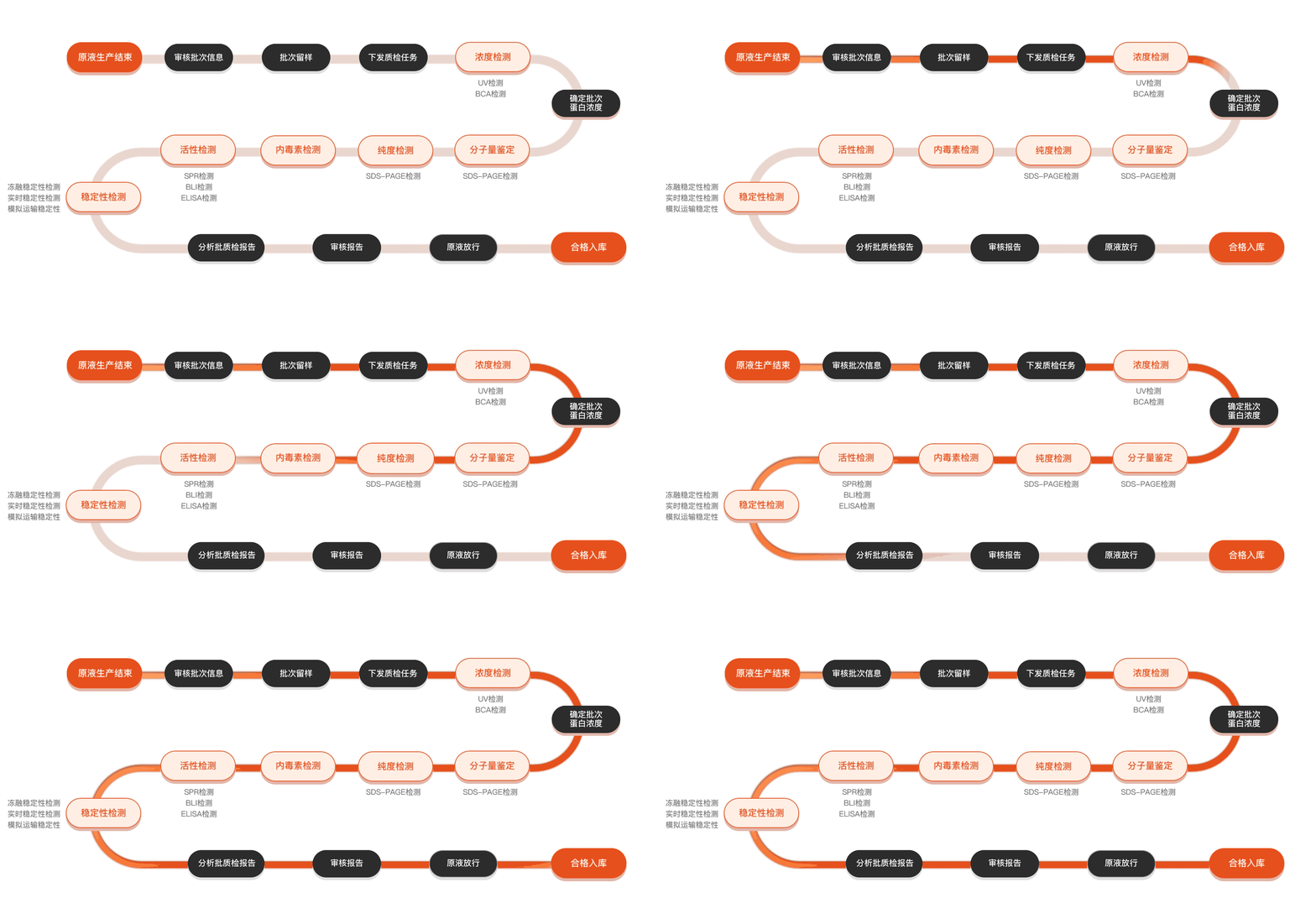
Quality inspection process
Related Products
Protein Description
MAGEA9 (Melanoma Antigen Gene A9) is a member of the MAGE family of genes, which are predominantly expressed in melanoma and certain other tumors but are typically silent in normal adult tissues, making them attractive targets for cancer immunotherapy. Its expression in various malignancies, especially in solid tumors, has led to increasing interest in understanding the role it plays in tumorigenesis and immune evasion. Research on MAGEA9 has unveiled its potential as a tumor-associated antigen (TAA), which can be leveraged in the development of therapeutic vaccines and adoptive T-cell therapies. The possibility of using MAGEA9 as a biomarker for cancer diagnosis and prognosis further emphasizes its importance in oncological research. Additionally, investigating the structure and function of recombinant MAGEA9 proteins can provide insights into their immunogenicity and interaction with immune cells, fostering the creation of more effective immunotherapeutic strategies. As the field of cancer immunotherapy continues to evolve, MAGEA9 stands out as a promising candidate for targeted treatment approaches, aiming to enhance the body's immune response against tumors while minimizing damage to normal tissues.