Analytical Data
-
Gene name
POLL
- Application
-
Alternative Names
POLL;DNA polymerase lambda
-
Species
Human
-
Source
E. coli
-
Tag
His tag N-Terminus
-
Purity
Greater than 90% as determined by SDS-PAGE.
-
Uniprot
Q9UGP5
-
Expression Region
1-575aa
-
AA Sequence
MDPRGILKAF PKRQKIHADA SSKVLAKIPR REEGEEAEEW LSSLRAHVVR TGIGRARAEL FEKQIVQHGG QLCPAQGPGV THIVVDEGMD YERALRLLRL PQLPPGAQLV KSAWLSLCLQ ERRLVDVAGF SIFIPSRYLD HPQPSKAEQD ASIPPGTHEA LLQTALSPPP PPTRPVSPPQ KAKEAPNTQA QPISDDEASD GEETQVSAAD LEALISGHYP TSLEGDCEPS PAPAVLDKWV CAQPSSQKAT NHNLHITEKL EVLAKAYSVQ GDKWRALGYA KAINALKSFH KPVTSYQEAC SIPGIGKRMA EKIIEILESG HLRKLDHISE SVPVLELFSN IWGAGTKTAQ MWYQQGFRSL EDIRSQASLT TQQAIGLKHY SDFLERMPRE EATEIEQTVQ KAAQAFNSGL LCVACGSYRR GKATCGDVDV LITHPDGRSH RGIFSRLLDS LRQEGFLTDD LVSQEENGQQ QKYLGVCRLP GPGRRHRRLD IIVVPYSEFA CALLYFTGSA HFNRSMRALA KTKGMSLSEH ALSTAVVRNT HGCKVGPGRV LPTPTEKDVF RLLGLPYREP AERDW
-
Endotoxin
< 1.0 EU per μg protein as determined by the LAL method.
-
Form
Freeze-dried powder
-
Buffer formulation
PBS, pH7.4, containing 0.01% SKL, 1mM DTT, 5% Trehalose and Proclin300.
-
Reconstitution
Reconstitute in ddH2O to a concentration of 0.1-0.5 mg/mL. Do not vortex.
- Customization
-
Stability Test
The thermal stability is described by the loss rate. The loss rate was determined by accelerated thermal degradation test, that is, incubate the protein at 37℃ for 48h, and no obvious degradation and precipitation were observed. The loss rate isless than 8% within the expiration date under appropriate storage condition.
-
Storage & Shelf Life
Samples are stable for up to twelve months from date of receipt at -20℃ to -80℃. Store it under sterile conditions at -20℃ to -80℃. It is recommended that the protein be aliquoted for optimal storage. Avoid repeated freeze-thaw cycles.
-
Shipping
In general, recombinant proteins are supplied as lyophilized powder and shipped at ambient temperature. For bulk packages, the proteins are provided as frozen liquid and shipped with blue ice, unless otherwise requested by the customer.
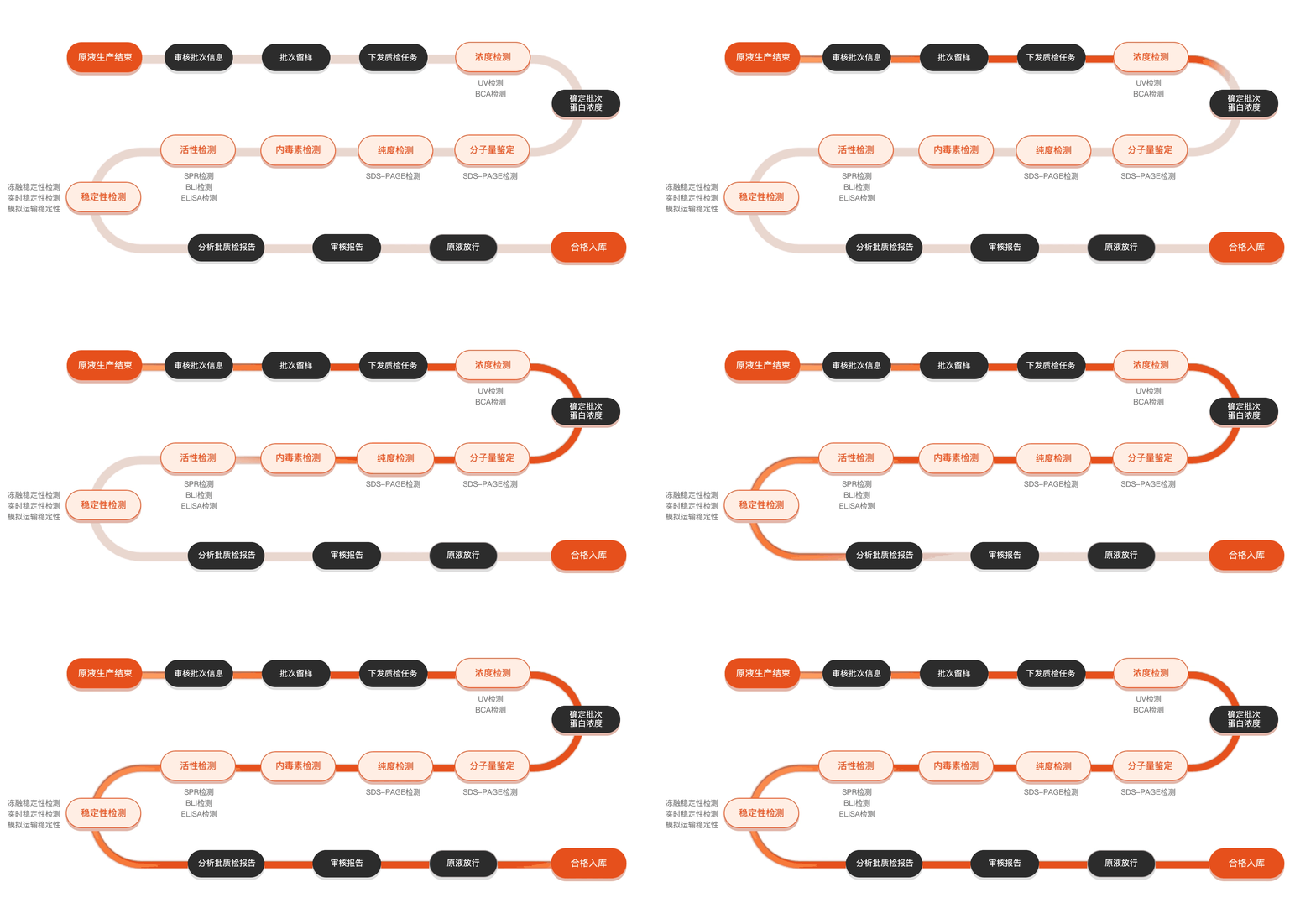
Quality inspection process
Related Products
Protein Description
POLL, or DNA polymerase lambda, is a crucial member of the DNA polymerase family involved in maintaining genomic stability and facilitating DNA repair processes. It primarily participates in the non-homologous end joining (NHEJ) pathway, a vital mechanism that repairs double-strand breaks, which can result from various sources such as ionizing radiation or oxidative stress. The study of POLL is significant as it provides insights into cellular mechanisms that prevent mutations and cancers, highlighting its role in both cancer biology and potential therapeutic strategies. Furthermore, mutations in POLL have been linked to certain cancer predispositions, making it an important target for research concerning tumorigenesis and potential interventions. Understanding the structural and functional properties of POLL, therefore, is essential for elucidating its contribution to DNA repair and the broader implications for human health, particularly in the context of cancer research and treatment. By exploring POLL's activity, enzymatic properties, and interactions with other proteins in the repair machinery, researchers aim to develop novel strategies to enhance DNA repair processes and improve the effectiveness of existing cancer therapies.