Analytical Data
-
Gene name
POMZP3
- Application
-
Alternative Names
POMZP3;POM121 and ZP3 fusion Protein
-
Species
Human
-
Source
E. coli
-
Tag
His tag N-Terminus
-
Purity
Greater than 90% as determined by SDS-PAGE.
-
Uniprot
Q6PJE2
-
Expression Region
1-187aa
-
AA Sequence
MGSSHHHHHH SSGLVPRGSH MGSMVCSPVT LRIAPPDRRF SRSAIPEQII SSTLSSPSSN APDPCAKETV LSALKEKKKK RTVEEEDQIF LDGQENKRSC LVDGLTDASS AFKVPRPGPD TLQFTVDVFH FANDSRNMIY ITCHLKVTLA EQDPDELNKA CSFSKPSNSW FPVEGLADIC QCCNKGDCGT PSHSRRQPRV VSQWSTSASL
-
Molecular Weight
23 kDa
-
Endotoxin
< 1.0 EU per μg protein as determined by the LAL method.
-
Form
Freeze-dried powder
-
Buffer formulation
PBS, pH7.4, containing 0.01% SKL, 1mM DTT, 5% Trehalose and Proclin300.
-
Reconstitution
Reconstitute in ddH2O to a concentration of 0.1-0.5 mg/mL. Do not vortex.
- Customization
-
Stability Test
The thermal stability is described by the loss rate. The loss rate was determined by accelerated thermal degradation test, that is, incubate the protein at 37℃ for 48h, and no obvious degradation and precipitation were observed. The loss rate isless than 8% within the expiration date under appropriate storage condition.
-
Storage & Shelf Life
Samples are stable for up to twelve months from date of receipt at -20℃ to -80℃. Store it under sterile conditions at -20℃ to -80℃. It is recommended that the protein be aliquoted for optimal storage. Avoid repeated freeze-thaw cycles.
-
Shipping
In general, recombinant proteins are supplied as lyophilized powder and shipped at ambient temperature. For bulk packages, the proteins are provided as frozen liquid and shipped with blue ice, unless otherwise requested by the customer.
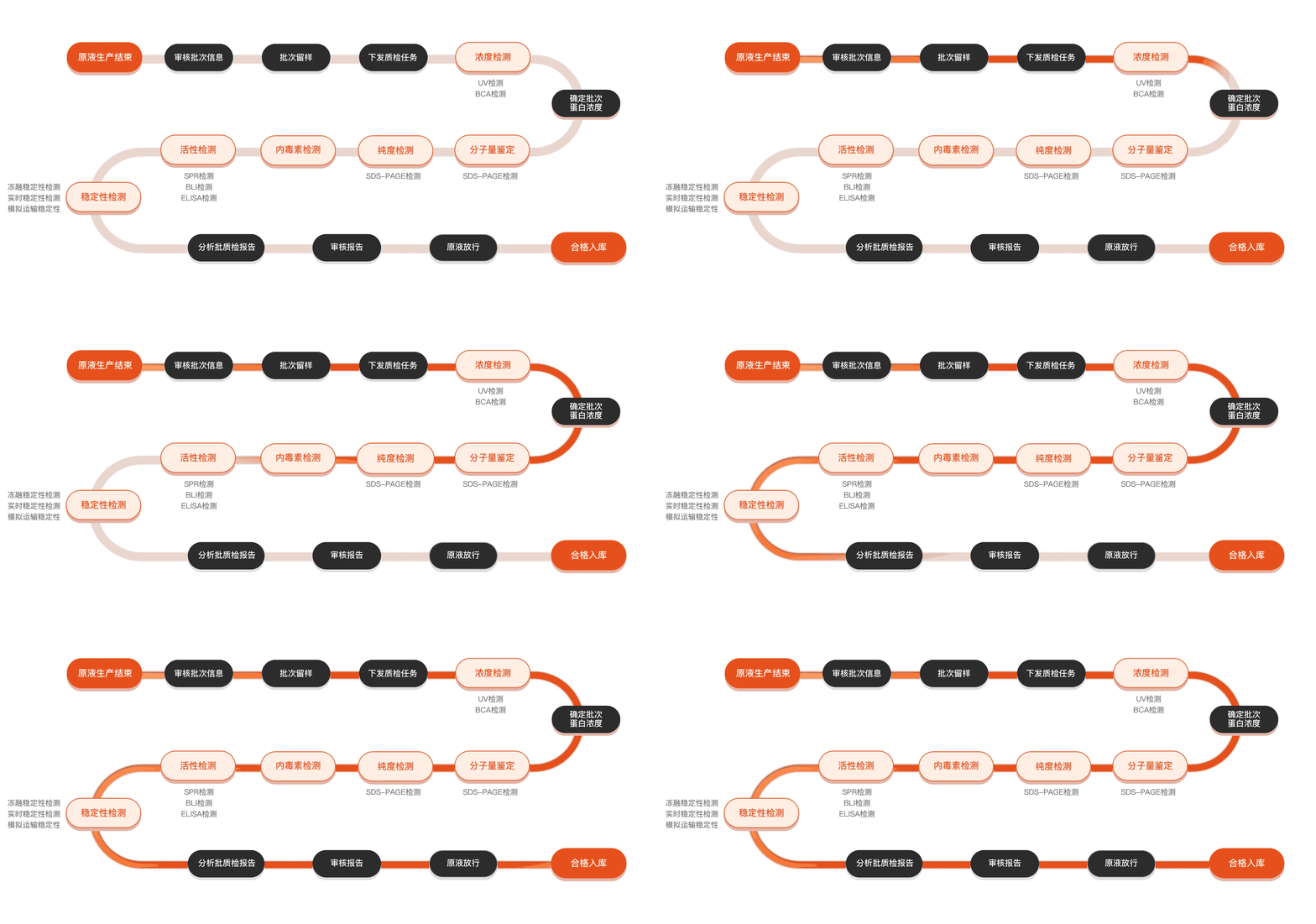
Quality inspection process
Related Products
Protein Description
POMZP3 is a recombinant protein derived from the ZP domain-containing proteins, which are key components of the zona pellucida, a glycoprotein extracellular matrix surrounding the oocyte. Research into POMZP3 has gained considerable attention due to its potential roles in reproductive biology and fertility. The zona pellucida plays a crucial role in sperm binding, activation, and the acrosome reaction during fertilization, making the study of its components essential for understanding reproductive mechanisms. Recombinant POMZP3 can be used in various applications, including the development of diagnostic tools for fertility assessments and the creation of vaccines targeting specific reproductive health issues. Moreover, its interaction with sperm and its involvement in oocyte development offer insights into fertility regulation and potential infertility treatments. As infertility rates rise globally, understanding the molecular intricacies of proteins like POMZP3 becomes increasingly important for developing innovative reproductive technologies and enhancing assisted reproductive techniques. The crystallization and characterization of POMZP3 are essential steps toward elucidating its structure-function relationships, which could lead to novel therapeutic interventions in assisted reproductive technologies. Overall, POMZP3 research contributes significantly to our understanding of reproductive physiology and offers promising avenues for improving fertility outcomes.