Analytical Data
-
Gene name
PTGR1
- Application
-
Alternative Names
PTGR2;ZADH1;Prostaglandin reductase 2
-
Species
Human
-
Source
E. coli
-
Tag
His tag N-Terminus
-
Purity
Greater than 90% as determined by SDS-PAGE.
-
Uniprot
Q14914
-
Expression Region
1-329aa
-
AA Sequence
MGSSHHHHHH SSGLVPRGSH MGSEFMVRTK TWTLKKHFVG YPTNSDFELK TAELPPLKNG EVLLEALFLT VDPYMRVAAK RLKEGDTMMG QQVAKVVESK NVALPKGTIV LASPGWTTHS ISDGKDLEKL LTEWPDTIPL SLALGTVGMP GLTAYFGLLE ICGVKGGETV MVNAAAGAVG SVVGQIAKLK GCKVVGAVGS DEKVAYLQKL GFDVVFNYKT VESLEETLKK ASPDGYDCYF DNVGGEFSNT VIGQMKKFGR IAICGAISTY NRTGPLPPGP PPEIVIYQEL RMEAFVVYRW QGDARQKALK DLLKWVLEGK IQYKEYIIEG FENMPAAFMG MLKGDNLGKT IVKA
-
Molecular Weight
39 kDa
-
Endotoxin
< 1.0 EU per μg protein as determined by the LAL method.
-
Form
Freeze-dried powder
-
Buffer formulation
PBS, pH7.4, containing 0.01% SKL, 1mM DTT, 5% Trehalose and Proclin300.
-
Reconstitution
Reconstitute in ddH2O to a concentration of 0.1-0.5 mg/mL. Do not vortex.
- Customization
-
Stability Test
The thermal stability is described by the loss rate. The loss rate was determined by accelerated thermal degradation test, that is, incubate the protein at 37℃ for 48h, and no obvious degradation and precipitation were observed. The loss rate isless than 8% within the expiration date under appropriate storage condition.
-
Storage & Shelf Life
Samples are stable for up to twelve months from date of receipt at -20℃ to -80℃. Store it under sterile conditions at -20℃ to -80℃. It is recommended that the protein be aliquoted for optimal storage. Avoid repeated freeze-thaw cycles.
-
Shipping
In general, recombinant proteins are supplied as lyophilized powder and shipped at ambient temperature. For bulk packages, the proteins are provided as frozen liquid and shipped with blue ice, unless otherwise requested by the customer.
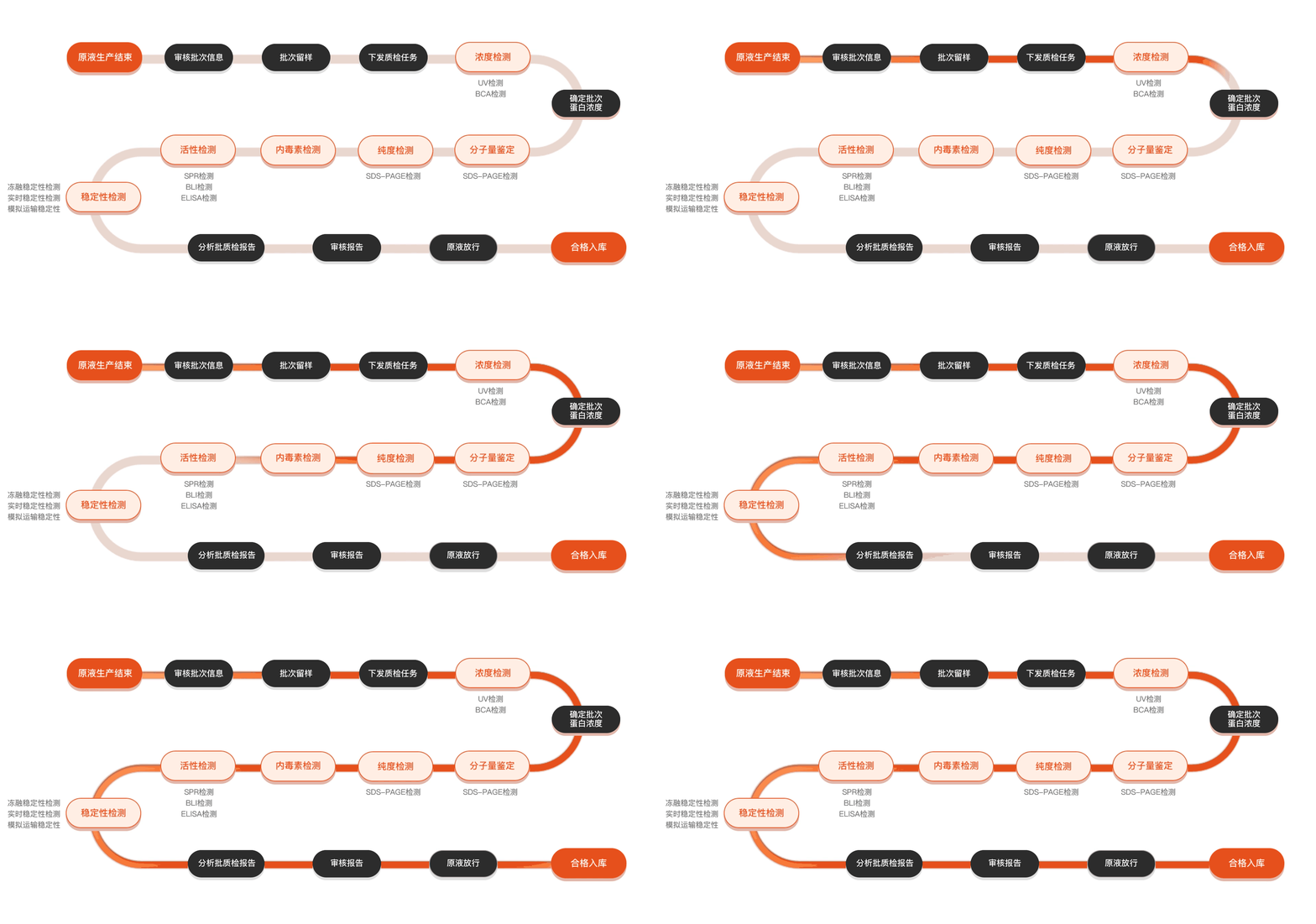
Quality inspection process
Related Products
Protein Description
PTGR1, or Prostaglandin Reductase 1, is an essential enzyme involved in the metabolism of prostaglandins, which are lipid compounds that play crucial roles in various physiological processes, including inflammation, pain modulation, and regulation of blood flow. The study of PTGR1 has gained prominence in the context of its potential implications in cancer research, cardiovascular diseases, and other inflammatory conditions. Dysregulation of prostaglandin levels has been linked to tumorigenesis and the progression of several malignancies, making PTGR1 a potential target for therapeutic intervention. Research efforts are focused on understanding the enzyme’s structure-function relationship and its role in prostaglandin metabolism, which could lead to the development of novel drugs that modulate its activity. Furthermore, PTGR1 has been implicated in the resistance of certain cancers to therapy, highlighting its significance in cancer treatment strategies. The production of recombinant PTGR1 enables detailed biochemical studies and the exploration of its enzymatic properties, facilitating drug discovery and the development of new therapeutic approaches. Overall, understanding PTGR1’s function and regulatory mechanisms is crucial for elucidating its role in health and disease, with promising avenues for clinical application in the management of cancer and inflammatory disorders.