Analytical Data
-
基因名
PARS2
- Application
-
别名
PARS2;Probable proline--tRNA ligase. mitochondrial
-
种属
Human
-
表达系统
E. coli
-
标签
His tag N-Terminus
-
纯度
Greater than 90% as determined by SDS-PAGE.
-
蛋白编号
Q7L3T8
-
表达区间
30-475aa
-
氨基酸序列
H HCAPRRGRRL LLSRVFQPQN LREDRVLSLQ DKSDDLTCKS QRLMLQVGLI YPASPGCYHL LPYTVRAMEK LVRVIDQEMQ AIGGQKVNMP SLSPAELWQA TNRWDLMGKE LLRLRDRHGK EYCLGPTHEE AITALIASQK KLSYKQLPFL LYQVTRKFRD EPRPRFGLLR GREFYMKDMY TFDSSPEAAQ QTYSLVCDAY CSLFNKLGLP FVKVQADVGT IGGTVSHEFQ LPVDIGEDRL AICPRCSFSA NMETLDLSQM NCPACQGPLT KTKGIEVGHT FYLGTKYSSI FNAQFTNVCG KPTLAEMGCY GLGVTRILAA AIEVLSTEDC VRWPSLLAPY QACLIPPKKG SKEQAASELI GQLYDHITEA VPQLHGEVLL DDRTHLTIGN RLKDANKFGY PFVIIAGKRA LEDPAHFEVW CQNTGEVAFL TKDGVMDLLT PVQTV
-
分子量
53.2 kDa
-
内毒素
< 1.0 EU per μg protein as determined by the LAL method.
-
性状
Freeze-dried powder
-
缓冲液
PBS, pH7.4, containing 0.01% SKL, 1mM DTT, 5% Trehalose and Proclin300.
-
复溶方法
Reconstitute in ddH2O to a concentration of 0.1-0.5 mg/mL. Do not vortex.
- 个性化定制
-
稳定性测试
The thermal stability is described by the loss rate. The loss rate was determined by accelerated thermal degradation test, that is, incubate the protein at 37℃ for 48h, and no obvious degradation and precipitation were observed. The loss rate isless than 8% within the expiration date under appropriate storage condition.
-
保存条件 & 期限
Samples are stable for up to twelve months from date of receipt at -20℃ to -80℃. Store it under sterile conditions at -20℃ to -80℃. It is recommended that the protein be aliquoted for optimal storage. Avoid repeated freeze-thaw cycles.
-
运输条件
In general, recombinant proteins are supplied as lyophilized powder and shipped at ambient temperature. For bulk packages, the proteins are provided as frozen liquid and shipped with blue ice, unless otherwise requested by the customer.
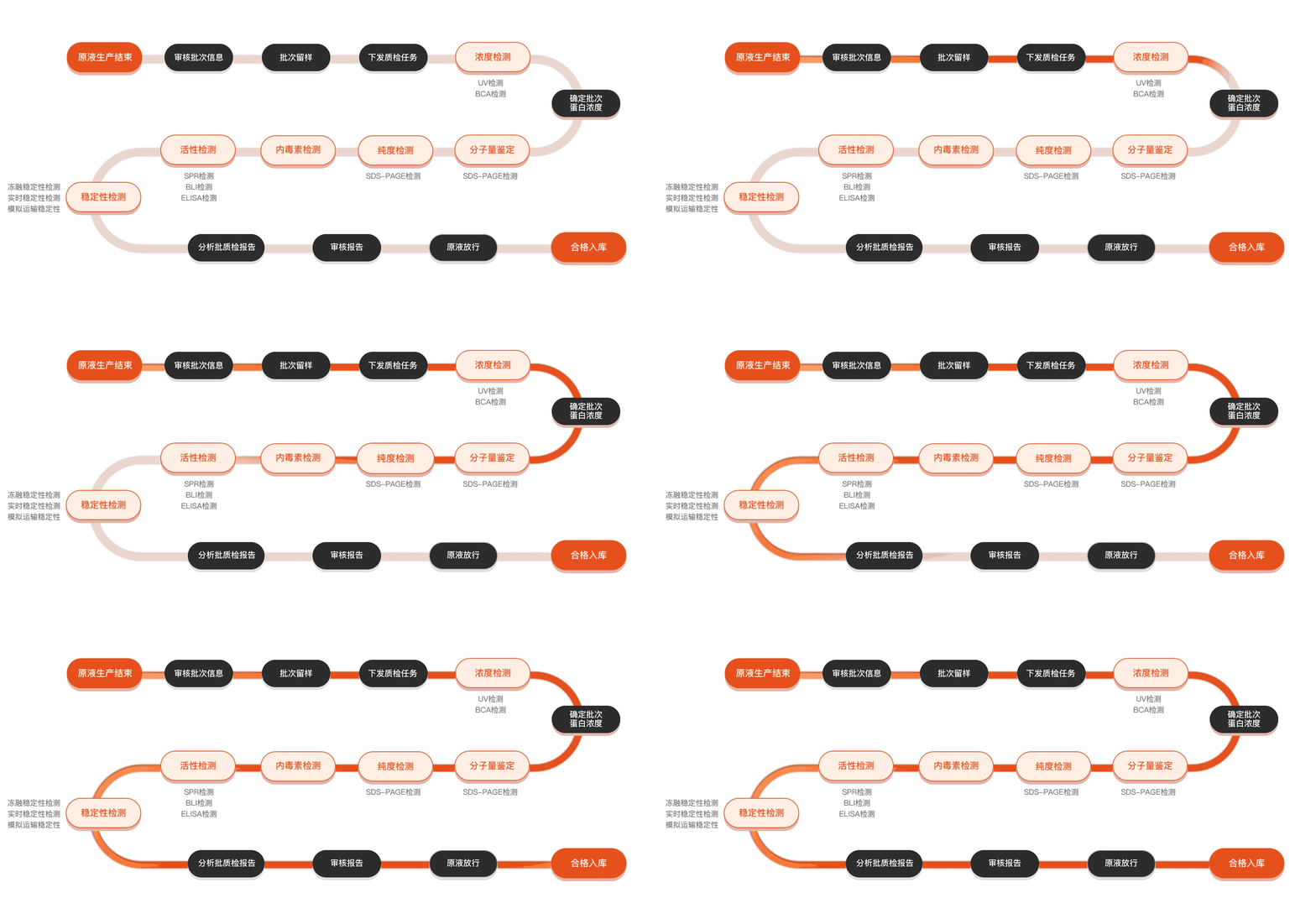
Quality inspection process
Related Products
Protein Description
PARS2, also known as mitochondrial phenylalanine-tRNA synthetase 2, is an essential enzyme involved in mitochondrial protein synthesis. It plays a critical role in the proper functioning of mitochondria by catalyzing the attachment of phenylalanine to its corresponding tRNA, a vital step in protein translation within the organelle. Research into PARS2 has gained prominence due to its potential implications in various mitochondrial disorders, which are often associated with genetic mutations affecting tRNA synthetases. These disorders can lead to diverse clinical manifestations, including neurodegenerative diseases and metabolic syndromes. Understanding the structure and function of PARS2 can provide insights into its role in mitochondrial dynamics and its involvement in disease mechanisms. Furthermore, the recombinant expression of PARS2 allows researchers to study its enzymatic properties, interaction with other mitochondrial components, and regulatory mechanisms, ultimately contributing to the development of potential therapeutic strategies. With advancements in biotechnological techniques, characterizing PARS2 through recombinant protein production can enhance our knowledge of mitochondrial biology and its pathophysiological implications, paving the way for innovative interventions in mitochondrial diseases.