Analytical Data
-
Gene name
SPATS2
- Application
-
Alternative Names
SPATS2;DNAPTP6;SPATS2-like Protein
-
Species
Human
-
Source
E. coli
-
Tag
His tag N-Terminus
-
Purity
Greater than 90% as determined by SDS-PAGE.
-
Uniprot
Q86XZ4
-
Expression Region
1-545aa
-
AA Sequence
MSRKQNQKDS SGFIFDLQSN TVLAQGGAFE NMKEKINAVR AIVPNKSNNE IILVLQHFDN CVDKTVQAFM EGSASEVLKE WTVTGKKKNK KKKNKPKPAA EPSNGIPDSS KSVSIQEEQS APSSEKGGMN GYHVNGAIND TESVDSLSEG LETLSIDARE LEDPESAMLD TLDRTGSMLQ NGVSDFETKS LTMHSIHNSQ QPRNAAKSLS RPTTETQFSN MGMEDVPLAT SKKLSSNIEK SVKDLQRCTV SLARYRVVVK EEMDASIKKM KQAFAELESC LMDREVALLA EMDKVKAEAM EILLSRQKKA ELLKKMTHVA VQMSEQQLVE LRADIKHFVS ERKYDEDLGR VARFTCDVET LKKSIDSFGQ VSHPKNSYST RSRCSSVTSV SLSSPSDASA ASSSTCASPP SLTSANKKNF APGETPAAIA NSSGQPYQPL REVLPGNRRG GQGYRPQGQK SNDPMNQGRH DSMGRYRNSS WYSSGSRYQS APSQAPGNTI ERGQTHSAGT NGTGVSMEPS PPTPSFKKGL PQRKPRTSQT EAVNS
-
Molecular Weight
59.5 kDa
-
Endotoxin
< 1.0 EU per μg protein as determined by the LAL method.
-
Form
Freeze-dried powder
-
Buffer formulation
PBS, pH7.4, containing 0.01% SKL, 1mM DTT, 5% Trehalose and Proclin300.
-
Reconstitution
Reconstitute in ddH2O to a concentration of 0.1-0.5 mg/mL. Do not vortex.
- Customization
-
Stability Test
The thermal stability is described by the loss rate. The loss rate was determined by accelerated thermal degradation test, that is, incubate the protein at 37℃ for 48h, and no obvious degradation and precipitation were observed. The loss rate isless than 8% within the expiration date under appropriate storage condition.
-
Storage & Shelf Life
Samples are stable for up to twelve months from date of receipt at -20℃ to -80℃. Store it under sterile conditions at -20℃ to -80℃. It is recommended that the protein be aliquoted for optimal storage. Avoid repeated freeze-thaw cycles.
-
Shipping
In general, recombinant proteins are supplied as lyophilized powder and shipped at ambient temperature. For bulk packages, the proteins are provided as frozen liquid and shipped with blue ice, unless otherwise requested by the customer.
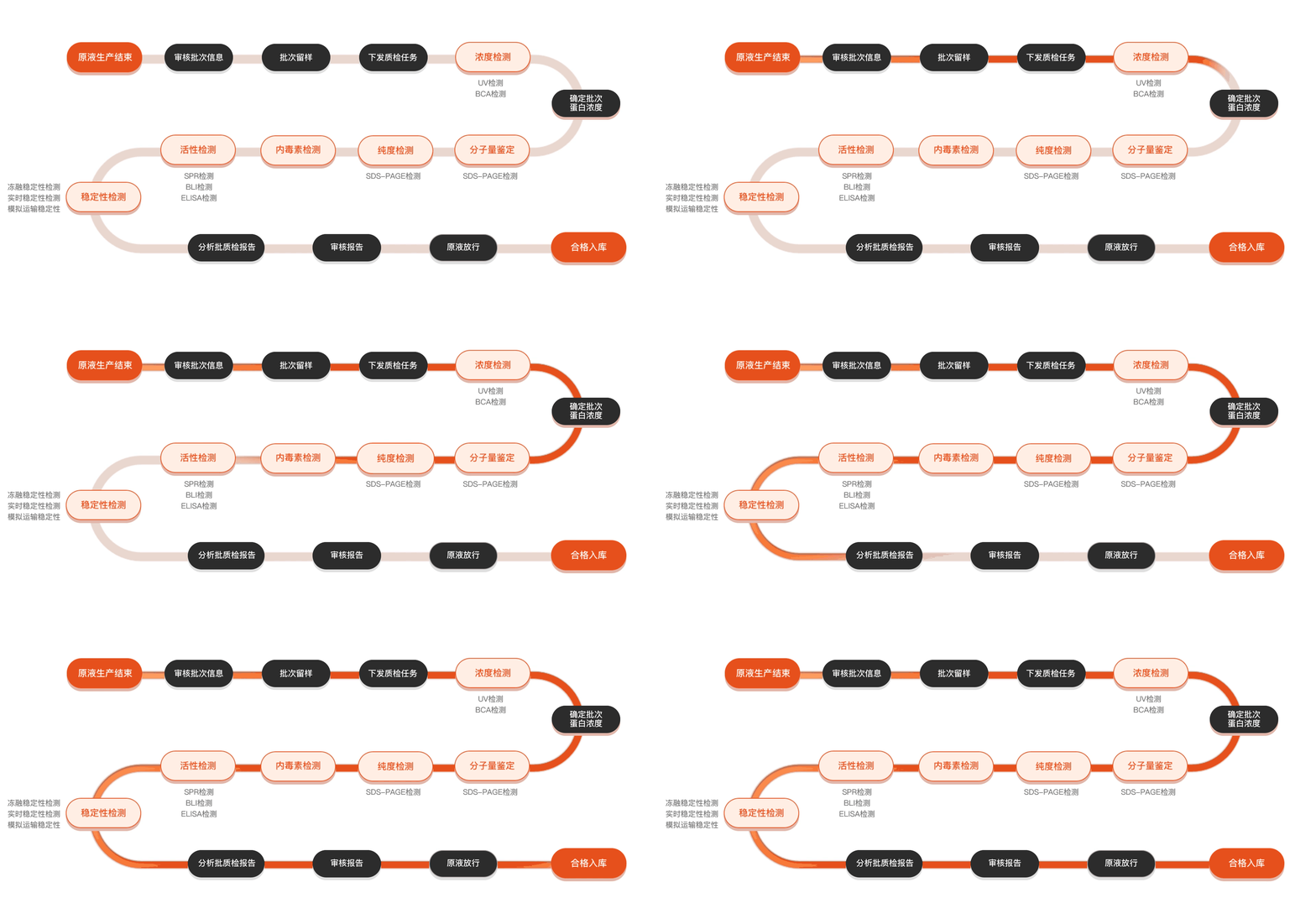
Quality inspection process
Related Products
Protein Description
SPATS2 (Sperm Associated Antigen 2) is a protein that has garnered attention in reproductive biology due to its critical role in sperm development and function. Research indicates that SPATS2 is involved in sperm maturation, motility, and interaction with the oocyte, making it a potential player in fertility assessment and treatment. The gene encoding SPATS2 is predominantly expressed in the testis, suggesting its specific function in male gametogenesis. Studies have suggested that abnormalities in SPATS2 expression can be linked to male infertility, which highlights its significance in understanding reproductive health. The investigation of SPATS2 recombinant proteins has opened avenues for exploring its biological function and potential as a biomarker for male fertility issues. Furthermore, the ability to produce and purify SPATS2 in a recombinant form allows for detailed biochemical and biophysical characterizations, facilitating the development of assays that could diagnose and possibly target reproductive disorders. Understanding the functional mechanisms of SPATS2 may provide insights into the intricate processes of spermatogenesis and could lead to innovative strategies in the field of reproductive medicine, aiming to enhance fertility outcomes. As the field of reproductive biotechnology evolves, the exploration of SPATS2 within the context of male fertility remains a promising area of research, with implications for both basic science and clinical applications.