Analytical Data
-
Gene name
PNMA6A
- Application
-
Alternative Names
PNMA6A; PNMA6C; Paraneoplastic antigen-like protein 6A
-
Species
Human
-
Source
E. coli
-
Tag
His tag N-Terminus
-
Purity
Greater than 90% as determined by SDS-PAGE.
-
Uniprot
P0CW24
-
Expression Region
1-399 aa
-
AA Sequence
MAVTMLQDWC RWMGVNARRG LLILGIPEDC DDAEFQESLE AALRPMGHFT VLGKVFREED NATAALVELD REVNYALVPR EIPGTGGPWN VVFVPRCSGE EFLGLGRVFH FPEQEGQMVE SVAGALGVGL RRVCWLRSIG QAVQPWVEAV RYQSLGVFSG RDQPAPGEES FEVWLDHTTE MLHVWQGVSE RERRRRLLEG LRGTALQLVH ALLAENPART AQDCLAALAQ VFGDNESQAT IRVKCLTAQQ QSGERLSAFV LRLEVLLQKA MEKEALARAS ADRVRLRQML TRAHLTEPLD EALRKLRMAG RSPSFLEMLG LVRESEAWEA SLARSVRAQT QEGAGARAGA QAVARASTKV EAVPGGPGRE PEGLRQAGGQ EAEELLQEGL KPVLEECDN
-
Molecular Weight
43.8 kDa
-
Endotoxin
< 1.0 EU per μg protein as determined by the LAL method.
-
Form
Freeze-dried powder
-
Buffer formulation
PBS, pH7.4, containing 0.01% SKL, 1mM DTT, 5% Trehalose and Proclin300.
-
Reconstitution
Reconstitute in ddH2O to a concentration of 0.1-0.5 mg/mL. Do not vortex.
- Customization
-
Stability Test
The thermal stability is described by the loss rate. The loss rate was determined by accelerated thermal degradation test, that is, incubate the protein at 37℃ for 48h, and no obvious degradation and precipitation were observed. The loss rate isless than 8% within the expiration date under appropriate storage condition.
-
Storage & Shelf Life
Samples are stable for up to twelve months from date of receipt at -20℃ to -80℃. Store it under sterile conditions at -20℃ to -80℃. It is recommended that the protein be aliquoted for optimal storage. Avoid repeated freeze-thaw cycles.
-
Shipping
In general, recombinant proteins are supplied as lyophilized powder and shipped at ambient temperature. For bulk packages, the proteins are provided as frozen liquid and shipped with blue ice, unless otherwise requested by the customer.
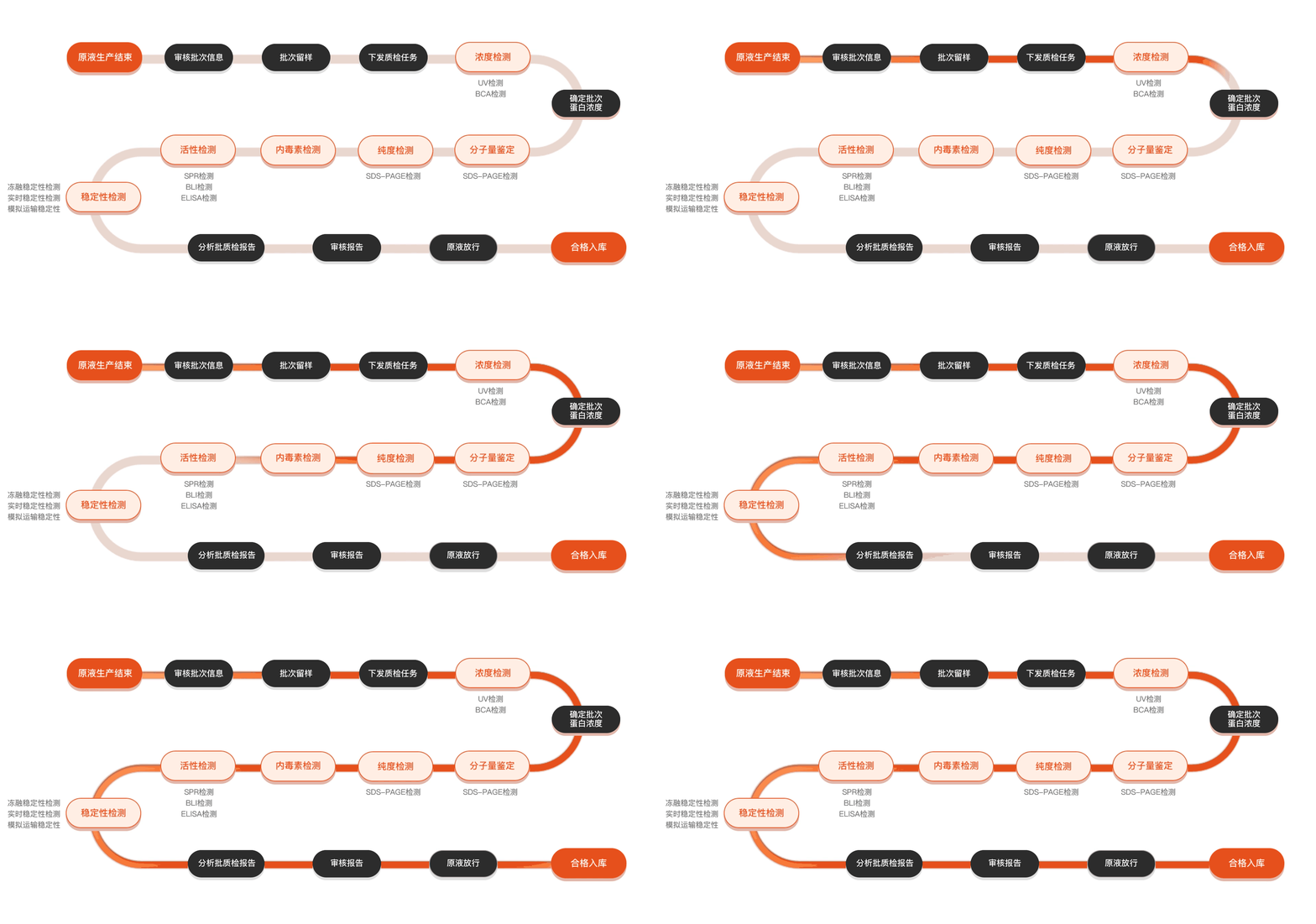
Quality inspection process
Related Products
Protein Description
PNMA6A (Paraneoplastic Ma Antigen 6A) is a potential oncoantigen associated with various malignancies, particularly in neuroblastoma and other tumors. Its significance has attracted attention due to its involvement in paraneoplastic neurological syndromes, where it may evoke immune responses in cancer patients. Research indicates that PNMA6A plays a role in neuronal development and survival, making it a focal point for understanding tumor immunology and potential therapeutic applications. The protein's expression is often correlated with tumor progression and patient prognosis, leading to investigations into its utility as a biomarker for cancer detection and treatment response. Moreover, the recombinant production of PNMA6A allows for detailed studies on its structure, function, and interactions with the immune system. This has potential implications for developing vaccine strategies or immunotherapies targeting PNMA6A-expressing tumors. As research continues, understanding the molecular mechanisms underlying PNMA6A's interactions with immune cells could pave the way for innovative approaches in cancer treatment, highlighting the importance of this protein in both clinical and laboratory settings.