Analytical Data
-
Gene name
F9
- Application
-
Alternative Names
F9;Coagulation factor IX
-
Species
Human
-
Source
E. coli
-
Tag
His tag N-Terminus
-
Purity
Greater than 90% as determined by SDS-PAGE.
-
Uniprot
P00740
-
Expression Region
1-461aa
-
AA Sequence
MQRVNMIMAESPGLITICLLGYLLSAECTVFLDHENANKILNRPKRYNSGKLEEFVQGNLERECMEEKCSFEEAREVFENTERTTEFWKQYVDGDQCESNPCLNGGSCKDDINSYECWCPFGFEGKNCELDVTCNIKNGRCEQFCKNSADNKVVCSCTEGYRLAENQKSCEPAVPFPCGRVSVSQTSKLTRAETVFPDVDYVNSTEAETILDNITQSTQSFNDFTRVVGGEDAKPGQFPWQVVLNGKVDAFCGGSIVNEKWIVTAAHCVETGVKITVVAGEHNIEETEHTEQKRNVIRIIPHHNYNAAINKYNHDIALLELDEPLVLNSYVTPICIADKEYTNIFLKFGSGYVSGWGRVFHKGRSALVLQYLRVPLVDRATCLRSTKFTIYNNMFCAGFHEGGRDSCQGDSGGPHVTEVEGTSFLTGIISWGEECAMKGKYGIYTKVSRYVNWIKEKTKLT
-
Endotoxin
< 1.0 EU per μg protein as determined by the LAL method.
-
Form
Freeze-dried powder
-
Buffer formulation
PBS, pH7.4, containing 0.01% SKL, 1mM DTT, 5% Trehalose and Proclin300.
-
Reconstitution
Reconstitute in ddH2O to a concentration of 0.1-0.5 mg/mL. Do not vortex.
- Customization
-
Stability Test
The thermal stability is described by the loss rate. The loss rate was determined by accelerated thermal degradation test, that is, incubate the protein at 37℃ for 48h, and no obvious degradation and precipitation were observed. The loss rate isless than 8% within the expiration date under appropriate storage condition.
-
Storage & Shelf Life
Samples are stable for up to twelve months from date of receipt at -20℃ to -80℃. Store it under sterile conditions at -20℃ to -80℃. It is recommended that the protein be aliquoted for optimal storage. Avoid repeated freeze-thaw cycles.
-
Shipping
In general, recombinant proteins are supplied as lyophilized powder and shipped at ambient temperature. For bulk packages, the proteins are provided as frozen liquid and shipped with blue ice, unless otherwise requested by the customer.
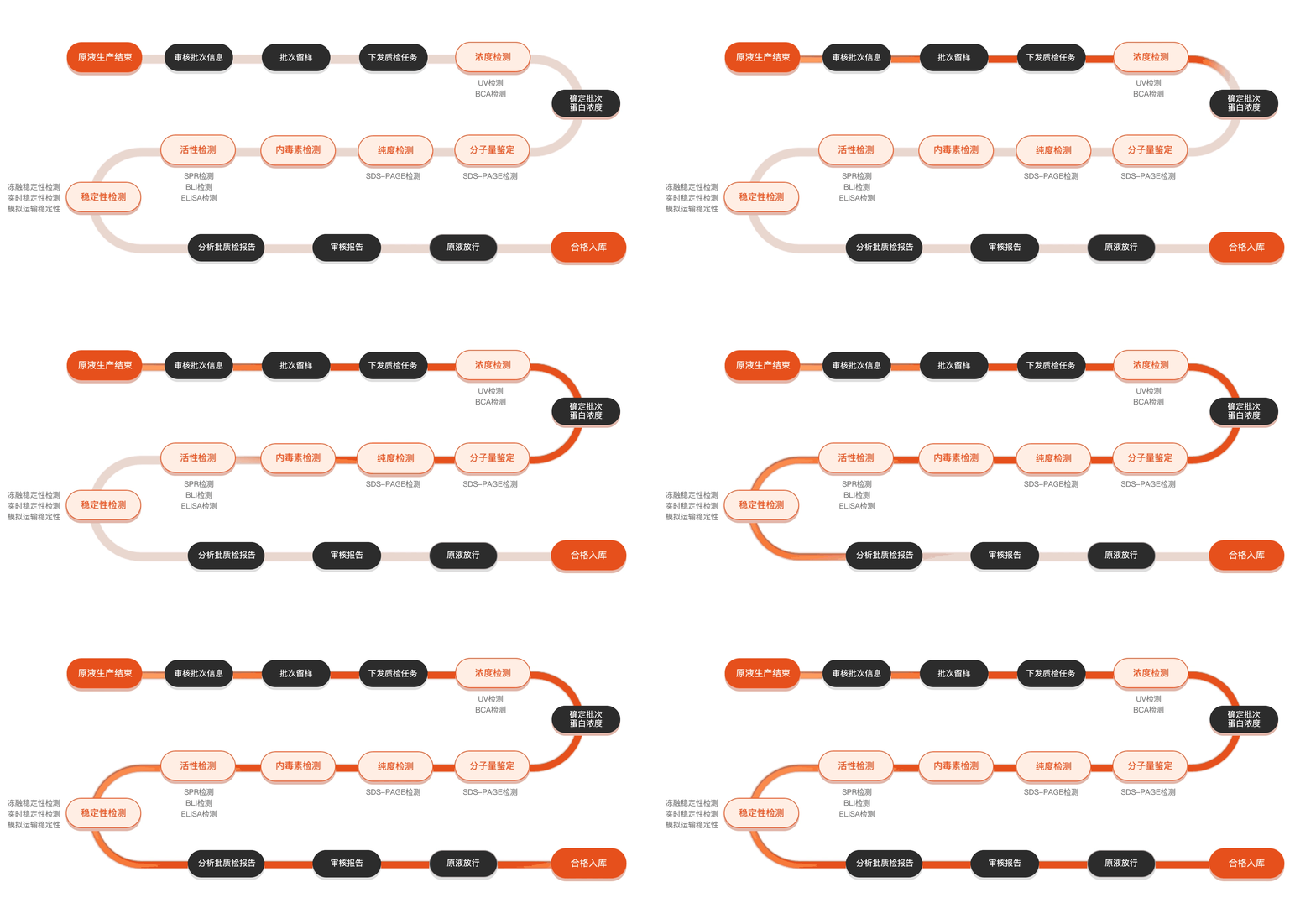
Quality inspection process
Related Products
Protein Description
F9, or coagulation factor IX, is a critical protein in the blood coagulation cascade, primarily responsible for preventing bleeding by facilitating the conversion of prothrombin to thrombin. Mutations in the F9 gene lead to hemophilia B, a genetic disorder characterized by a deficiency in factor IX, resulting in prolonged bleeding episodes. Current therapeutic strategies for hemophilia B include the infusion of plasma-derived or recombinant factor IX; however, challenges such as the development of inhibitory antibodies and limited therapeutic efficacy remain. Recent advancements in protein engineering and genetic therapy are paving the way for innovative approaches to enhance the stability, efficacy, and safety of F9-based therapies. Researchers are exploring strategies such as the design of modified F9 proteins with improved pharmacokinetic properties, as well as gene therapy techniques that aim to deliver a functional copy of the F9 gene to patients. Understanding the structure-function relationships of F9 and its interactions within the coagulation cascade is crucial for developing novel therapeutic agents that can effectively manage hemophilia B and enhance the quality of life for affected individuals. The ongoing research endeavors in the field of F9 recombinant protein studies are vital for optimizing treatments and potentially providing a cure for hemophilia, transforming patient care and outcomes.