Analytical Data
-
基因名
UPB1
- Application
-
别名
UPB1;BUP1;Beta-ureidopropionase
-
种属
Human
-
表达系统
E. coli
-
标签
His tag N-Terminus
-
纯度
Greater than 90% as determined by SDS-PAGE.
-
蛋白编号
Q9UBR1
-
表达区间
1-384aa
-
氨基酸序列
MAGAEWKSLE ECLEKHLPLP DLQEVKRVLY GKELRKLDLP REAFEAASRE DFELQGYAFE AAEEQLRRPR IVHVGLVQNR IPLPANAPVA EQVSALHRRI KAIVEVAAMC GVNIICFQEA WTMPFAFCTR EKLPWTEFAE SAEDGPTTRF CQKLAKNHDM VVVSPILERD SEHGDVLWNT AVVISNSGAV LGKTRKNHIP RVGDFNESTY YMEGNLGHPV FQTQFGRIAV NICYGRHHPL NWLMYSINGA EIIFNPSATI GALSESLWPI EARNAAIANH CFTCAINRVG TEHFPNEFTS GDGKKAHQDF GYFYGSSYVA APDSSRTPGL SRSRDGLLVA KLDLNLCQQV NDVWNFKMTG RYEMYARELA EAVKSNYSPT IVKE
-
内毒素
< 1.0 EU per μg protein as determined by the LAL method.
-
性状
Freeze-dried powder
-
缓冲液
PBS, pH7.4, containing 0.01% SKL, 1mM DTT, 5% Trehalose and Proclin300.
-
复溶方法
Reconstitute in ddH2O to a concentration of 0.1-0.5 mg/mL. Do not vortex.
- 个性化定制
-
稳定性测试
The thermal stability is described by the loss rate. The loss rate was determined by accelerated thermal degradation test, that is, incubate the protein at 37℃ for 48h, and no obvious degradation and precipitation were observed. The loss rate isless than 8% within the expiration date under appropriate storage condition.
-
保存条件 & 期限
Samples are stable for up to twelve months from date of receipt at -20℃ to -80℃. Store it under sterile conditions at -20℃ to -80℃. It is recommended that the protein be aliquoted for optimal storage. Avoid repeated freeze-thaw cycles.
-
运输条件
In general, recombinant proteins are supplied as lyophilized powder and shipped at ambient temperature. For bulk packages, the proteins are provided as frozen liquid and shipped with blue ice, unless otherwise requested by the customer.
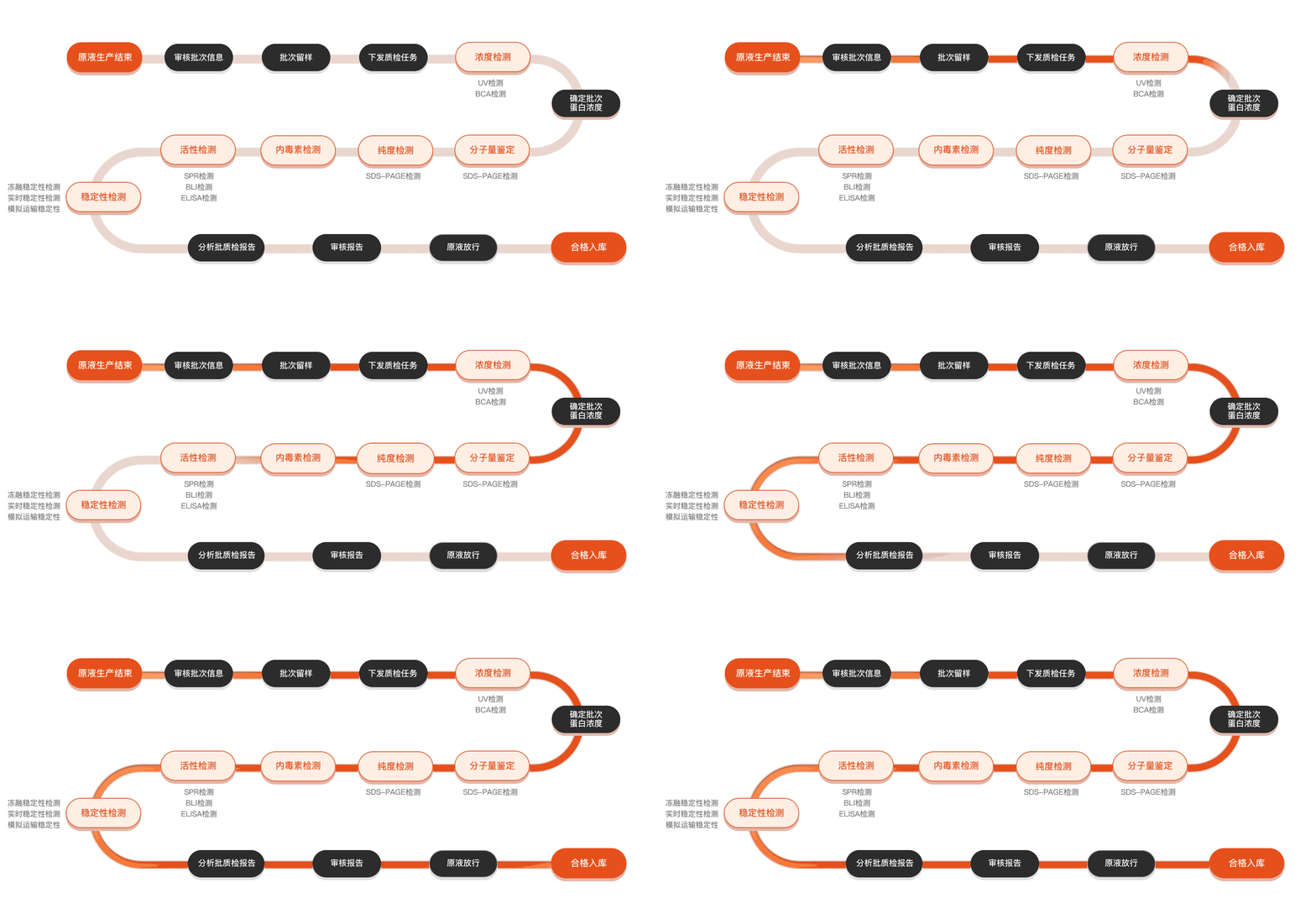
Quality inspection process
Related Products
Protein Description
UPB1, or Urokinase Plasminogen Activator Receptor (uPAR) Binding Protein 1, is a key player in various biological processes, particularly those related to cell adhesion, migration, and signaling. Its role in the uPA/uPAR system has drawn significant attention due to its involvement in cancer progression, tissue remodeling, and inflammatory responses. Research has shown that UPB1 can influence tumor microenvironments by modulating matrix degradation and facilitating the invasion of cancer cells. Furthermore, studies have indicated that UPB1 may serve as a potential biomarker for certain malignancies, offering insights into patient prognosis and therapeutic response. Given the complexities associated with its function and interactions, the recombinant expression of UPB1 in model systems allows for detailed characterization of its structural properties and biological roles. Investigating the recombinant protein can also pave the way for the development of targeted therapeutic interventions that could inhibit its pro-tumorigenic effects. Current advancements in biotechnology enable the production of UPB1 in soluble forms, enhancing its application in both basic and applied research. Consequently, studying UPB1 and its recombinant forms is crucial for unraveling the molecular mechanisms underpinning various pathophysiological conditions, making it an attractive candidate for developing novel cancer therapies and diagnostic tools.