Analytical Data
-
基因名
Calmegin
- Application
-
别名
Calmegin;Calmegin
-
种属
Human
-
表达系统
E. coli
-
标签
His tag N-Terminus
-
纯度
Greater than 90% as determined by SDS-PAGE.
-
蛋白编号
O14967
-
表达区间
20-610aa
-
氨基酸序列
EFMDDDVETEDFEENSEEIDVNESELSSEIKYKTPQPIGEVYFAETFDSGRLAGWVLSKAKKDDMDEEISIYDGRWEIEELKENQVPGDRGLVLKSRAKHHAISAVLAKPFIFADKPLIVQYEVNFQDGIDCGGAYIKLLADTDDLILENFYDKTSYIIMFGPDKCGEDYKLHFIFRHKHPKTGVFEEKHAKPPDVDLKKFFTDRKTHLYTLVMNPDDTFEVLVDQTVVNKGSLLEDVVPPIKPPKEIEDPNDKKPEEWDERAKIPDPSAVKPEDWDESEPAQIEDSSVVKPAGWLDDEPKFIPDPNAEKPDDWNEDTDGEWEAPQILNPACRIGCGEWKPPMIDNPKYKGVWRPPLVDNPNYQGIWSPRKIPNPDYFEDDHPFLLTSFSALGLELWSMTSDIYFDNFIICSEKEVADHWAADGWRWKIMIANANKPGVLKQLMAAAEGHPWLWLIYLVTAGVPIALITSFCWPRKVKKKHKDTEYKKTDICIPQTKGVLEQEEKEEKAALEKPMDLEEEKKQNDGEMLEKEEESEPEEKSEEEIEIIEGQEESNQSNKSGSEDEMKEADESTGSGDGPIKSVRKRRVRKD
-
内毒素
< 1.0 EU per μg protein as determined by the LAL method.
-
性状
Freeze-dried powder
-
缓冲液
PBS, pH7.4, containing 0.01% SKL, 1mM DTT, 5% Trehalose and Proclin300.
-
复溶方法
Reconstitute in ddH2O to a concentration of 0.1-0.5 mg/mL. Do not vortex.
- 个性化定制
-
稳定性测试
The thermal stability is described by the loss rate. The loss rate was determined by accelerated thermal degradation test, that is, incubate the protein at 37℃ for 48h, and no obvious degradation and precipitation were observed. The loss rate isless than 8% within the expiration date under appropriate storage condition.
-
保存条件 & 期限
Samples are stable for up to twelve months from date of receipt at -20℃ to -80℃. Store it under sterile conditions at -20℃ to -80℃. It is recommended that the protein be aliquoted for optimal storage. Avoid repeated freeze-thaw cycles.
-
运输条件
In general, recombinant proteins are supplied as lyophilized powder and shipped at ambient temperature. For bulk packages, the proteins are provided as frozen liquid and shipped with blue ice, unless otherwise requested by the customer.
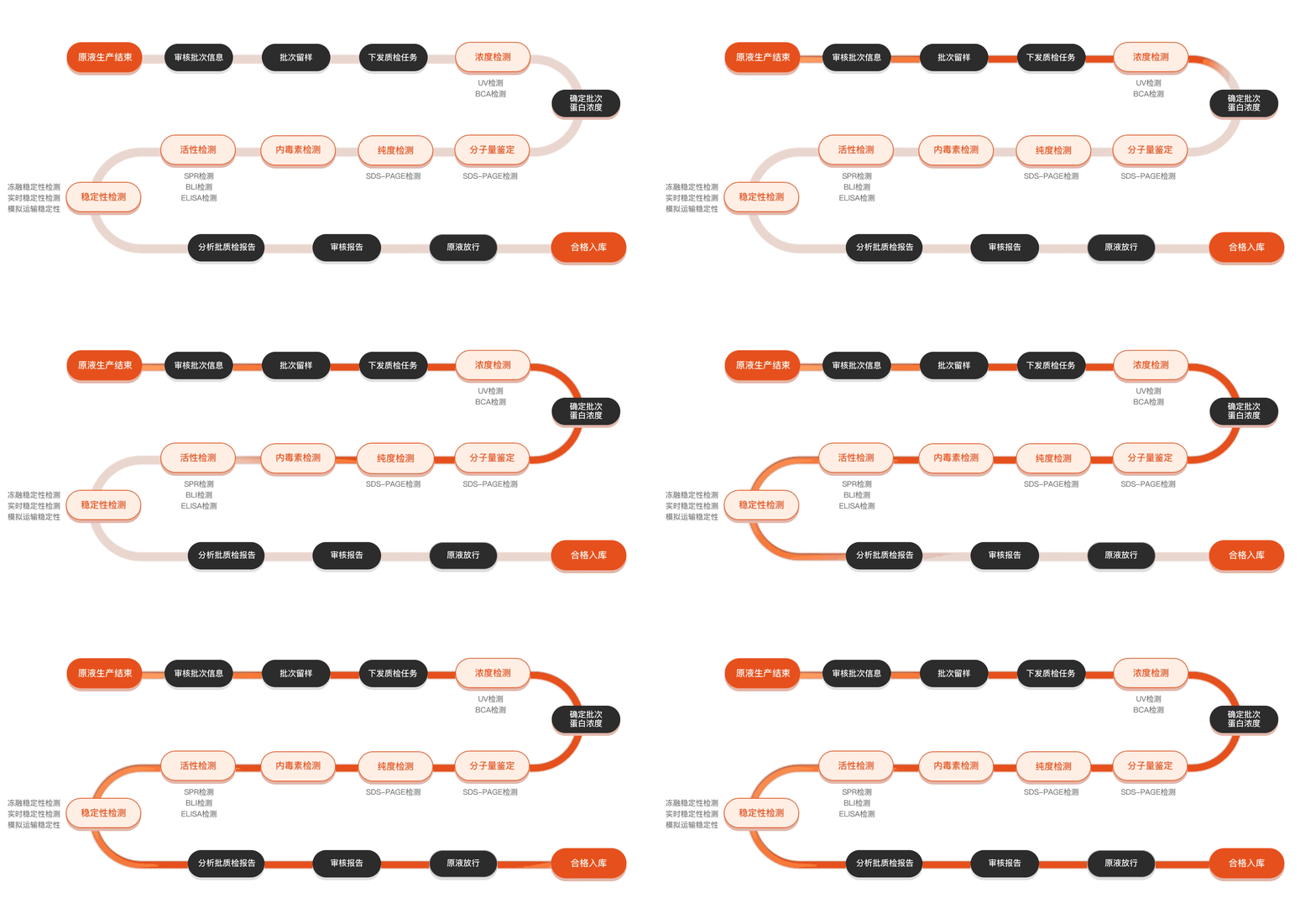
Quality inspection process
Related Products
Protein Description
Calmegin is a molecular chaperone belonging to the family of endoplasmic reticulum (ER) resident proteins, primarily involved in the proper folding and assembly of proteins within the ER. Its significance has gained attention due to its role in ensuring the quality control of newly synthesized glycoproteins, particularly in the context of diseases related to protein misfolding and aggregation, such as neurodegenerative disorders and certain genetic conditions. Research on Calmegin has revealed its dual function in assisting the folding processes and facilitating the transport of proteins to their respective destinations, thus playing a critical role in cellular homeostasis. The study of Calmegin recombinant proteins has become pivotal for understanding its structural biology and functional mechanisms, which can offer insights into therapeutic approaches for diseases linked to protein folding dysfunctions. Additionally, as a model system, recombinant Calmegin can be utilized to explore protein-protein interactions and the chaperone's influence on the stability of various substrates, extending its relevance beyond fundamental biology into biotechnology applications. In recent years, advances in recombinant DNA technology have enabled the production of high-yield Calmegin proteins, thus facilitating detailed biochemical and structural studies that shed light on its implications in health and disease. Overall, the ongoing exploration of Calmegin's role and mechanisms continues to enhance our understanding of cellular processes and provides a promising avenue for therapeutic innovation.