Analytical Data
-
Gene name
PRR3
- Application
-
Alternative Names
CAT56; MHC class I region proline-rich protein CAT56; Proline rich 3; Proline rich polypeptide 3; Proline-rich protein 3; Prr3; PRR3_HUMAN
-
Species
Human
-
Source
E. coli
-
Tag
His tag N-Terminus
-
Purity
Greater than 90% as determined by SDS-PAGE.
-
Uniprot
P79522
-
Expression Region
1-188 aa
-
AA Sequence
MPKRKKQNHH QPPTQQQPPL PEREETGDEE DGSPIGPPSL LGPPPMANGK PGDPKSALHR GPPGSRGPLI PPLLSLPPPP WGRGPIRRGL GPRSSPYGRG WWGVNAEPPF PGPGHGGPTR GSFHKEQRNP RRLKSWSLIK NTCPPKDDPQ VMEDKSDRPV CRHFAKKGHC RYEDLCAFYH PGVNGPPL
-
Molecular Weight
20.6 kDa
-
Endotoxin
< 1.0 EU per μg protein as determined by the LAL method.
-
Form
Freeze-dried powder
-
Buffer formulation
PBS, pH7.4, containing 0.01% SKL, 1mM DTT, 5% Trehalose and Proclin300.
-
Reconstitution
Reconstitute in ddH2O to a concentration of 0.1-0.5 mg/mL. Do not vortex.
- Customization
-
Stability Test
The thermal stability is described by the loss rate. The loss rate was determined by accelerated thermal degradation test, that is, incubate the protein at 37℃ for 48h, and no obvious degradation and precipitation were observed. The loss rate isless than 8% within the expiration date under appropriate storage condition.
-
Storage & Shelf Life
Samples are stable for up to twelve months from date of receipt at -20℃ to -80℃. Store it under sterile conditions at -20℃ to -80℃. It is recommended that the protein be aliquoted for optimal storage. Avoid repeated freeze-thaw cycles.
-
Shipping
In general, recombinant proteins are supplied as lyophilized powder and shipped at ambient temperature. For bulk packages, the proteins are provided as frozen liquid and shipped with blue ice, unless otherwise requested by the customer.
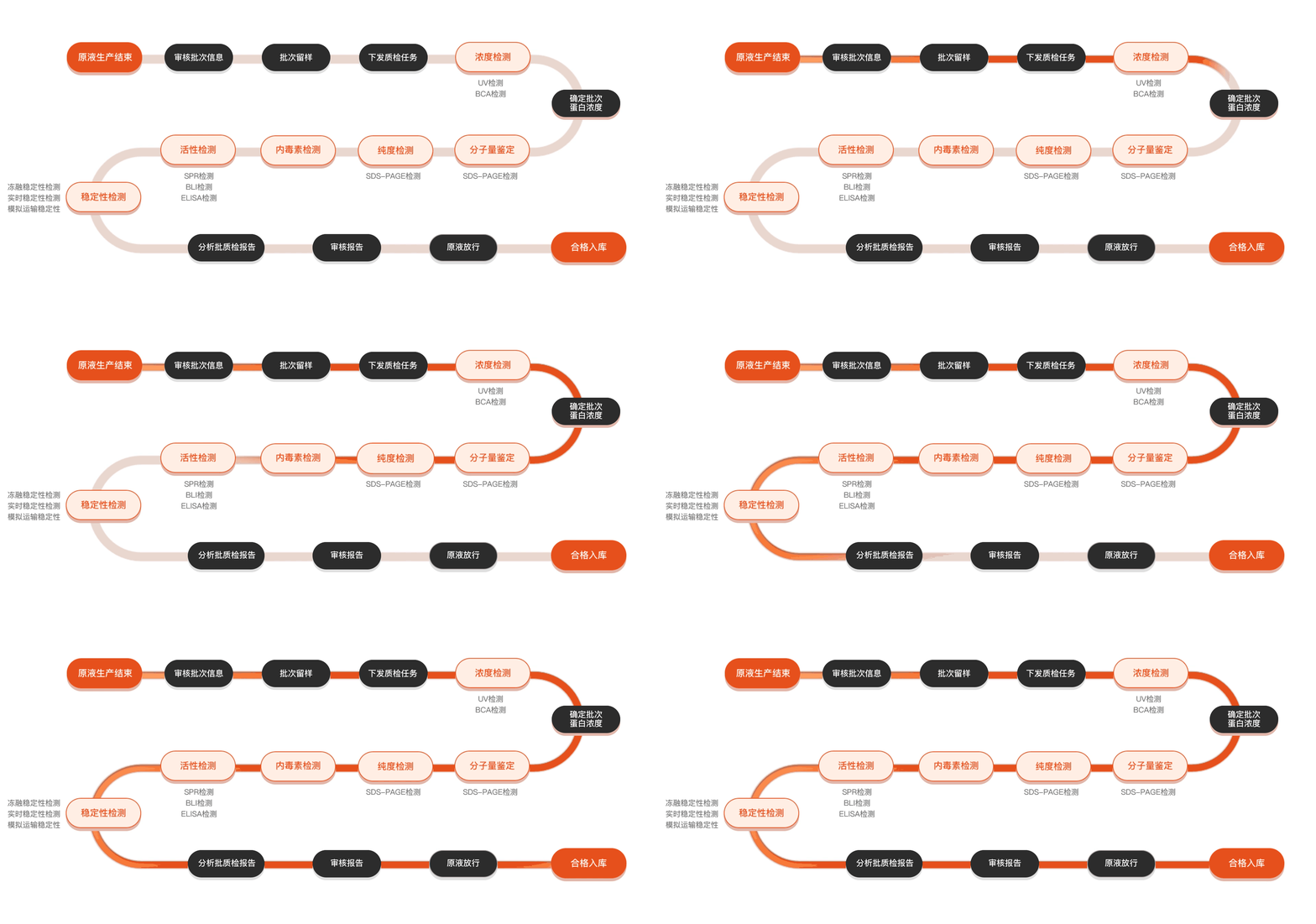
Quality inspection process
Related Products
Protein Description
PRR3, or Pathogen-Related Resistance protein 3, is a member of the plant resistance (R) protein family, which plays a crucial role in the immune response of plants against pathogens, particularly bacteria and fungi. The study of PRR3 emerged in the context of increasing global challenges in agriculture, such as crop diseases that severely impact food security and sustainable farming practices. Previous research has highlighted that R proteins, including PRR3, are involved in recognizing pathogen-associated molecular patterns (PAMPs) and initiating defense mechanisms in plants. Understanding the mechanisms and functionality of PRR3 is essential for bioengineering crops with enhanced resistance traits. Recent advances in molecular biology techniques, such as CRISPR/Cas9 and transcriptomic analyses, have paved the way for a deeper understanding of its structural characteristics, signaling pathways, and interactions with other proteins. Investigations into PRR3 also focus on its role in mediating cross-talk between various signaling pathways, providing insights into the complex network of plant immune responses. By elucidating the functions and regulatory mechanisms of PRR3, researchers aim to develop resilient crop varieties capable of thriving in the face of biotic stressors, thereby contributing to global efforts in sustainable agriculture and food security.