Analytical Data
-
基因名
PFK2
- Application
-
别名
PFK2;6-phosphofructo-2-kinase/fructose-2.6-bisphosphatase 2
-
种属
Human
-
表达系统
E. coli
-
标签
His tag N-Terminus
-
纯度
Greater than 90% as determined by SDS-PAGE.
-
蛋白编号
PFKFB3
-
表达区间
1-520aa
-
氨基酸序列
MPLELTQSRV QKIWVPVDHR PSLPRSCGPK LTNSPTVIVM VGLPARGKTY ISKKLTRYLN WIGVPTKVFN VGEYRREAVK QYSSYNFFRP DNEEAMKVRK QCALAALRDV KSYLAKEGGQ IAVFDATNTT RERRHMILHF AKENDFKAFF IESVCDDPTV VASNIMEVKI SSPDYKDCNS AEAMDDFMKR ISCYEASYQP LDPDKCDRDL SLIKVIDVGR RFLVNRVQDH IQSRIVYYLM NIHVQPRTIY LCRHGENEHN LQGRIGGDSG LSSRGKKFAS ALSKFVEEQN LKDLRVWTSQ LKSTIQTAEA LRLPYEQWKA LNEIDAGVCE ELTYEEIRDT YPEEYALREQ DKYYYRYPTG ESYQDLVQRL EPVIMELERQ ENVLVICHQA VLRCLLAYFL DKSAEEMPYL KCPLHTVLKL TPVAYGCRVE SIYLNVESVC THRERSEDAK KGPNPLMRRN SVTPLASPEP TKKPRINSFE EHVASTSAAL PSCLPPEVPT QLPGQNMKGS RSSADSSRKH
-
内毒素
< 1.0 EU per μg protein as determined by the LAL method.
-
性状
Freeze-dried powder
-
缓冲液
PBS, pH7.4, containing 0.01% SKL, 1mM DTT, 5% Trehalose and Proclin300.
-
复溶方法
Reconstitute in ddH2O to a concentration of 0.1-0.5 mg/mL. Do not vortex.
- 个性化定制
-
稳定性测试
The thermal stability is described by the loss rate. The loss rate was determined by accelerated thermal degradation test, that is, incubate the protein at 37℃ for 48h, and no obvious degradation and precipitation were observed. The loss rate isless than 8% within the expiration date under appropriate storage condition.
-
保存条件 & 期限
Samples are stable for up to twelve months from date of receipt at -20℃ to -80℃. Store it under sterile conditions at -20℃ to -80℃. It is recommended that the protein be aliquoted for optimal storage. Avoid repeated freeze-thaw cycles.
-
运输条件
In general, recombinant proteins are supplied as lyophilized powder and shipped at ambient temperature. For bulk packages, the proteins are provided as frozen liquid and shipped with blue ice, unless otherwise requested by the customer.
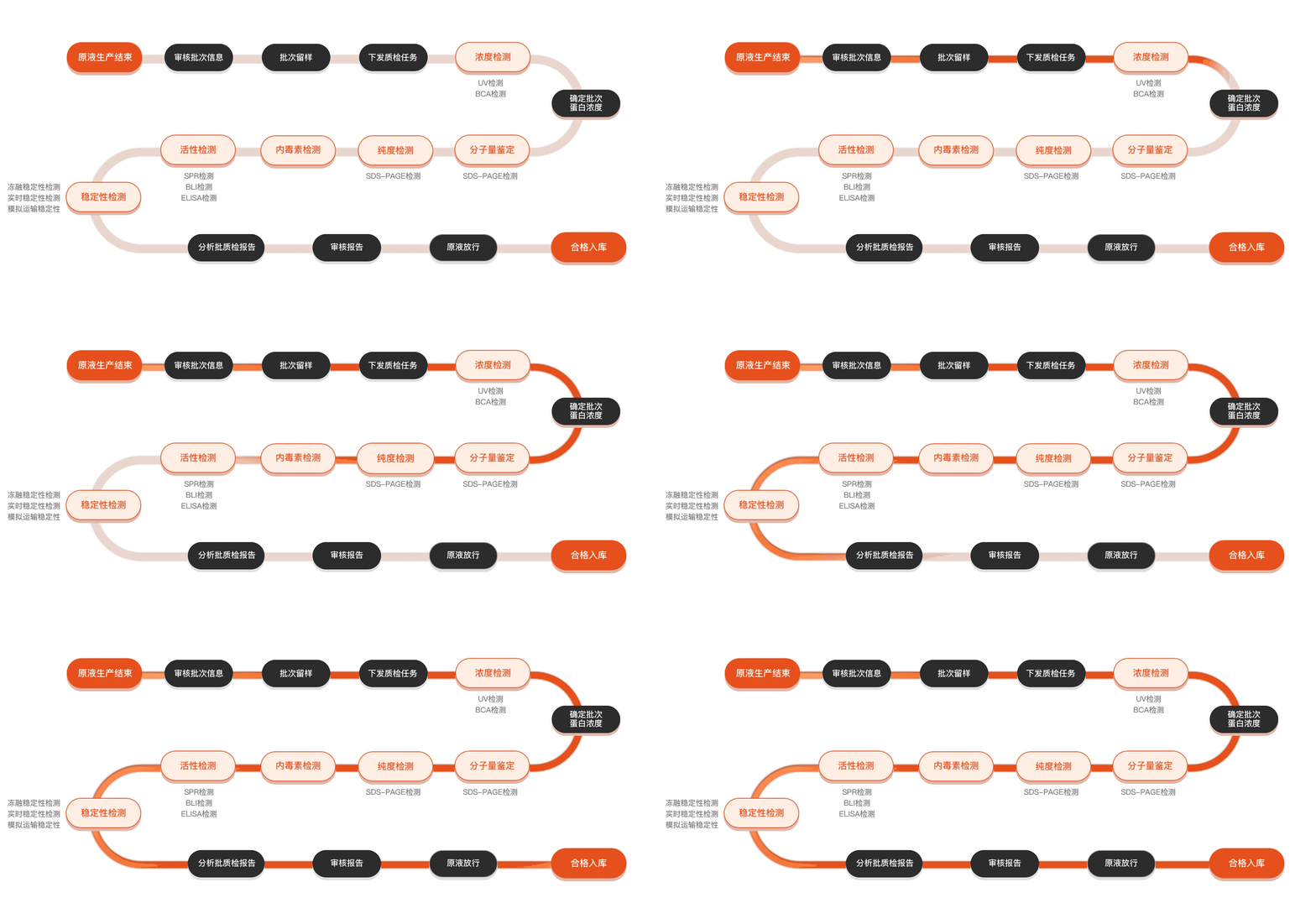
Quality inspection process
Related Products






Protein Description
Phosphofructokinase-2 (PFK2) is a critical enzyme involved in the regulation of glycolysis and gluconeogenesis, as it plays a pivotal role in controlling the levels of fructose-2,6-bisphosphate, a potent allosteric activator of phosphofructokinase-1 (PFK1). The regulation of PFK2 is essential for maintaining cellular energy homeostasis and responding to metabolic demands. Dysregulation of PFK2 has been implicated in various metabolic disorders, including obesity, diabetes, and cancer. Research into the recombinant expression of PFK2 has gained attention due to its potential application in understanding metabolic pathways and developing therapeutic interventions. Recombinant PFK2 allows for detailed studies of enzyme kinetics, regulation, and substrate specificity in controlled laboratory conditions, enabling researchers to dissect the molecular mechanisms underlying its function. Additionally, the investigation of PFK2's structural properties through techniques such as X-ray crystallography or NMR spectroscopy can provide insights into its regulatory mechanisms and interactions with other metabolic enzymes. Understanding these aspects of PFK2 can aid in identifying novel targets for drug development, particularly in diseases characterized by altered glucose metabolism. The generation of recombinant PFK2 also opens avenues for engineering variants with altered properties that could be used in metabolic engineering applications, potentially leading to advancements in biotechnological fields. Thus, the study of recombinant PFK2 not only enhances our basic understanding of metabolic regulation but also holds promise for practical applications in medicine and biotechnology.