Analytical Data
-
基因名
GNb2
- Application
-
别名
GNb2;Guanine nucleotide-binding Protein G(I)/G(S)/G(T) subunit beta-2
-
种属
Human
-
表达系统
E. coli
-
标签
His tag N-Terminus
-
纯度
Greater than 90% as determined by SDS-PAGE.
-
蛋白编号
P62879
-
表达区间
21-327aa
-
氨基酸序列
ARKACGDSTLTQITAGLDPVGRIQMRTRRTLRGHLAKIYAMHWGTDSRLLVSASQDGKLIIWDSYTTNKVHAIPLRSSWVMTCAYAPSGNFVACGGLDNICSIYSLKTREGNVRVSRELPGHTGYLSCCRFLDDNQIITSSGDTTCALWDIETGQQTVGFAGHSGDVMSLSLAPDGRTFVSGACDASIKLWDVRDSMCRQTFIGHESDINAVAFFPNGYAFTTGSDDATCRLFDLRADQELLMYSHDNIICGITSVAFSRSGRLLLAGYDDFNCNIWDAMKGDRAGVLAGHDNRVSCLGVTDDGMAV
-
分子量
60.4kDa
-
内毒素
< 1.0 EU per μg protein as determined by the LAL method.
-
性状
Freeze-dried powder
-
缓冲液
PBS, pH7.4, containing 0.01% SKL, 1mM DTT, 5% Trehalose and Proclin300.
-
复溶方法
Reconstitute in ddH2O to a concentration of 0.1-0.5 mg/mL. Do not vortex.
- 个性化定制
-
稳定性测试
The thermal stability is described by the loss rate. The loss rate was determined by accelerated thermal degradation test, that is, incubate the protein at 37℃ for 48h, and no obvious degradation and precipitation were observed. The loss rate isless than 8% within the expiration date under appropriate storage condition.
-
保存条件 & 期限
Samples are stable for up to twelve months from date of receipt at -20℃ to -80℃. Store it under sterile conditions at -20℃ to -80℃. It is recommended that the protein be aliquoted for optimal storage. Avoid repeated freeze-thaw cycles.
-
运输条件
In general, recombinant proteins are supplied as lyophilized powder and shipped at ambient temperature. For bulk packages, the proteins are provided as frozen liquid and shipped with blue ice, unless otherwise requested by the customer.
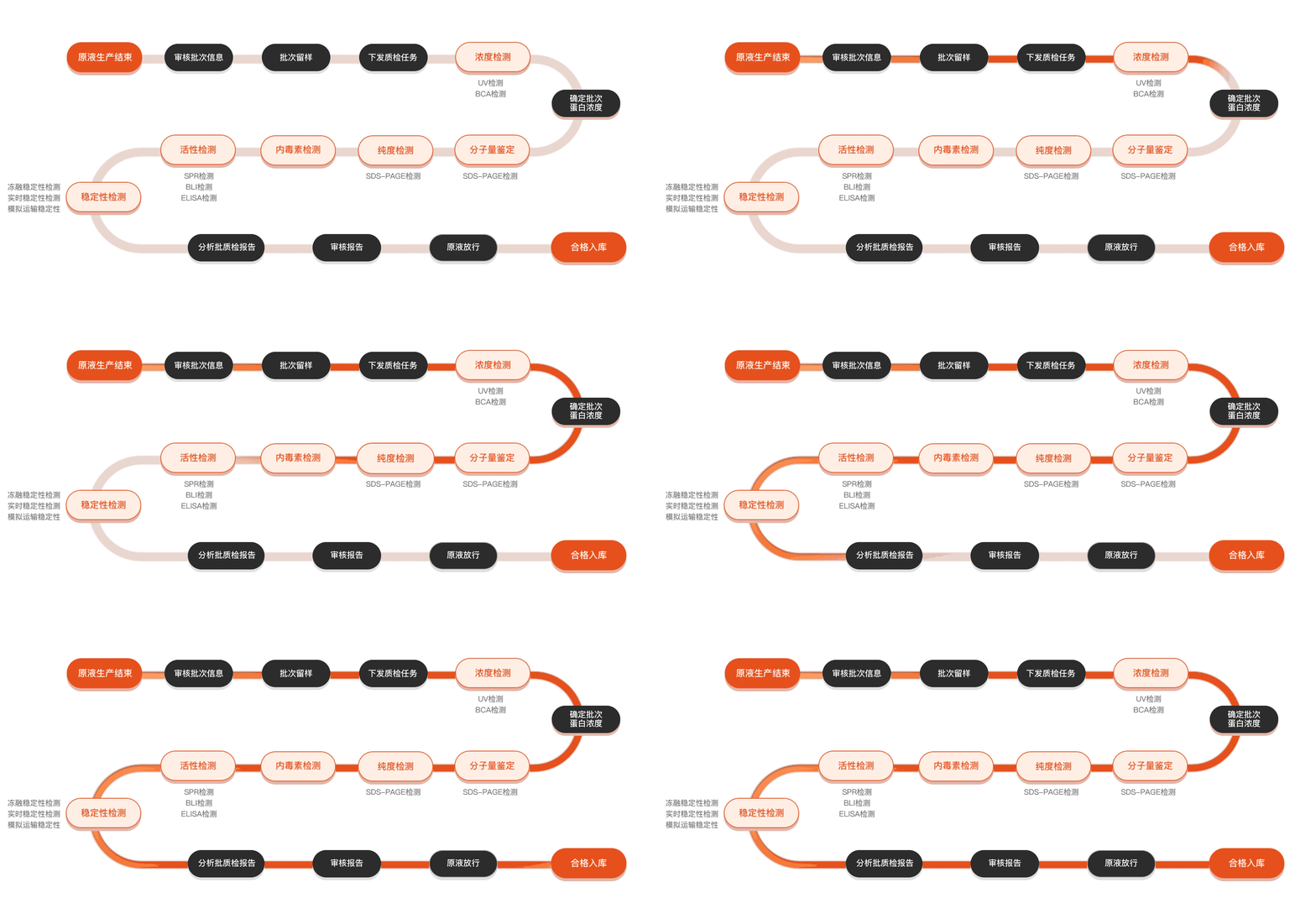
Quality inspection process
Related Products
Protein Description
The GNb2 recombinant protein has gained attention in the field of biomedical research due to its potential therapeutic applications, particularly in the context of autoimmune diseases and cancer immunotherapy. GNb2, a fully human monoclonal antibody, targets the CD4 receptor, which plays a crucial role in T-cell activation and immune response modulation. Research has demonstrated that GNb2 can selectively inhibit T-helper cell activation, thereby reducing inflammation and autoimmunity. This makes it a promising candidate for treating conditions such as multiple sclerosis (MS) and other inflammatory diseases. Additionally, studies have indicated that GNb2 may enhance anti-tumor immunity by modulating the tumor microenvironment. The unique mechanism of action of GNb2, combined with its specificity and reduced immunogenicity, positions it as a novel therapeutic agent that could offer alternatives to existing treatments with fewer side effects. As ongoing clinical trials and preclinical studies explore its efficacy and safety, GNb2 represents a significant advancement in the development of targeted therapies that harness the immune system's capabilities while minimizing collateral damage to healthy tissues. This research underscores the importance of personalized medicine and the need for innovative approaches to tackle complex immune-related disorders.