Analytical Data
-
基因名
PHF8
- Application
-
别名
PHF8;KIAA1111;ZNF422;Histone lysine demethylase PHF8
-
种属
Human
-
表达系统
E. coli
-
标签
His tag N-Terminus
-
纯度
Greater than 90% as determined by SDS-PAGE.
-
蛋白编号
Q9UPP1
-
表达区间
2-525aa
-
氨基酸序列
NRSRAIVQR GRVLPPPAPL DTTNLAGRRT LQGRAKMASV PVYCLCRLPY DVTRFMIECD MCQDWFHGSC VGVEEEKAAD IDLYHCPNCE VLHGPSIMKK RRGSSKGHDT HKGKPVKTGS PTFVRELRSR TFDSSDEVIL KPTGNQLTVE FLEENSFSVP ILVLKKDGLG MTLPSPSFTV RDVEHYVGSD KEIDVIDVTR QADCKMKLGD FVKYYYSGKR EKVLNVISLE FSDTRLSNLV ETPKIVRKLS WVENLWPEEC VFERPNVQKY CLMSVRDSYT DFHIDFGGTS VWYHVLKGEK IFYLIRPTNA NLTLFECWSS SSNQNEMFFG DQVDKCYKCS VKQGQTLFIP TGWIHAVLTP VDCLAFGGNF LHSLNIEMQL KAYEIEKRLS TADLFRFPNF ETICWYVGKH ILDIFRGLRE NRRHPASYLV HGGKALNLAF RAWTRKEALP DHEDEIPETV RTVQLIKDLA REIRLVEDIF QQNVGKTSNI FGLQRIFPAG SIPLTRPAHS TSVSMSRLSL PSKNG
-
分子量
62 kDa
-
内毒素
< 1.0 EU per μg protein as determined by the LAL method.
-
性状
Freeze-dried powder
-
缓冲液
PBS, pH7.4, containing 0.01% SKL, 1mM DTT, 5% Trehalose and Proclin300.
-
复溶方法
Reconstitute in ddH2O to a concentration of 0.1-0.5 mg/mL. Do not vortex.
- 个性化定制
-
稳定性测试
The thermal stability is described by the loss rate. The loss rate was determined by accelerated thermal degradation test, that is, incubate the protein at 37℃ for 48h, and no obvious degradation and precipitation were observed. The loss rate isless than 8% within the expiration date under appropriate storage condition.
-
保存条件 & 期限
Samples are stable for up to twelve months from date of receipt at -20℃ to -80℃. Store it under sterile conditions at -20℃ to -80℃. It is recommended that the protein be aliquoted for optimal storage. Avoid repeated freeze-thaw cycles.
-
运输条件
In general, recombinant proteins are supplied as lyophilized powder and shipped at ambient temperature. For bulk packages, the proteins are provided as frozen liquid and shipped with blue ice, unless otherwise requested by the customer.
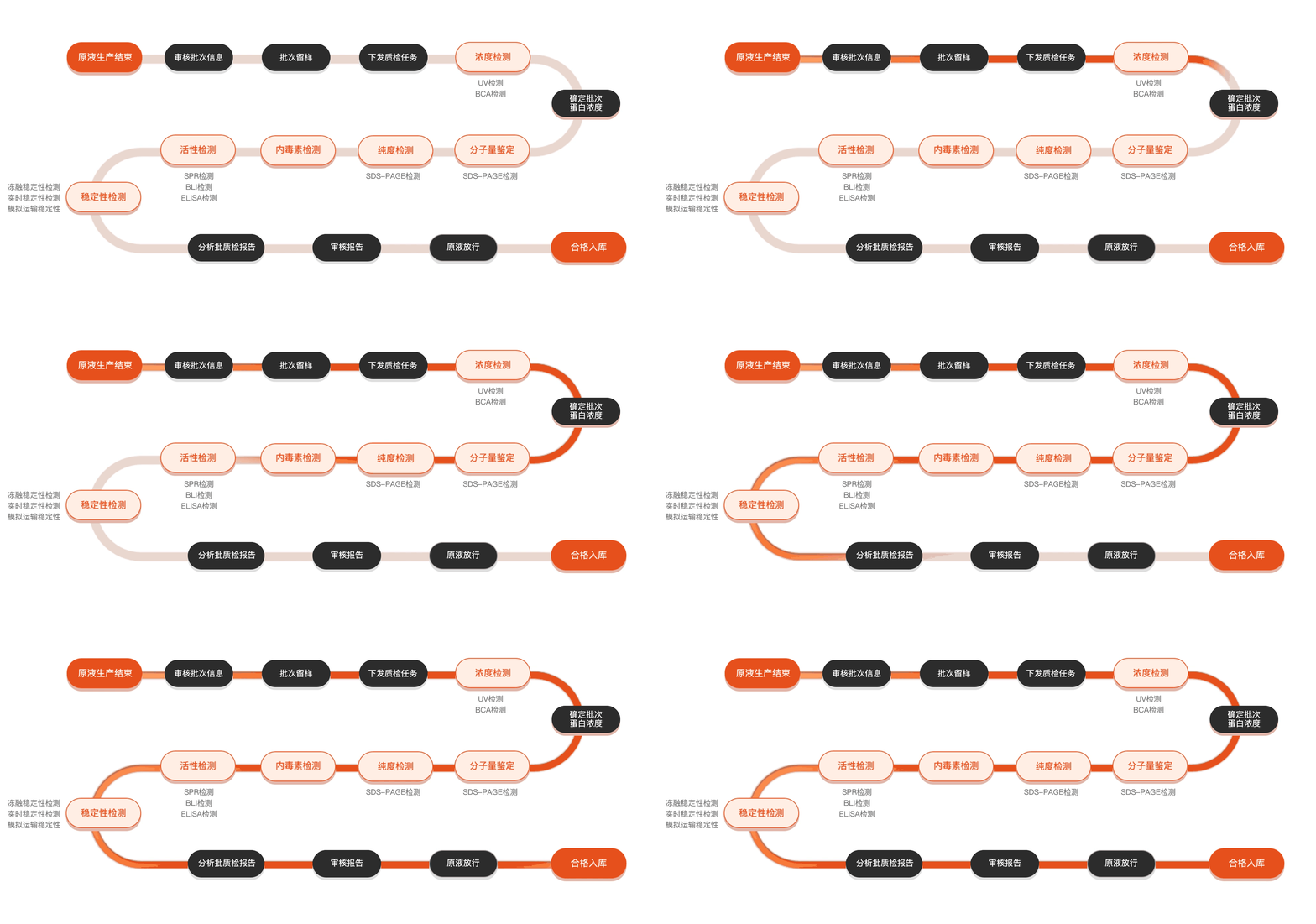
Quality inspection process
Related Products
Protein Description
PHF8 (PHD-finger protein 8) is a member of the PHD-finger family of proteins and plays a significant role in regulating gene expression through epigenetic mechanisms. It functions as a histone demethylase, specifically targeting dimethylated lysine 9 on histone H3, which is crucial for transcriptional activation. Its dysregulation has been associated with various diseases, including certain cancers and intellectual disabilities. Research on PHF8 has gained momentum owing to its essential functions in development and cellular differentiation, as well as its involvement in the maintenance of stem cell pluripotency. Understanding the structural and functional properties of recombinant PHF8 protein is vital for elucidating its biological roles and interactions. Recombinant techniques allow for the production of PHF8 in a controlled environment, enabling detailed studies on its enzymatic activity, substrate specificity, and molecular interactions. Insights gained from these studies contribute to our understanding of epigenetic regulation mechanisms and may lead to the development of therapeutic strategies targeting PHF8-related pathologies. Given the growing interest in epigenetic factors in health and disease, PHF8 stands out as a promising candidate for further investigation, with the potential to uncover novel insights into gene regulation and its implications in various biological processes.