Analytical Data
-
Gene name
SSBP2
- Application
-
Alternative Names
HSPC116; Sequence specific single stranded DNA binding protein 2; Sequence-specific single-stranded-DNA-binding protein 2; Single stranded DNA binding protein 2; Single-stranded DNA-binding protein 2; SOSS B2; Ssbp2; SSBP2_HUMAN; SSDP2
-
Species
Human
-
Source
E. coli
-
Tag
His tag N-Terminus
-
Purity
Greater than 90% as determined by SDS-PAGE.
-
Uniprot
P81877
-
Expression Region
1-361 aa
-
AA Sequence
MYGKGKSNSS AVPSDSQARE KLALYVYEYL LHVGAQKSAQ TFLSEIRWEK NITLGEPPGF LHSWWCVFWD LYCAAPERRE TCEHSSEAKA FHDYS aaP SPVLGNIPPG DGMPVGPVPP GFFQPFMSPR YPGGPRPPLR IPNQALGGVP GSQPLLPSGM DPTRQQGHPN MGGPMQRMTP PRGMVPLGPQ NYGGAMRPPL NALGGPGMPG MNMGPGGGRP WPNPTNANSI PYSSASPGNY VGPPGGGGPP GTPIMPSPAD STNSGDNMYT LMNAVPPGPN RPNFPMGPGS DGPMGGLGGM ESHHMNGSLG SGDMDSISKN SPNNMSLSNQ PGTPRDDGEM GGNFLNPFQS ESYSPSMTMS V
-
Molecular Weight
37.8 kDa
-
Endotoxin
< 1.0 EU per μg protein as determined by the LAL method.
-
Form
Freeze-dried powder
-
Buffer formulation
PBS, pH7.4, containing 0.01% SKL, 1mM DTT, 5% Trehalose and Proclin300.
-
Reconstitution
Reconstitute in ddH2O to a concentration of 0.1-0.5 mg/mL. Do not vortex.
- Customization
-
Stability Test
The thermal stability is described by the loss rate. The loss rate was determined by accelerated thermal degradation test, that is, incubate the protein at 37℃ for 48h, and no obvious degradation and precipitation were observed. The loss rate isless than 8% within the expiration date under appropriate storage condition.
-
Storage & Shelf Life
Samples are stable for up to twelve months from date of receipt at -20℃ to -80℃. Store it under sterile conditions at -20℃ to -80℃. It is recommended that the protein be aliquoted for optimal storage. Avoid repeated freeze-thaw cycles.
-
Shipping
In general, recombinant proteins are supplied as lyophilized powder and shipped at ambient temperature. For bulk packages, the proteins are provided as frozen liquid and shipped with blue ice, unless otherwise requested by the customer.
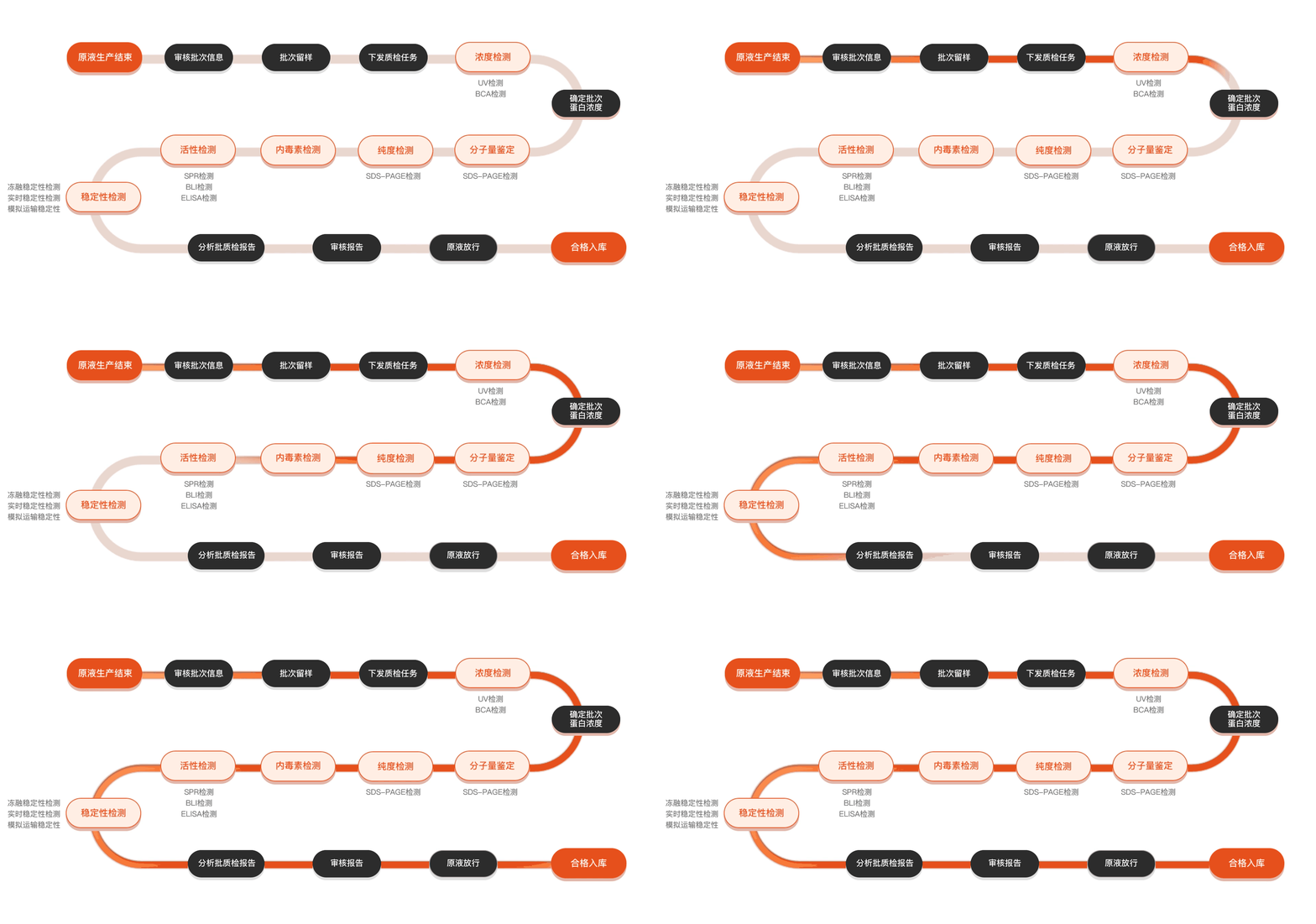
Quality inspection process
Related Products
Protein Description
SSBP2 (Single-Stranded DNA Binding Protein 2) is an essential nuclear protein that plays a crucial role in DNA metabolism, particularly during replication and repair processes. It is implicated in the stabilization of single-stranded DNA, protecting it from degradation and aiding in the recruitment of various factors necessary for efficient DNA replication and repair. Recent studies have identified SSBP2 as a key player in maintaining genomic stability, suggesting its involvement in tumor suppression and the cellular response to DNA damage. Dysregulation of SSBP2 expression has been associated with several cancers, making it a potential biomarker and therapeutic target. The development and study of SSBP2 recombinant protein have gained traction in the scientific community, with a focus on understanding its structure, function, and interactions with other DNA-binding proteins. By leveraging recombinant DNA technology, researchers aim to produce high-quality SSBP2 protein for in vitro assays, which will facilitate the investigation of its biological roles and mechanisms of action. The elucidation of SSBP2’s functional properties may not only deepen our understanding of DNA metabolism but also pave the way for novel cancer therapies targeting its pathways. Overall, the study of SSBP2 serves as a significant intersection of molecular biology and cancer research, reflecting the importance of single-stranded DNA binding proteins in cellular homeostasis and the potential implications for human health.