Analytical Data
-
Gene name
APPBP2
- Application
-
Alternative Names
APPBP2;KIAA0228;PAT1;Amyloid Protein-binding Protein 2
-
Species
Human
-
Source
E. coli
-
Tag
His tag N-Terminus
-
Purity
Greater than 90% as determined by SDS-PAGE.
-
Uniprot
Q92624
-
Expression Region
1-585aa
-
AA Sequence
MAAVELEWIP ETLYNTAISA VVDNYIRSRR DIRSLPENIQ FDVYYKLYQQ GRLCQLGSEF CELEVFAKVL RALDKRHLLH HCFQALMDHG VKVASVLAYS FSRRCSYIAE SDAAVKEKAI QVGFVLGGFL SDAGWYSDAE KVFLSCLQLC TLHDEMLHWF RAVECCVRLL HVRNGNCKYH LGEETFKLAQ TYMDKLSKHG QQANKAALYG ELCALLFAKS HYDEAYKWCI EAMKEITAGL PVKVVVDVLR QASKACVVKR EFKKAEQLIK HAVYLARDHF GSKHPKYSDT LLDYGFYLLN VDNICQSVAI YQAALDIRQS VFGGKNIHVA TAHEDLAYSS YVHQYSSGKF DNALFHAERA IGIITHILPE DHLLLASSKR VKALILEEIA IDCHNKETEQ RLLQEAHDLH LSSLQLAKKA FGEFNVQTAK HYGNLGRLYQ SMRKFKEAEE MHIKAIQIKE QLLGQEDYEV ALSVGHLASL YNYDMNQYEN AEKLYLRSIA IGKKLFGEGY SGLEYDYRGL IKLYNSIGNY EKVFEYHNVL SNWNRLRDRQ YSVTDALEDV STSPQSTEEV VQSFLISQNV EGPSC
-
Endotoxin
< 1.0 EU per μg protein as determined by the LAL method.
-
Form
Freeze-dried powder
-
Buffer formulation
PBS, pH7.4, containing 0.01% SKL, 1mM DTT, 5% Trehalose and Proclin300.
-
Reconstitution
Reconstitute in ddH2O to a concentration of 0.1-0.5 mg/mL. Do not vortex.
- Customization
-
Stability Test
The thermal stability is described by the loss rate. The loss rate was determined by accelerated thermal degradation test, that is, incubate the protein at 37℃ for 48h, and no obvious degradation and precipitation were observed. The loss rate isless than 8% within the expiration date under appropriate storage condition.
-
Storage & Shelf Life
Samples are stable for up to twelve months from date of receipt at -20℃ to -80℃. Store it under sterile conditions at -20℃ to -80℃. It is recommended that the protein be aliquoted for optimal storage. Avoid repeated freeze-thaw cycles.
-
Shipping
In general, recombinant proteins are supplied as lyophilized powder and shipped at ambient temperature. For bulk packages, the proteins are provided as frozen liquid and shipped with blue ice, unless otherwise requested by the customer.
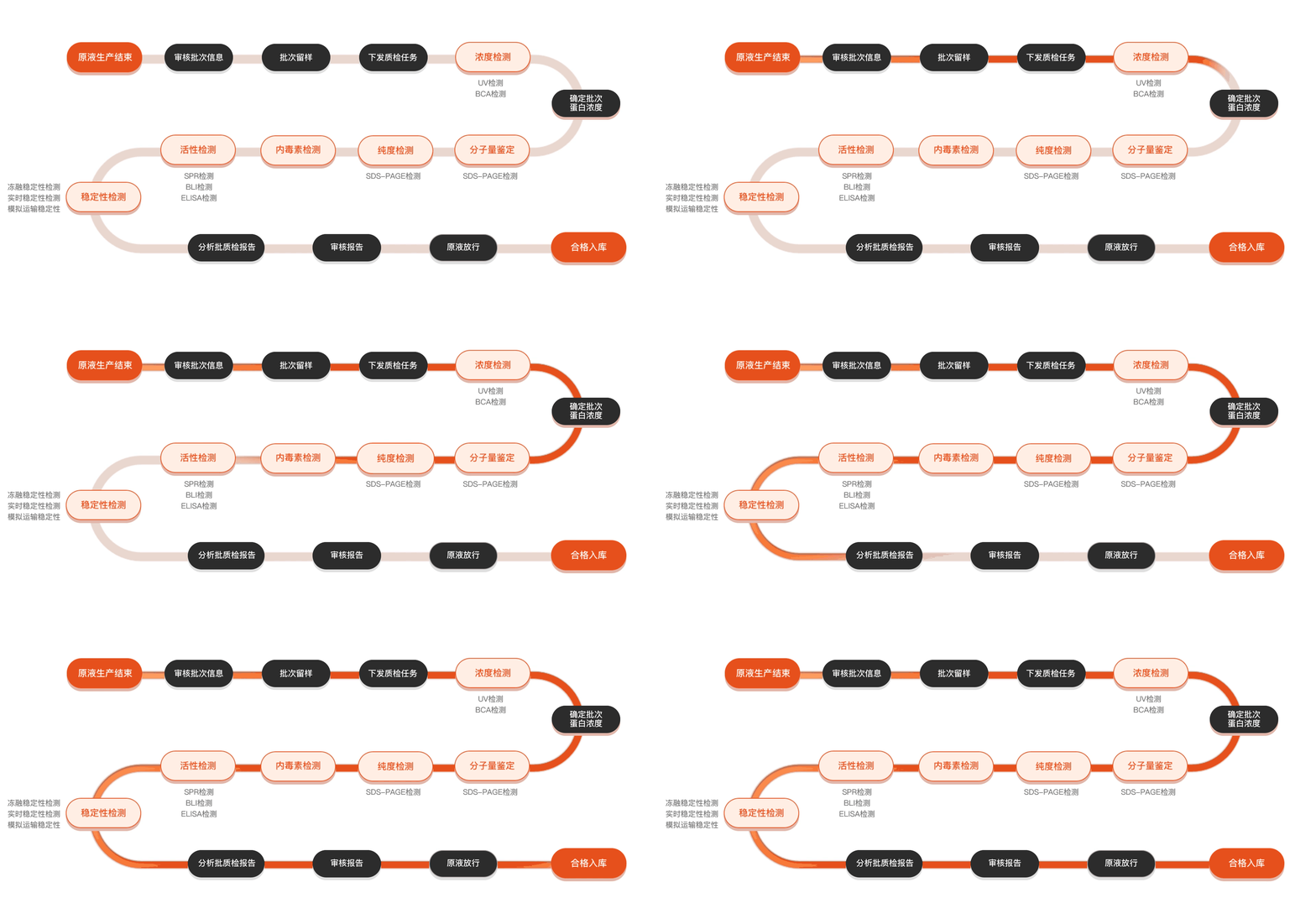
Quality inspection process
Related Products
Protein Description
APPBP2 (APP Biogenesis and Processing) is a key protein implicated in the regulation of amyloid precursor protein (APP) processing and is linked to neurodegenerative diseases such as Alzheimer's. Research on APPBP2 has garnered considerable interest due to its role in the modulation of APP metabolism, influencing the production of amyloid-beta peptides, which are central to the pathogenesis of Alzheimer's disease. The protein is known to facilitate the trafficking and stability of APP, thereby impacting the processing pathways that lead to either the production of neuroprotective fragments or neurotoxic amyloid-beta aggregates. Understanding the molecular mechanisms underlying APPBP2 function may provide insights into therapeutic strategies aimed at mitigating the progression of Alzheimer's disease. Moreover, recombinant APPBP2 protein has been studied as a potential biomarker for disease diagnosis and a target for drug development. Recent technological advancements in protein expression systems have enabled the efficient production of recombinant APPBP2, allowing for detailed biophysical and biochemical studies. These investigations are crucial in deciphering the protein's structure-function relationships and its interactions with other cellular components. As research progresses, elucidating the role of APPBP2 in APP biogenesis and processing will contribute to a more comprehensive understanding of Alzheimer's disease mechanisms and may open new avenues for intervention in neurodegenerative diseases.