

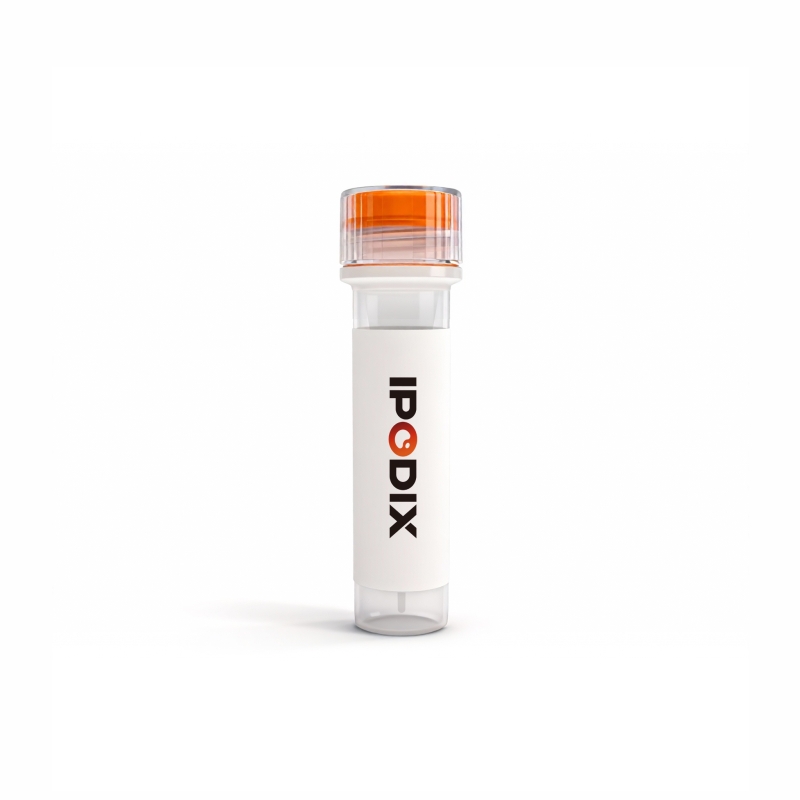
Analytical Data
-
Gene name
ACHAP
- Application
-
Alternative Names
ACHAP;ACHAP;C6orf82;Protein CutA
-
Species
Human
-
Source
E. coli
-
Tag
His tag N-Terminus
-
Purity
Greater than 90% as determined by SDS-PAGE.
-
Uniprot
O60888
-
Expression Region
33-179aa
-
AA Sequence
RLLLLPRV LLTMASGSPP TQPSPASDSG SGYVPGSVSA AFVTCPNEKV AKEIARAVVE KRLAACVNLI PQITSIYEWK GKIEEDSEVL MMIKTQSSLV PALTDFVRSV HPYEVAEVIA LPVEQGNFPY LQWVRQVTES VSDSITVLP
-
Endotoxin
< 1.0 EU per μg protein as determined by the LAL method.
-
Form
Freeze-dried powder
-
Buffer formulation
PBS, pH7.4, containing 0.01% SKL, 1mM DTT, 5% Trehalose and Proclin300.
-
Reconstitution
Reconstitute in ddH2O to a concentration of 0.1-0.5 mg/mL. Do not vortex.
- Customization
-
Stability Test
The thermal stability is described by the loss rate. The loss rate was determined by accelerated thermal degradation test, that is, incubate the protein at 37℃ for 48h, and no obvious degradation and precipitation were observed. The loss rate isless than 8% within the expiration date under appropriate storage condition.
-
Storage & Shelf Life
Samples are stable for up to twelve months from date of receipt at -20℃ to -80℃. Store it under sterile conditions at -20℃ to -80℃. It is recommended that the protein be aliquoted for optimal storage. Avoid repeated freeze-thaw cycles.
-
Shipping
In general, recombinant proteins are supplied as lyophilized powder and shipped at ambient temperature. For bulk packages, the proteins are provided as frozen liquid and shipped with blue ice, unless otherwise requested by the customer.
Quality inspection process

Related Products
Protein Description
ACHAP (Anaphylatoxin C3a and C5a Homologous Protein) is a novel protein of interest in immunology and inflammation research due to its involvement in immune responses. It is derived from the complement system, a crucial component of the innate immune response, where it plays a role in mediating various physiological and pathological processes. The understanding of ACHAP's structure and function has garnered attention because it may act as a regulatory element in the complement cascade, influencing the activation of immune cells and modulation of inflammatory responses. Early studies have suggested that ACHAP can bind to receptors associated with anaphylatoxins, potentially impacting the severity of inflammatory diseases. This has prompted researchers to investigate its potential therapeutic applications, particularly in conditions such as sepsis, autoimmune diseases, and other immune-mediated disorders. Moreover, the recombinant production of ACHAP offers opportunities for detailed biochemical and biophysical characterizations, enabling the exploration of its mechanism of action and the development of targeted interventions aimed at modulating its activity. Understanding the role of ACHAP and its re-combinantly produced form may lead to novel strategies for treating diseases characterized by dysregulated immune responses, highlighting its significance in advancing therapeutic approaches within the field of immunology.







