Analytical Data
-
基因名
NLRP3
- Application
-
别名
NLRP3;C1orf7;CIAS1;NALP3;NACHT. LRR and PYD domains-containing Protein 3
-
种属
Human
-
表达系统
E. coli
-
标签
C-6*His
-
纯度
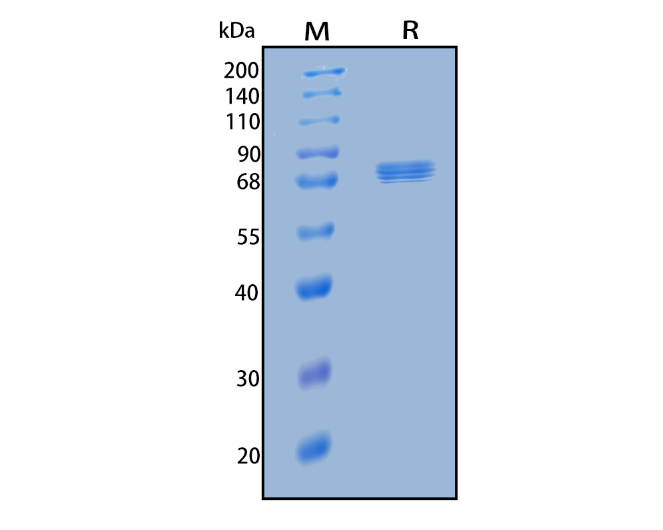
Greater than 90% as determined by SDS-PAGE.
-
蛋白编号
Q96P20-1
-
表达区间
131-704aa
-
氨基酸序列
KMKKDYRKKYRKYVRSRFQCIEDRNARLGESVSLNKRYTRLRLIKEHRSQQEREQELLAIGKTKTCESPVSPIKMELLFDPDDEHSEPVHTVVFQGAAGIGKTILARKMMLDWASGTLYQDRFDYLFYIHCREVSLVTQRSLGDLIMSCCPDPNPPIHKIVRKPSRILFLMDGFDELQGAFDEHIGPLCTDWQKAERGDILLSSLIRKKLLPEASLLITTRPVALEKLQHLLDHPRHVEILGFSEAKRKEYFFKYFSDEAQARAAFSLIQENEVLFTMCFIPLVCWIVCTGLKQQMESGKSLAQTSKTTTAVYVFFLSSLLQPRGGSQEHGLCAHLWGLCSLAADGIWNQKILFEESDLRNHGLQKADVSAFLRMNLFQKEVDCEKFYSFIHMTFQEFFAAMYYLLEEEKEGRTNVPGSRLKLPSRDVTVLLENYGKFEKGYLIFVVRFLFGLVNQERTSYLEKKLSCKISQQIRLELLKWIEVKAKAKKLQIQPSQLELFYCLYEMQEEDFVQRAMDYFPKIEINLSTRMDHMVSSFCIENCHRVESLSLGFLHNMPKEEEEEEKEGRHLDMV
-
蛋白长度
Partial
-
分子量
72 kDa
-
内毒素
< 1.0 EU per μg protein as determined by the LAL method.
-
性状
Freeze-dried powder
-
缓冲液
PBS, pH7.4, containing 0.01% SKL, 1mM DTT, 5% Trehalose and Proclin300.
-
复溶方法
Reconstitute in ddH2O to a concentration of 0.1-0.5 mg/mL. Do not vortex.
- 个性化定制
-
稳定性测试
The thermal stability is described by the loss rate. The loss rate was determined by accelerated thermal degradation test, that is, incubate the protein at 37℃ for 48h, and no obvious degradation and precipitation were observed. The loss rate isless than 8% within the expiration date under appropriate storage condition.
-
保存条件 & 期限
Samples are stable for up to twelve months from date of receipt at -20℃ to -80℃. Store it under sterile conditions at -20℃ to -80℃. It is recommended that the protein be aliquoted for optimal storage. Avoid repeated freeze-thaw cycles.
-
运输条件
In general, recombinant proteins are supplied as lyophilized powder and shipped at ambient temperature. For bulk packages, the proteins are provided as frozen liquid and shipped with blue ice, unless otherwise requested by the customer.
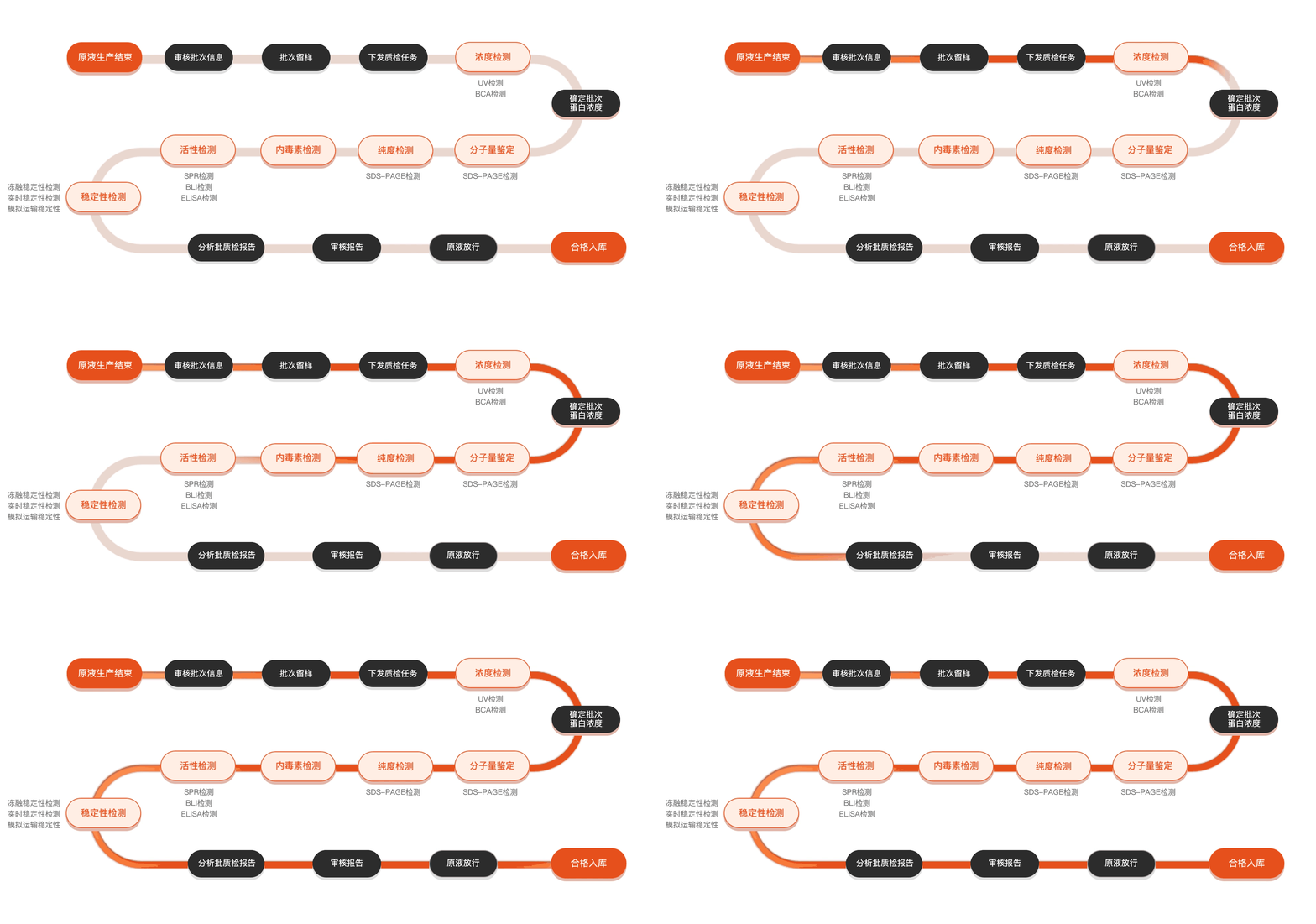
Quality inspection process
Related Products
Identification
Protein Description
NLRP3, part of the NOD-like receptor (NLR) family, is an intracellular pattern recognition receptor that plays a critical role in the innate immune response. It is best known for its involvement in the formation of the NLRP3 inflammasome, a multi-protein complex that activates caspase-1, leading to the maturation and secretion of pro-inflammatory cytokines such as IL-1β and IL-18. Dysregulation of NLRP3 has been implicated in various inflammatory diseases, including autoimmune disorders, metabolic syndromes, and neurodegenerative diseases, highlighting its potential as a therapeutic target. The study of recombinant NLRP3 proteins has enabled researchers to elucidate the molecular mechanisms governing inflammasome activation and downstream signaling pathways. By examining the structure-function relationship of NLRP3 through recombinant techniques, scientists can develop novel inhibitors or modulators to therapeutically manage conditions associated with NLRP3 dysregulation. Moreover, these studies contribute to a deeper understanding of innate immunity, offering insights into how the immune system recognizes and responds to pathogens and danger signals. As research in this area progresses, the exploitation of NLRP3 as a biomarker for disease prognosis and as a target for drug design continues to gain momentum, potentially leading to innovative strategies for treating inflammation-driven diseases. The recombinant NLRP3 protein will serve as a crucial tool in these ongoing investigations, helping to unravel the complexities of immune responses and paving the way for future therapeutic developments.