Analytical Data
-
Gene name
aprE
- Application
-
Alternative Names
aprE; apr; aprA; sprE; BSU10300; Subtilisin E; EC 3.4.21.62
-
Species
Bacillus subtilis
-
Source
E. coli
-
Tag
N- His-SUMO
-
Purity
Greater than 90% as determined by SDS-PAGE.
-
Uniprot
P04189
-
Expression Region
107-381aa
-
Molecular Weight
43.7 kDa
-
Endotoxin
< 1.0 EU per μg protein as determined by the LAL method.
-
Form
Freeze-dried powder
-
Buffer formulation
PBS, pH7.4, containing 0.01% SKL, 1mM DTT, 5% Trehalose and Proclin300.
-
Reconstitution
Reconstitute in ddH2O to a concentration of 0.1-0.5 mg/mL. Do not vortex.
- Customization
-
Stability Test
The thermal stability is described by the loss rate. The loss rate was determined by accelerated thermal degradation test, that is, incubate the protein at 37℃ for 48h, and no obvious degradation and precipitation were observed. The loss rate isless than 8% within the expiration date under appropriate storage condition.
-
Storage & Shelf Life
Samples are stable for up to twelve months from date of receipt at -20℃ to -80℃. Store it under sterile conditions at -20℃ to -80℃. It is recommended that the protein be aliquoted for optimal storage. Avoid repeated freeze-thaw cycles.
-
Shipping
In general, recombinant proteins are supplied as lyophilized powder and shipped at ambient temperature. For bulk packages, the proteins are provided as frozen liquid and shipped with blue ice, unless otherwise requested by the customer.
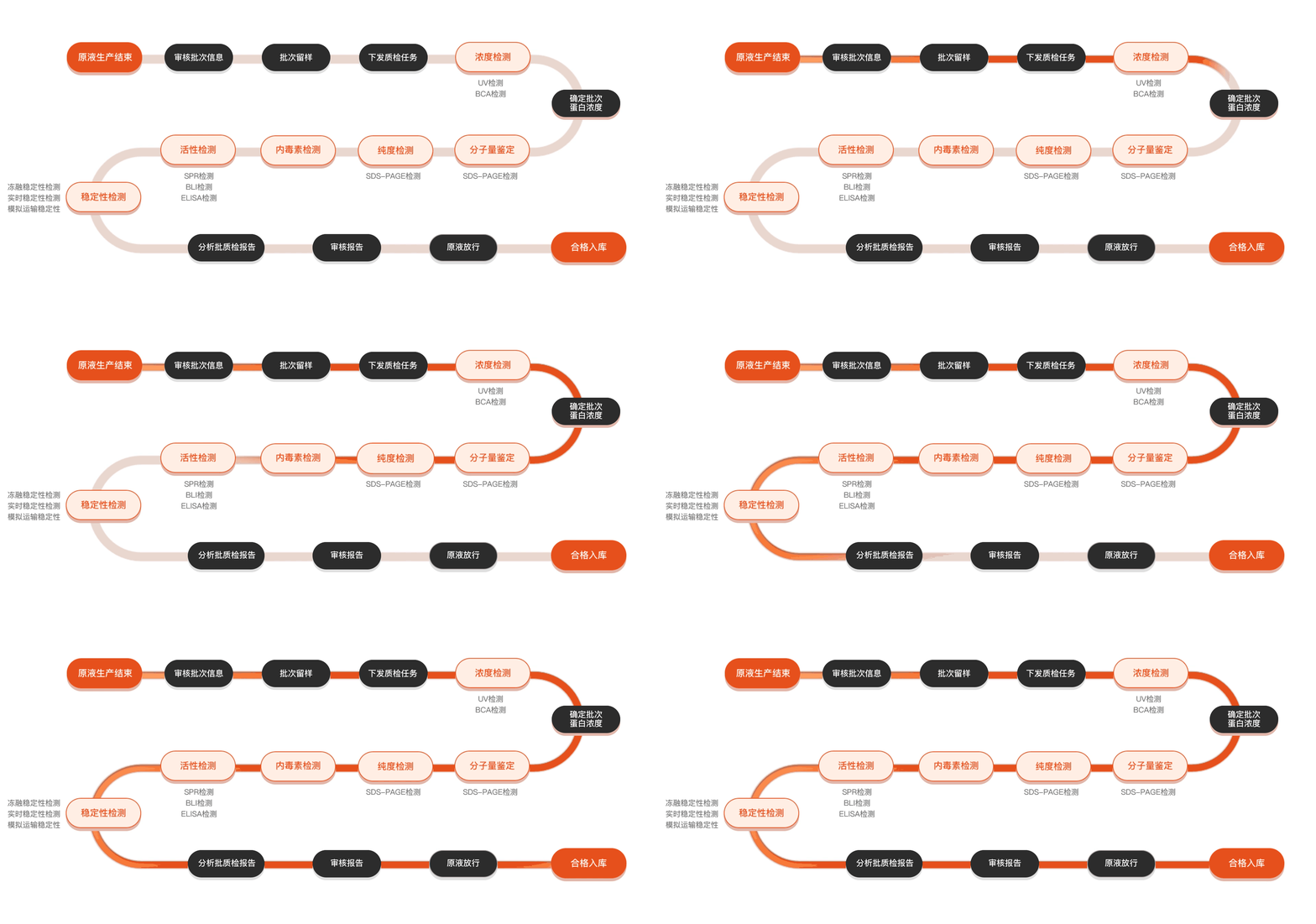
Quality inspection process
Related Products
Protein Description
The study of aprE recombinant protein centers on the aprE gene, which encodes an extracellular serine protease produced by the bacterium *Bacillus subtilis*. This enzyme plays a significant role in various industrial applications, including food processing, textile, and detergent industries, due to its proteolytic activity and ability to function under a broad range of pH and temperature conditions. The recombinant production of aprE allows for a more efficient and scalable approach to obtain this important enzyme, as traditional methods of extraction from native sources can be labor-intensive and yield limited quantities. Genetic engineering techniques, such as cloning the aprE gene into suitable expression vectors, enable the overexpression of the protein in microorganisms like *E. coli* or *Bacillus* species. Research on aprE recombinant protein not only focuses on improving yield and activity through optimization of cloning and expression conditions but also aims to characterize the enzyme’s properties and enhance its stability and functionality for specific applications. Understanding the structure-function relationship of aprE and its potential modifications further opens avenues for tailored enzyme applications in biotechnological processes, contributing to greener and more efficient industrial practices.