Analytical Data
-
Gene name
TNFRSF8
- Application
-
Alternative Names
TNFRSF8;CD30;Tumor necrosis factor receptor superfamily member 8
-
Species
Human
-
Source
E. coli
-
Tag
His tag N-Terminus
-
Purity
Greater than 90% as determined by SDS-PAGE.
-
Uniprot
P28908
-
Expression Region
1-380aa
-
AA Sequence
MRVLLAALGL LFLGALRAFP QDRPFEDTCH GNPSHYYDKA VRRCCYRCPM GLFPTQQCPQ RPTDCRKQCE PDYYLDEADR CTACVTCSRD DLVEKTPCAW NSSRVCECRP GMFCSTSAVN SCARCFFHSV CPAGMIVKFP GTAQKNTVCE PASPGVSPAC ASPENCKEPS SGTIPQAKPT PVSPATSSAS TMPVRGGTRL AQEAASKLTR APDSPSSVGR PSSDPGLSPT QPCPEGSGDC RKQCEPDYYL DEAGRCTACV SCSRDDLVEK TPCAWNSSRT CECRPGMICA TSATNSCARC VPYPICAAET VTKPQDMAEK DTTFEAPPLG TQPDCNPTPE NGEAPASTSP TQSLLVDSQA SKTLPIPTSA PVALSSTGKP
-
Molecular Weight
80 kDa
-
Endotoxin
< 1.0 EU per μg protein as determined by the LAL method.
-
Form
Freeze-dried powder
-
Buffer formulation
PBS, pH7.4, containing 0.01% SKL, 1mM DTT, 5% Trehalose and Proclin300.
-
Reconstitution
Reconstitute in ddH2O to a concentration of 0.1-0.5 mg/mL. Do not vortex.
- Customization
-
Stability Test
The thermal stability is described by the loss rate. The loss rate was determined by accelerated thermal degradation test, that is, incubate the protein at 37℃ for 48h, and no obvious degradation and precipitation were observed. The loss rate isless than 8% within the expiration date under appropriate storage condition.
-
Storage & Shelf Life
Samples are stable for up to twelve months from date of receipt at -20℃ to -80℃. Store it under sterile conditions at -20℃ to -80℃. It is recommended that the protein be aliquoted for optimal storage. Avoid repeated freeze-thaw cycles.
-
Shipping
In general, recombinant proteins are supplied as lyophilized powder and shipped at ambient temperature. For bulk packages, the proteins are provided as frozen liquid and shipped with blue ice, unless otherwise requested by the customer.
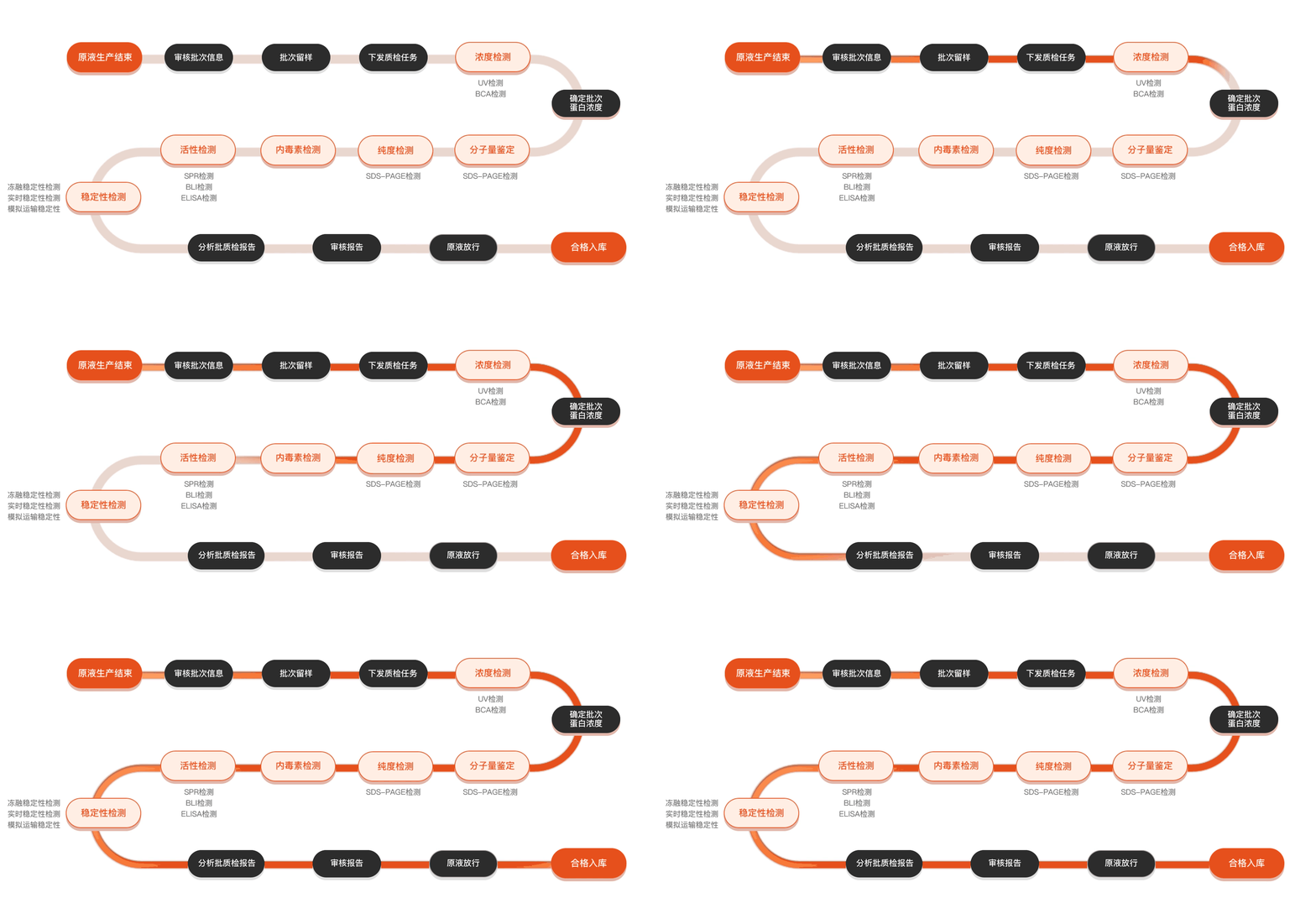
Quality inspection process
Related Products
Protein Description
TNFRSF8, also known as CD30, is a member of the tumor necrosis factor (TNF) receptor superfamily, primarily expressed on activated T cells and certain B cells. It plays a crucial role in regulating immune responses and cellular proliferation, particularly in the context of lymphocyte activation and survival. Dysregulation of CD30 signaling has been implicated in various hematological malignancies, such as Hodgkin's lymphoma and non-Hodgkin's lymphoma, making it a potential target for therapeutic intervention. Recombinant proteins of TNFRSF8 have been developed for various research and clinical purposes, including the design of monoclonal antibodies that can selectively target CD30-expressing cells. Researchers have focused on the functional characterization of this receptor to understand its signaling pathways and interactions with ligands, which could inform new treatments that exploit CD30's role in immune modulation. The study of TNFRSF8 recombinant proteins not only provides insights into T cell dynamics and tumor immunity but also paves the way for innovative therapies that leverage the immune system to combat malignancies. With the ongoing progress in biotechnology, TNFRSF8 remains a significant focus in immunotherapy research, highlighting its potential for influencing both tumor biology and the development of novel therapeutic strategies.