Analytical Data
-
基因名
ARL6IP4
- Application
-
别名
ARL6IP4ADP-ribosylation factor-like Protein 6-interacting Protein 4
-
种属
Human
-
表达系统
E. coli
-
标签
His tag N-Terminus
-
纯度
Greater than 90% as determined by SDS-PAGE.
-
蛋白编号
Q66PJ3
-
表达区间
1-360aa
-
氨基酸序列
MERAGPAGEE GGAREGRLLP RAPGAWVLRA CAERAALEVG AASADTGVRG CGARGPAPLL ASAGGGRARD GTWGVRTKGS GAALPSRPAS RAAPRPEASS PPLPLEKARG GLSGPQGGRA RGAMAHVGSR KRSRSRSRSR GRGSEKRKKK SRKDTSRNCS ASTSQGRKAS TAPGAEASPS PCITERSKQK ARRRTRSSSS SSSSSSSSSS SSSSSSSSSS SDGRKKRGKY KDKRRKKKKK RKKLKKKGKE KAEAQQVEAL PGPSLDQWHR SAGEEEDGPV LTDEQKSRIQ AMKPMTKEEW DARQSIIRKV VDPETGRTRL IKGDGEVLEE IVTKERHREI NKQATRGDCL AFQMRAGLLP
-
分子量
26.3 kDa
-
内毒素
< 1.0 EU per μg protein as determined by the LAL method.
-
性状
Freeze-dried powder
-
缓冲液
PBS, pH7.4, containing 0.01% SKL, 1mM DTT, 5% Trehalose and Proclin300.
-
复溶方法
Reconstitute in ddH2O to a concentration of 0.1-0.5 mg/mL. Do not vortex.
- 个性化定制
-
稳定性测试
The thermal stability is described by the loss rate. The loss rate was determined by accelerated thermal degradation test, that is, incubate the protein at 37℃ for 48h, and no obvious degradation and precipitation were observed. The loss rate isless than 8% within the expiration date under appropriate storage condition.
-
保存条件 & 期限
Samples are stable for up to twelve months from date of receipt at -20℃ to -80℃. Store it under sterile conditions at -20℃ to -80℃. It is recommended that the protein be aliquoted for optimal storage. Avoid repeated freeze-thaw cycles.
-
运输条件
In general, recombinant proteins are supplied as lyophilized powder and shipped at ambient temperature. For bulk packages, the proteins are provided as frozen liquid and shipped with blue ice, unless otherwise requested by the customer.
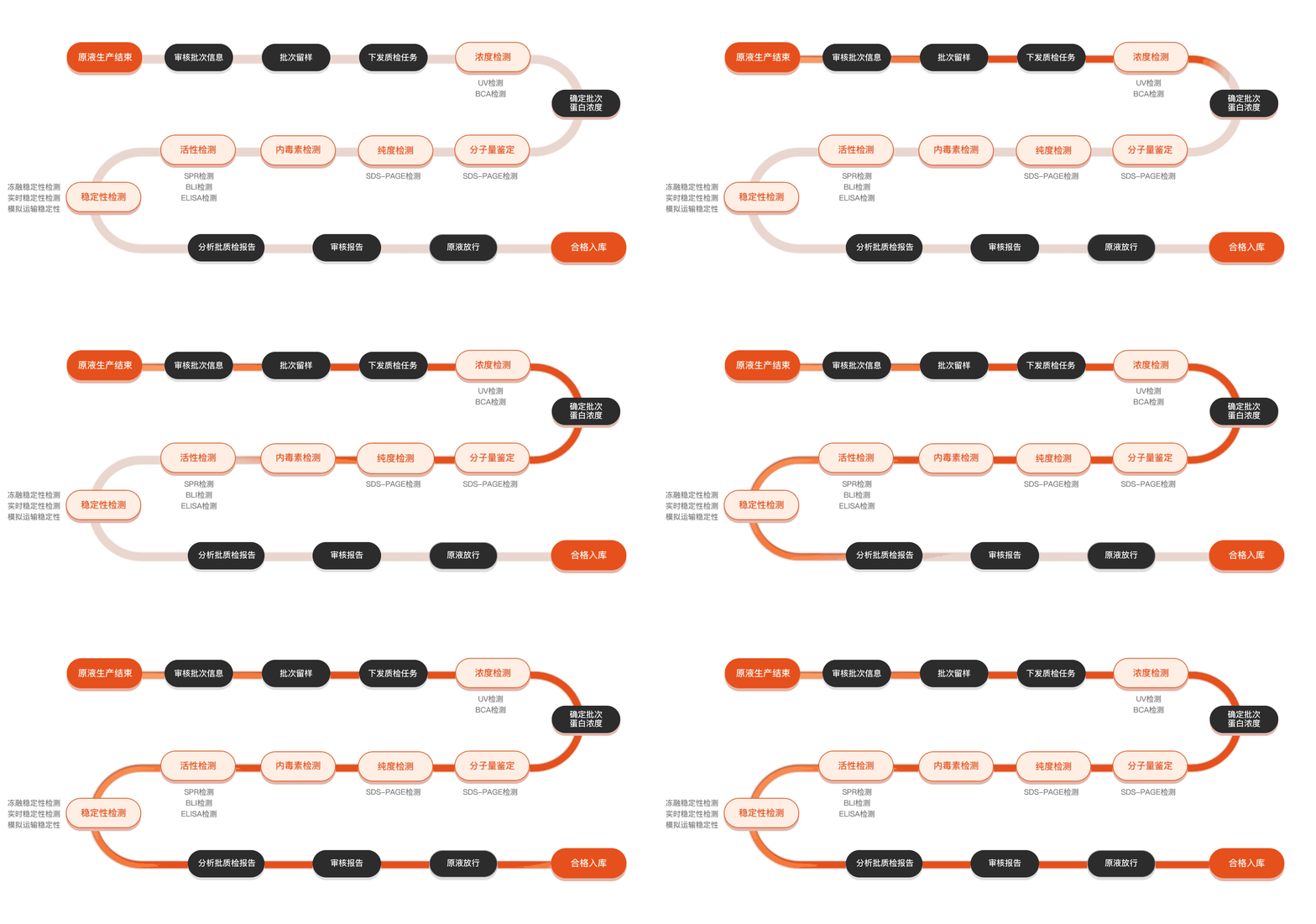
Quality inspection process
Related Products
Protein Description
ARL6IP4, short for ADP-ribosylation factor-like 6 interacting protein 4, is a member of the ARF-family of proteins, which play critical roles in various cellular processes, including vesicular trafficking, cytoskeletal dynamics, and signal transduction. Research into ARL6IP4 has intensified in recent years, particularly due to its potential involvement in cellular mechanisms underlying various diseases, including cancer and neurodegenerative disorders. Studies have shown that ARL6IP4 interacts with multiple proteins and cellular pathways, indicating its role as a significant regulator of cellular functions. Recombination techniques have allowed researchers to produce ARL6IP4 as a recombinant protein, facilitating in-depth investigations into its structure, function, and interactions with other biomolecules. Such studies aim to elucidate the molecular mechanisms by which ARL6IP4 exerts its effects, thereby potentially identifying it as a target for therapeutic intervention. The ongoing research endeavors emphasize the importance of ARL6IP4 in maintaining cellular homeostasis and its implications in disease processes, making it a crucial focus in the field of molecular biology and biochemistry.