Analytical Data
-
Gene name
PSMAL
- Application
-
Alternative Names
FOLH1B; PSMAL; GIG26Putative N-acetylated-alpha-linked acidic dipeptidase; NAALADase; EC 3.4.-.-; Cell growth-inhibiting gene 26 protein; Prostate-specific membrane antigen-like protein; Putative folate hydrolase 1B
-
Species
Human
-
Source
E. coli
-
Tag
His tag N-Terminus
-
Purity
Greater than 90% as determined by SDS-PAGE.
-
Uniprot
Q9HBA9
-
Expression Region
1-442 aa
-
AA Sequence
MGGSAPPDSS WRGSLKVSYN VGPGFTGNFS TQKVKMHIHS TNEVTRIYNV IGTLRGAVEP DRYVILGGHR DSWVFGGIDP QSGAAVVHET VRSFGTLKKE GWRPRRTILF ASWDAEEFGL LGSTEWAEDN SRLLQERGVA YINADSSIEG NYTLRVDCTP LMYSLVYNLT KELKSPDEGF EGKSLYESWT KKSPSPEFSG MPRISKLGSG NDFEVFFQRL GIASGRARYT KNWETNKFSG YPLYHSVYET YELVEKFYDP MFKYHLTVAQ VRGGMVFELA NSIVLPFDCR DYAVVLRKYA DKIYNISMKH PQEMKTYSLS FDSLFSAVKN FTEIASKFSE RLQDFDKSNP ILLRMMNDQL MFLERAFIDP LGLPDRPFYR HVIYAPSSHN KYAGESFPGI YDALFDIESK VDPSKAWGDV KRQISVAAFT VQAAAETLSE VA
-
Molecular Weight
50.0 kDa
-
Endotoxin
< 1.0 EU per μg protein as determined by the LAL method.
-
Form
Freeze-dried powder
-
Buffer formulation
PBS, pH7.4, containing 0.01% SKL, 1mM DTT, 5% Trehalose and Proclin300.
-
Reconstitution
Reconstitute in ddH2O to a concentration of 0.1-0.5 mg/mL. Do not vortex.
- Customization
-
Stability Test
The thermal stability is described by the loss rate. The loss rate was determined by accelerated thermal degradation test, that is, incubate the protein at 37℃ for 48h, and no obvious degradation and precipitation were observed. The loss rate isless than 8% within the expiration date under appropriate storage condition.
-
Storage & Shelf Life
Samples are stable for up to twelve months from date of receipt at -20℃ to -80℃. Store it under sterile conditions at -20℃ to -80℃. It is recommended that the protein be aliquoted for optimal storage. Avoid repeated freeze-thaw cycles.
-
Shipping
In general, recombinant proteins are supplied as lyophilized powder and shipped at ambient temperature. For bulk packages, the proteins are provided as frozen liquid and shipped with blue ice, unless otherwise requested by the customer.
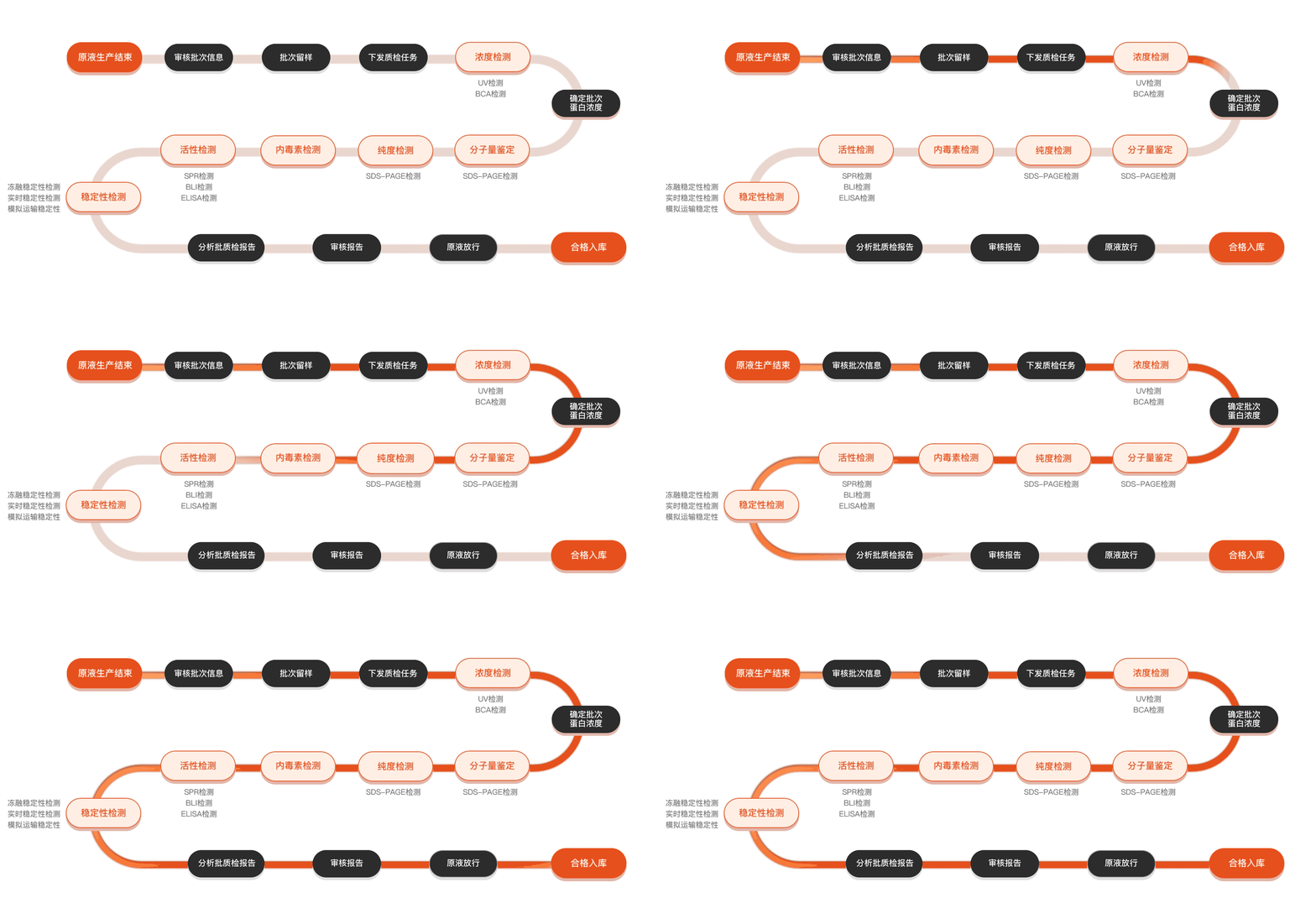
Quality inspection process
Related Products
Protein Description
PSMAL, or PSM Alpha-Like protein, has garnered attention in recent years due to its potential roles in various biological processes and diseases. It is a part of the proteasome system, which is crucial for protein degradation and regulation within cells. The proteasome plays a key role in maintaining cellular homeostasis by removing misfolded or damaged proteins, thereby preventing the accumulation of toxic aggregates. Research has suggested that PSMAL may be involved in specific pathways related to protein turnover and cellular stress responses, possibly influencing processes like inflammation and apoptosis. Furthermore, abnormalities in proteasomal activity have been linked to several diseases, including neurodegenerative disorders and certain cancers, making the study of PSMAL particularly relevant for understanding these pathologies. By investigating the structure, function, and regulation of PSMAL and its interactions with other cellular components, researchers aim to elucidate its contribution to cellular health and disease states. This understanding may lead to the development of novel therapeutic strategies targeting proteasomal dysfunctions, providing new avenues for treatment in diseases characterized by protein mismanagement. As a result, PSMAL represents a significant focus in molecular and cellular biology research, highlighting its relevance in both fundamental science and potential clinical applications.