Analytical Data
-
Gene name
EXOSC7
- Application
-
Alternative Names
EXOSC7;KIAA0116;RRP42;Exosome complex component RRP42
-
Species
Human
-
Source
E. coli
-
Tag
His tag N-Terminus
-
Purity
Greater than 90% as determined by SDS-PAGE.
-
Uniprot
Q15024
-
Expression Region
1-291aa
-
AA Sequence
MGSSHHHHHH SSGLVPRGSH MGSMASVTLS EAEKVYIVHG VQEDLRVDGR GCEDYRCVEV ETDVVSNTSG SARVKLGHTD ILVGVKAEMGT PKLEKPNEG YLEFFVDCSA SATPEFEGRG GDDLGTEIAN TLYRIFNNKS SVDLKTLCIS PREHCWVLYV DVLLLECGGN LFDAISIAVK AALFNTRIPR VRVLEDEEGS KDIELSDDPY DCIRLSVENV PCIVTLCKIG YRHVVDATLQ EEACSLASLL VSVTSKGVVT CMRKVGKGSL DPESIFEMME TGKRVGKVLH ASLQSVVHKE ESLGPKRQKV GFLG
-
Molecular Weight
34 kDa
-
Endotoxin
< 1.0 EU per μg protein as determined by the LAL method.
-
Form
Freeze-dried powder
-
Buffer formulation
PBS, pH7.4, containing 0.01% SKL, 1mM DTT, 5% Trehalose and Proclin300.
-
Reconstitution
Reconstitute in ddH2O to a concentration of 0.1-0.5 mg/mL. Do not vortex.
- Customization
-
Stability Test
The thermal stability is described by the loss rate. The loss rate was determined by accelerated thermal degradation test, that is, incubate the protein at 37℃ for 48h, and no obvious degradation and precipitation were observed. The loss rate isless than 8% within the expiration date under appropriate storage condition.
-
Storage & Shelf Life
Samples are stable for up to twelve months from date of receipt at -20℃ to -80℃. Store it under sterile conditions at -20℃ to -80℃. It is recommended that the protein be aliquoted for optimal storage. Avoid repeated freeze-thaw cycles.
-
Shipping
In general, recombinant proteins are supplied as lyophilized powder and shipped at ambient temperature. For bulk packages, the proteins are provided as frozen liquid and shipped with blue ice, unless otherwise requested by the customer.
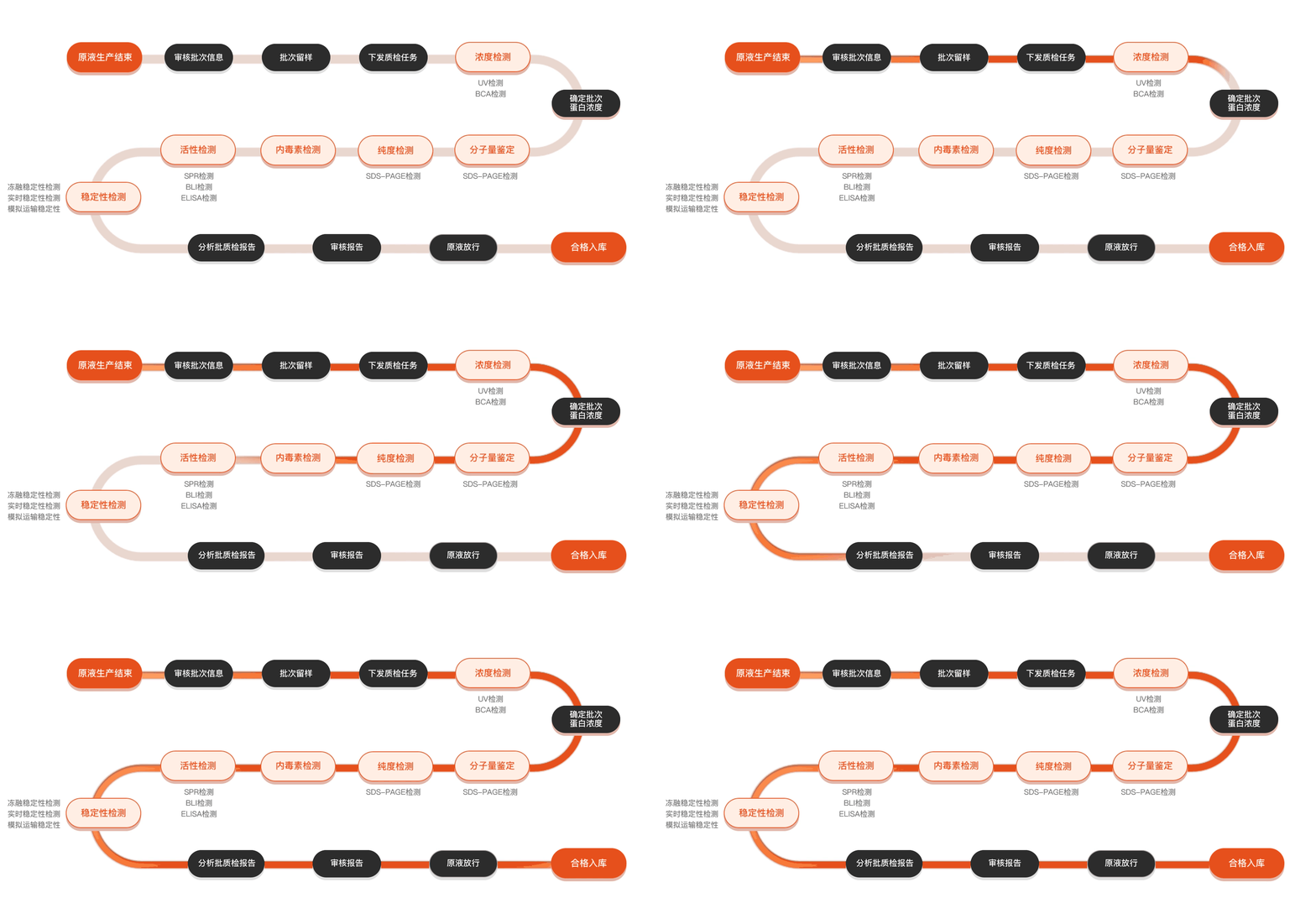
Quality inspection process
Related Products
Protein Description
EXOSC7 is a crucial component of the exosome complex, which plays a vital role in RNA processing and degradation within eukaryotic cells. The exosome is a multi-protein complex that regulates the stability and turnover of various RNA molecules, including mRNA and non-coding RNAs, thereby influencing gene expression and cellular homeostasis. Recent studies have highlighted the importance of EXOSC7 in various cellular processes, such as nonsense-mediated decay, ribosomal RNA processing, and responding to cellular stress. Mutations or dysfunctions in EXOSC7 are linked to diseases, including neurodegenerative disorders and certain types of cancer, making it a significant focus for molecular biology research. Recombinant EXOSC7 protein production allows for detailed structural and functional studies, enhancing our understanding of its role in cellular RNA metabolism. Investigating the biochemical properties and interactions of EXOSC7 could lead to insights into the mechanisms of RNA processing and the potential development of therapeutic strategies targeting RNA dysregulation in disease contexts. Overall, the study of EXOSC7 not only contributes to fundamental molecular biology but also holds promise for translational applications in health and disease management.