Analytical Data
-
Gene name
HVA
- Application
-
Alternative Names
HVA;CACH5;CACNL1A5;Voltage-dependent N-type calcium channel subunit alpha-1B
-
Species
Human
-
Source
E. coli
-
Tag
His tag N-Terminus
-
Purity
Greater than 90% as determined by SDS-PAGE.
-
Uniprot
Q00975
-
Expression Region
全长
-
AA Sequence
full
-
Molecular Weight
262 kDa
-
Endotoxin
< 1.0 EU per μg protein as determined by the LAL method.
-
Form
Freeze-dried powder
-
Buffer formulation
PBS, pH7.4, containing 0.01% SKL, 1mM DTT, 5% Trehalose and Proclin300.
-
Reconstitution
Reconstitute in ddH2O to a concentration of 0.1-0.5 mg/mL. Do not vortex.
- Customization
-
Stability Test
The thermal stability is described by the loss rate. The loss rate was determined by accelerated thermal degradation test, that is, incubate the protein at 37℃ for 48h, and no obvious degradation and precipitation were observed. The loss rate isless than 8% within the expiration date under appropriate storage condition.
-
Storage & Shelf Life
Samples are stable for up to twelve months from date of receipt at -20℃ to -80℃. Store it under sterile conditions at -20℃ to -80℃. It is recommended that the protein be aliquoted for optimal storage. Avoid repeated freeze-thaw cycles.
-
Shipping
In general, recombinant proteins are supplied as lyophilized powder and shipped at ambient temperature. For bulk packages, the proteins are provided as frozen liquid and shipped with blue ice, unless otherwise requested by the customer.
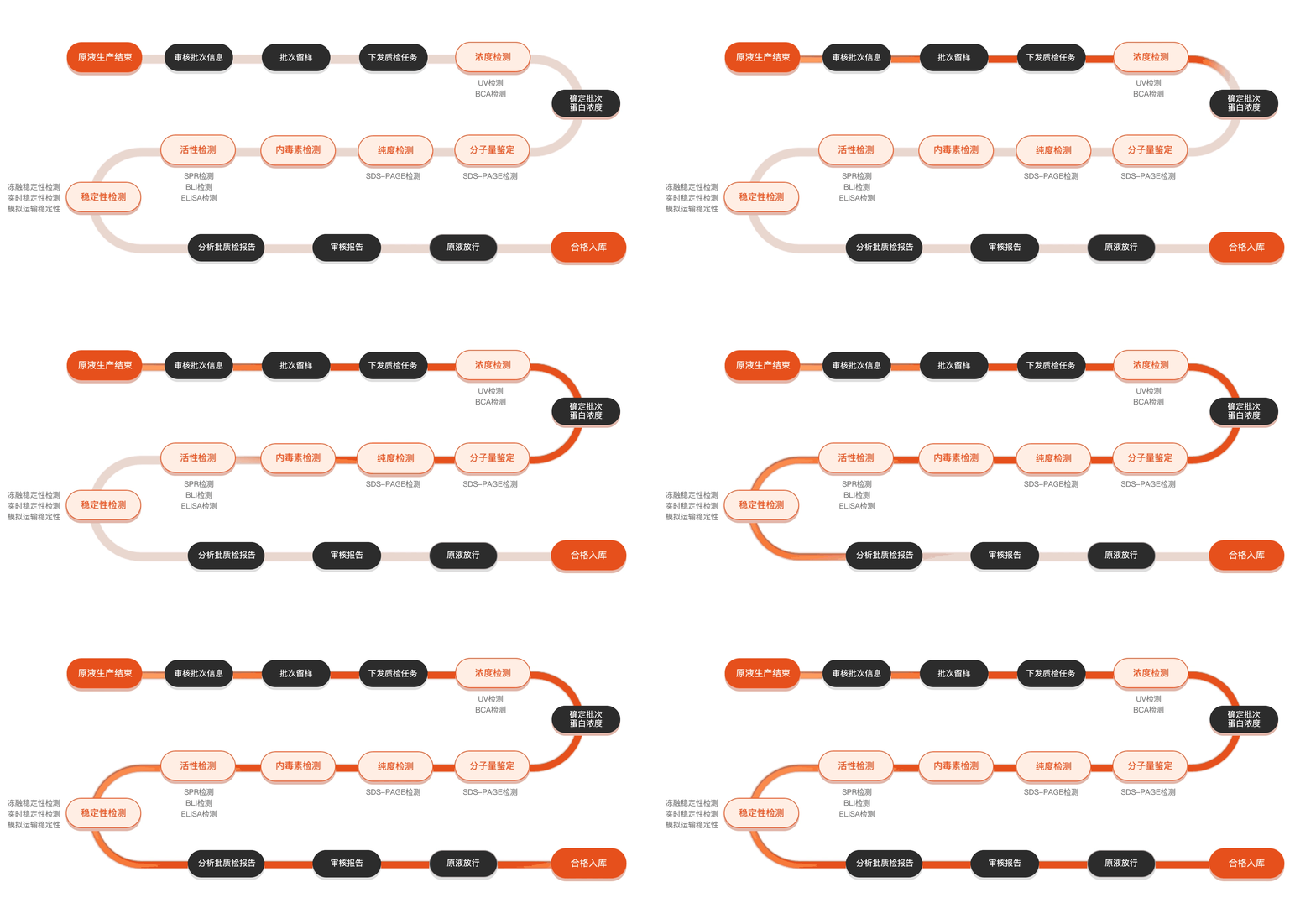
Quality inspection process
Related Products
Protein Description
High-value added (HVA) recombinant proteins have gained significant attention in recent years due to their diverse applications in therapeutics, diagnostics, and industrial processes. The demand for these proteins has surged, particularly in the biopharmaceutical sector, where they are essential for the development of vaccines, enzymes, and monoclonal antibodies. The recombinant DNA technology has enabled the production of HVA proteins in various host systems, including bacteria, yeast, plants, and mammalian cells, each offering unique advantages in terms of yield, post-translational modifications, and scalability. Research in this area focuses on optimizing expression systems, enhancing protein stability, and refining purification processes to maximize yield and functionality. Additionally, the sustainable production of HVA proteins from renewable resources has become a pressing objective, as it aligns with global efforts toward environmentally friendly practices. As biotechnological advancements continue to evolve, the study of HVA recombinant proteins plays a crucial role in addressing critical challenges in health, agriculture, and industry, thereby contributing to innovation and economic growth.