Analytical Data
-
Gene name
PKM2
- Application
-
Alternative Names
PKM;OIP3;PK2;PK3;Pyruvate kinase PKM
-
Species
Human
-
Source
E. coli
-
Tag
N-terminal His
-
Purity
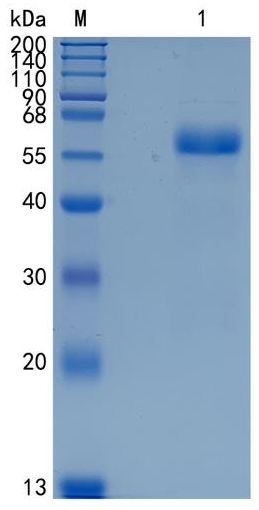
Greater than 90% as determined by SDS-PAGE.
-
Uniprot
P14618
-
Expression Region
1-531aa
-
AA Sequence
MSKPHSEAGT AFIQTQQLHA AMADTFLEHM CRLDIDSPPI TARNTGIICT IGPASRSVET LKEMIKSGMN VARLNFSHGT HEYHAETIKN VRTATESFAS DPILYRPVAV ALDTKGPEIR TGLIKGSGTA EVELKKGATL KITLDNAYME KCDENILWLD YKNICKVVEV GSKIYVDDGL ISLQVKQKGA DFLVTEVENG GSLGSKKGVN LPGAAVDLPA VSEKDIQDLK FGVEQDVDMV FASFIRKASD VHEVRKVLGE KGKNIKIISK IENHEGVRRF DEILEASDGI MVARGDLGIE IPAEKVFLAQ KMMIGRCNRA GKPVICATQM LESMIKKPRP TRAEGSDVAN AVLDGADCIM LSGETAKGDY PLEAVRMQHL IAREAEAAIY HLQLFEELRR LAPITSDPTE ATAVGAVEAS FKCCSGAIIV LTKSGRSAHQ VARYRPRAPI IAVTRNPQTA RQAHLYRGIF PVLCKDPVQE AWAEDVDLRV NFAMNVGKAR GFFKKGDVVI VLTGWRPGSG FTNTMRVVPV P
-
Molecular Weight
65 kDa
-
Endotoxin
< 1.0 EU per μg protein as determined by the LAL method.
-
Form
Freeze-dried powder
-
Buffer formulation
PBS, pH7.4, containing 0.01% SKL, 1mM DTT, 5% Trehalose and Proclin300.
-
Reconstitution
Reconstitute in ddH2O to a concentration of 0.1-0.5 mg/mL. Do not vortex.
- Customization
-
Stability Test
The thermal stability is described by the loss rate. The loss rate was determined by accelerated thermal degradation test, that is, incubate the protein at 37℃ for 48h, and no obvious degradation and precipitation were observed. The loss rate isless than 8% within the expiration date under appropriate storage condition.
-
Storage & Shelf Life
Samples are stable for up to twelve months from date of receipt at -20℃ to -80℃. Store it under sterile conditions at -20℃ to -80℃. It is recommended that the protein be aliquoted for optimal storage. Avoid repeated freeze-thaw cycles.
-
Shipping
In general, recombinant proteins are supplied as lyophilized powder and shipped at ambient temperature. For bulk packages, the proteins are provided as frozen liquid and shipped with blue ice, unless otherwise requested by the customer.
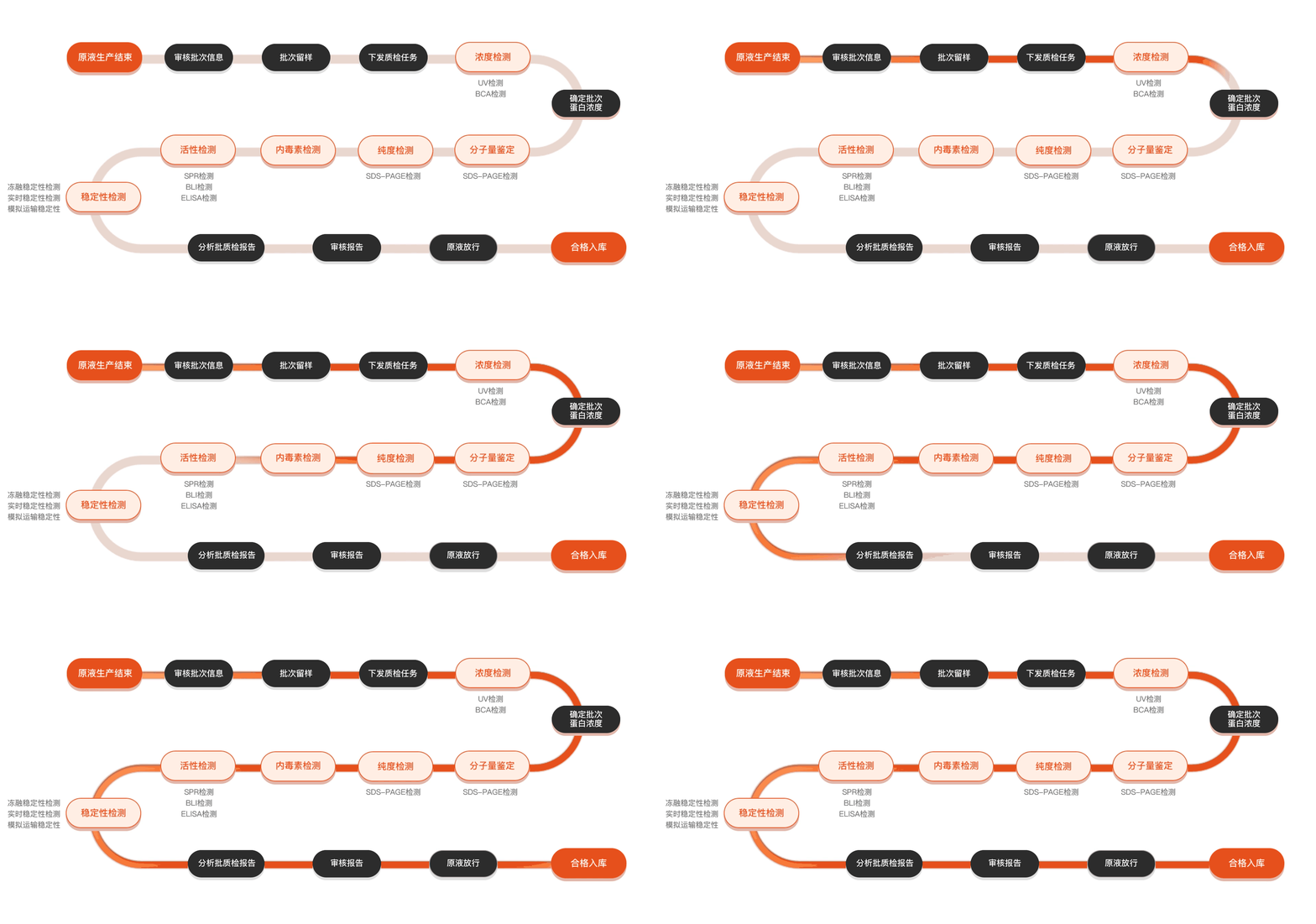
Quality inspection process
Related Products
Identification
Protein Description
Pyruvate kinase M2 (PKM2) is an enzyme that plays a crucial role in the glycolytic pathway, facilitating the conversion of phosphoenolpyruvate to pyruvate, while generating ATP. Unlike its isoforms in normal tissues, PKM2 is predominantly expressed in cancer cells, where it contributes to the Warburg effect—favoring aerobic glycolysis even in the presence of oxygen. This metabolic shift allows tumor cells to produce not only energy but also intermediates for biosynthetic processes that support rapid proliferation. Research into recombinant PKM2 has gained momentum, focusing on its enzymatic mechanisms, regulatory properties, and interactions with various metabolites and signaling molecules. Understanding PKM2’s structure and function at a molecular level is essential, as it reveals insights into cancer metabolism and potential therapeutic targets. Furthermore, the recombinant expression of PKM2 facilitates the investigation of its properties and the development of inhibitors that could disrupt its activity in malignant cells. As cancer continues to be a leading cause of mortality worldwide, elucidating the role of PKM2 could pave the way for innovative strategies in cancer treatment and metabolic therapies.